
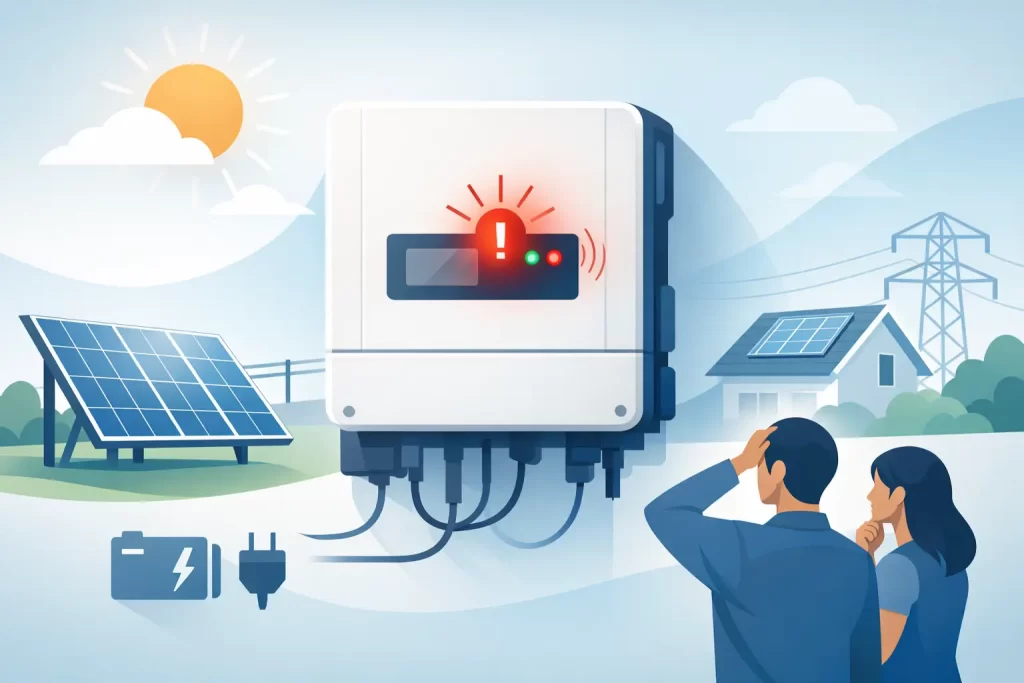
A flashing light on a solar inverter can mean anything from normal start-up behaviour to a fault that is stopping your system earning and saving. If you are asking, why is my inverter flashing, the answer is not simply the colour of the light. The make and model, the display message, the weather and whether the system is still generating all matter.
Treat an inverter warning as an early warning, not something to ignore until the next electricity bill arrives. The inverter is the working heart of your solar PV system. It converts the DC electricity from the panels into usable AC electricity for your home and the grid. When it shuts down or repeatedly disconnects, your panels may be producing power that you cannot use.
Why is my inverter flashing when it is working normally?
Not every flashing light is a fault. Many inverters use a pulsing green LED to show that they are powered up, monitoring the solar array or waiting for enough daylight to begin generating. Early in the morning, late in the afternoon and during very dull weather, an inverter may flash while it checks whether there is sufficient DC voltage from the panels to start safely.
A green light that flashes or pulses while the screen shows normal generation figures is usually reassuring. Some systems also briefly flash during their self-test sequence after sunrise, after a power cut, or when they reconnect to the grid. This is particularly common where a system has battery storage and is managing several power sources at once.
The key question is whether the inverter settles into normal operation and reports a sensible output. On a bright day, a system that continues flashing for hours with zero generation needs closer attention.
What the inverter light colours usually mean
There is no single colour code across every manufacturer, so the user manual and the message on the inverter screen always take priority. However, most domestic solar inverters follow a similar pattern.
A green light generally indicates normal operation or standby. A steady green light often means active generation, while flashing can mean start-up or low-light standby.
An orange or amber light commonly signals a warning, reduced output or a temporary grid issue. The inverter may still be operating, but it has detected a condition that needs monitoring. This could be weak sunlight, a communication problem, a voltage issue or an internal setting that needs checking.
A red light usually indicates a fault. It does not automatically mean the inverter has failed beyond repair, but it normally means the unit has stopped generating or has disconnected to protect itself. Record the exact error code before resetting anything.
A blue or white flashing light is often related to Wi-Fi, monitoring or battery communications rather than solar generation itself. Your panels may still be working perfectly, but the app may be unable to report their performance. Do not assume a monitoring fault is harmless, though. If the system has gone offline, you can miss a genuine generation problem for weeks.
The common causes of a flashing solar inverter
Grid voltage is too high
High grid voltage is one of the most common reasons a domestic inverter flashes, shows a warning or repeatedly switches off on sunny days. Inverters are required to disconnect when the voltage rises beyond safe limits. In the UK, this frequently happens in areas with lots of solar generation, particularly around midday when several homes are exporting power at once.
The pattern is often clear: the system starts normally in the morning, output rises as the sun strengthens, then the inverter trips and reconnects several times. Your monitoring may show a jagged generation graph or unexplained gaps during the brightest part of the day.
This is not a fault to solve by changing inverter settings yourself. An engineer needs to assess voltage readings, cable sizing, system configuration and the supply network. In some cases, the Distribution Network Operator must investigate the local supply. A properly planned battery can also reduce export pressure, but it is not a cure for every voltage issue.
A temporary power cut or grid disturbance
Your inverter must switch off during a power cut unless it has a correctly installed backup supply. This prevents electricity being fed into cables that may be under repair. After the mains returns, the inverter often waits for a set period, carries out safety checks and then reconnects. Flashing lights during this delay can be entirely normal.
If the house has power but the inverter does not reconnect after a reasonable period, check the display for a grid-related error. Repeated local outages, loose AC connections or a failing circuit breaker can also cause the same behaviour.
Low sunlight or a DC-side issue
A flashing status light at dawn is normal. Flashing through the middle of a clear day is different. The inverter may not be receiving the voltage it expects from one or more panel strings.
Possible causes include damaged cabling, failed connectors, an isolator problem, water ingress, a tripped protective device or a fault in an optimiser. Physical panel issues can contribute too. Heavy moss, persistent pigeon fouling and deep shading may reduce generation, although dirt alone does not usually cause a sudden inverter fault code.
Where birds have nested beneath the array, cables can be disturbed and contamination can build up around the roof area. This is why solar maintenance is more than simply rinsing panels from the ground. The roof, fixings, cable routes and array condition need inspecting safely by someone who understands solar PV work.
An insulation or earth fault
An insulation fault means the inverter has detected that DC cables or components may not be electrically isolated as they should be. Moisture in a connector, damaged cable insulation, rodent damage, poor original workmanship or a failed component can all be responsible.
These faults can appear after heavy rain, then disappear when conditions dry out. That does not make them safe to ignore. Intermittent faults are often harder to trace and can worsen over time. They need proper testing, not repeated resets.
The inverter is overheating
Inverters generate heat during operation. If the unit is installed in a cramped cupboard, loft space or south-facing location with poor ventilation, it may reduce output or shut down during warm weather. A blocked fan or dust build-up can make matters worse.
Check that vents are not obstructed and that nothing has been stored against the unit. Do not remove covers or attempt internal cleaning. Capacitors and DC equipment can remain hazardous even after isolation.
Communication, meter or battery faults
Modern systems may include a generation meter, current clamps, Wi-Fi dongle, export limiter and battery controller. A flashing inverter can sometimes be reporting a communication issue between these components rather than a failed solar array.
This distinction matters. A lost Wi-Fi connection affects visibility in your app, while a failed meter or export-control device may affect how the inverter operates. Battery systems add another layer: firmware mismatches, battery temperature limits and communication errors can all cause warnings that need model-specific diagnosis.
What to check before calling an engineer
Start with the information that will help diagnose the problem. Take a clear photograph of the inverter screen, warning light and any error number. Note the time, weather conditions and whether the issue happens every day or only at certain times. Check the monitoring app, if available, for generation gaps or repeated shutdowns.
You can also look for obvious external causes without touching live equipment: has there been a power cut, storm damage, a tripped consumer-unit breaker or heavy bird activity around the panels? If you can safely see the inverter, make sure its ventilation openings are clear.
Do not open the inverter, remove DC connectors, climb onto the roof, or keep cycling the isolators in the hope that the light will disappear. Solar panels produce DC electricity whenever there is daylight, and poor handling of DC connections creates a serious fire and shock risk. A reset may clear a temporary grid event, but it can also mask a recurring fault and delay the right repair.
When a flashing inverter needs urgent attention
Arrange a qualified solar inspection promptly if the light is red, the display shows an insulation, isolation, arc or earth fault, or generation has stopped in good daylight. The same applies if you notice burning smells, heat damage, buzzing, water ingress, scorch marks or damaged cabling.
A unit that repeatedly disconnects at high output also deserves investigation. It may look like a minor nuisance, but every avoidable shutdown reduces the return from your solar investment. Left unresolved, voltage and connection issues can place unnecessary strain on equipment.
For older systems, the fault may also be a sign that replacement is more sensible than repeated repair. That depends on the inverter age, warranty position, condition of the array and whether you are considering a battery or solar upgrade. Safer Solar UK can assess the whole installation rather than replacing a single part without identifying the original cause.
A flashing inverter is giving you useful information. Capture the code, resist the temptation to interfere with live equipment, and have a specialist determine whether it is normal operation, a grid problem or a fault that is quietly costing you generation.