
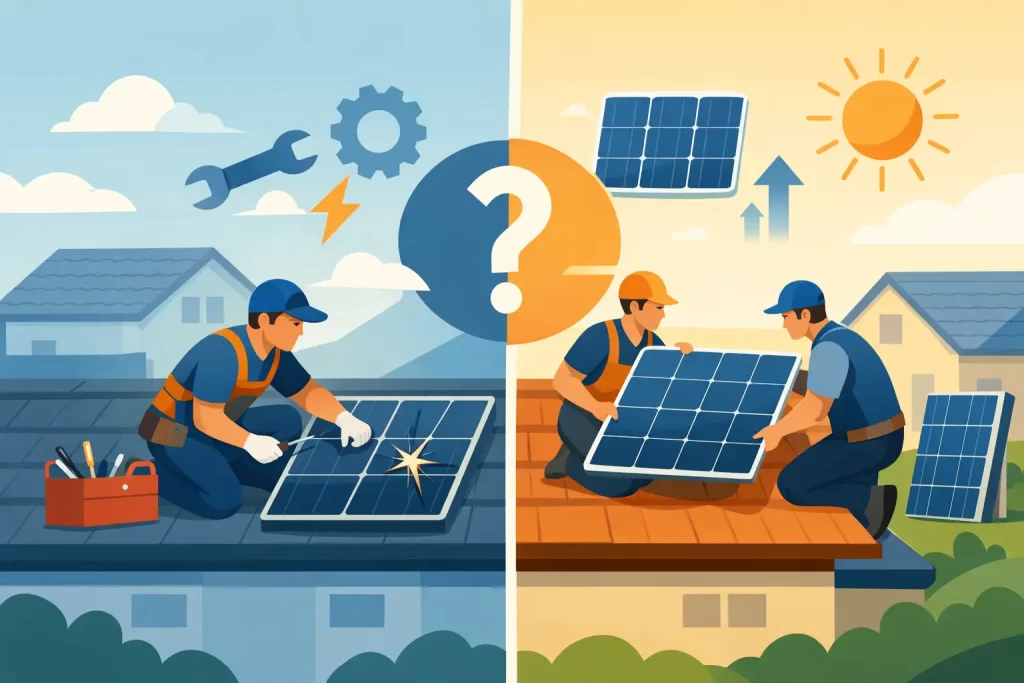
Your solar panels were meant to reduce reliance on expensive grid electricity, not become another unanswered household problem. When generation falls, an inverter shows a fault code, or pigeons have turned the array into a nesting site, the question is usually solar repair vs replacement. The right answer depends on the actual fault, the age of the equipment, roof condition and whether a repair will genuinely protect your system for years rather than simply delay a larger problem.
A proper diagnosis comes before either option. Replacing working equipment is wasteful. Equally, repeatedly patching a failing system can cost more in lost generation, call-outs and safety risk than a planned upgrade.
Solar repair vs replacement starts with diagnosis
Solar PV systems are not one single component. Panels, inverter, isolators, cabling, roof fixings, generation meter, optimisers and battery equipment all have different expected lifespans and failure points. A drop in output does not automatically mean the panels need replacing.
A specialist should compare current generation with the system’s historic performance, seasonal weather and shading conditions. They should then inspect the inverter’s fault history, test the DC and AC sides where appropriate, check connectors and isolators, and look closely at the array and roof penetrations. This matters because the visible problem is not always the root cause.
For example, a failed inverter can stop an otherwise healthy array from producing. A damaged cable or water-affected connector may cause intermittent faults. Heavy moss, lichen, bird droppings and nesting material can reduce light reaching the panels and restrict airflow beneath them. In each case, targeted work may restore performance without the cost and disruption of replacing the whole system.
Be wary of anyone who diagnoses a major fault from a photograph or recommends new panels without testing the system. Solar work involves live electrical equipment and roof-level access. Cheap guesswork is not a maintenance strategy.
When solar repair is the sensible choice
Repair is often the best-value route when the fault is isolated and the core system remains sound. This is particularly common with systems that are only a few years old or have been well maintained.
Inverter faults and end-of-life inverters
The inverter is commonly the first major component to need attention. It works hard every day, converting DC electricity from the panels into usable AC electricity for the home. Many inverters have a shorter service life than the panels themselves.
If the panels test well and the installation is safe, replacing only the inverter can be a sensible repair. It can also be an opportunity to fit a model that better suits battery storage, monitoring or future expansion. The key is to make sure the replacement is correctly specified for the array, the existing wiring and the property’s electrical supply.
Damaged cables, isolators and connectors
Perished cabling, poor connectors, failed DC isolators and water ingress are repairable problems, but they should never be treated casually. Poor previous workmanship can leave loose connections, unsuitable components or roof entries that allow moisture in. These faults can reduce generation and, more seriously, create overheating or electrical safety risks.
A qualified solar specialist can replace affected components, correct substandard work and retest the system. If the damage is limited, there is no reason to discard sound panels simply because one part of the circuit has failed.
Soiling, pigeons and physical obstruction
Panels covered in droppings, moss or grime may look like they have failed when the problem is contamination. Pigeons nesting beneath an array create a particularly unpleasant version of this problem. Their waste can stain panels, block drainage routes, attract insects and contaminate the roof area. Nesting materials can also interfere with ventilation and conceal damage.
Professional cleaning and pigeon proofing can protect output and prevent the same issue returning. This is not a job for pressure washers, abrasive tools or an untrained cleaner walking across a roof. Panels, roof tiles and mounting systems can all be damaged by the wrong approach.
When replacement is the safer long-term investment
Replacement becomes more compelling when the issue is widespread, repeated or linked to equipment that is obsolete. The cheapest immediate option is not always the least expensive over the remaining life of the system.
Panels are damaged or performing poorly across the array
Cracked glass, failed backsheets, moisture ingress, burnt junction boxes and widespread hotspots are not minor cosmetic issues. Damaged panels may produce less power, create electrical faults or deteriorate further. If several panels show physical damage or test poorly, replacing the affected section – or redesigning the array – may be more reliable than continuing with piecemeal repairs.
Older systems can also use lower-output panels that take up valuable roof space. If your roof can accommodate fewer, higher-output modern panels, a replacement project may increase generation while improving the layout and correcting old installation defects.
The roof needs major work
If a roof is approaching the point where it needs retiling, structural repair or replacement, the array should be assessed as part of that work. Removing and refitting panels without checking the mounting system, flashing, roof coverings and cable routes is a false economy.
A good solar contractor understands that the roof and PV system must work together. Replacing worn roof components, renewing unsuitable fixings and reinstalling the array correctly can prevent leaks and avoid paying twice for scaffolding and labour.
The system no longer fits how you use energy
A system installed a decade ago may still function, but it may not match a household that now works from home, charges an electric vehicle or wants battery storage. An undersized array, a non-compatible inverter or poor monitoring can limit the value you receive from your roof.
In this situation, replacement does not always mean removing everything. It may mean retaining good panels, fitting a new inverter, adding optimisers where shading is an issue, increasing capacity where practical, or installing a battery. The best route is the one that improves usable generation without compromising safety or creating an awkward mix of incompatible equipment.
Compare the whole cost, not just the quote
A repair quote can look attractive because it is smaller today. But homeowners should also consider lost generation, likely repeat failures, warranty cover, access costs and the remaining expected life of the equipment. One inverter replacement is usually sensible. Replacing the inverter, several panels, damaged cabling and failed isolators on an ageing, poorly fitted system may point towards a more comprehensive upgrade.
Ask for a clear explanation of what has failed, what tests support that conclusion and what work is included. You should know whether the quoted figure covers fault finding, replacement parts, safe isolation, roof access, commissioning and any necessary notification or certification. Vague quotes make it difficult to compare like for like.
Warranties matter too, but they are not a substitute for quality installation. A long product warranty is of limited comfort if the company fitting the equipment cannot diagnose faults properly or does not address the underlying roof and electrical issues.
Do not let safety become the deciding factor too late
Solar systems should be inspected promptly if you notice burning smells, scorch marks, repeated inverter trips, water entering near cable routes, damaged panels, loose mounting hardware or a sudden unexplained loss of generation. Turn off equipment only if it is safe to do so and seek professional advice. Do not attempt to unplug DC connectors, remove panels or investigate faults beneath the array yourself.
This is where specialist aftercare has real value. Safer Solar UK approaches underperforming and poorly installed systems as a technical and safety problem first, not a quick sales opportunity. That means identifying whether a repair will restore dependable performance or whether replacement is the responsible recommendation.
The useful question is not, “Can this be repaired?” Nearly anything can be repaired at some cost. Ask instead: “Will this work leave my roof, electrics and solar generation in a position I can trust?” A documented inspection and an honest recommendation will give you a far better answer than another temporary fix.