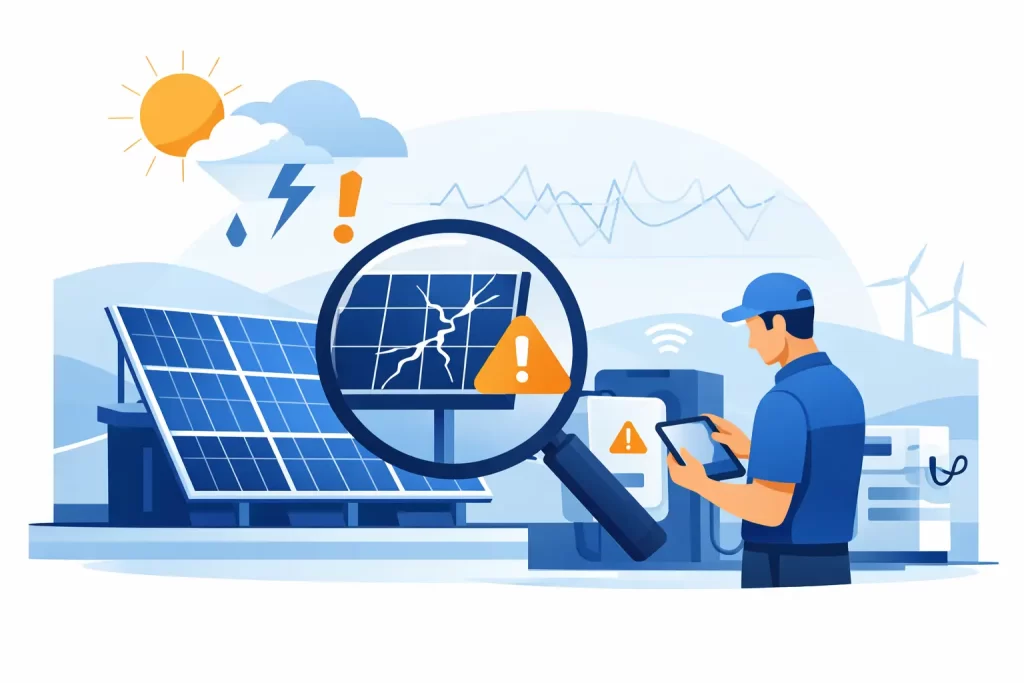
A solar PV system does not have to stop working completely to have a fault. A sharp fall in generation, an inverter warning light, repeated shut-downs or a battery that no longer behaves as expected can all point to a problem that needs proper investigation. A solar fault diagnosis service is designed to find the real cause, rather than guessing, resetting equipment and hoping the issue disappears.
For homeowners, that distinction matters. Solar faults can reduce the return from your system for months before they become obvious. Worse still, poorly installed cables, damaged roof penetrations, failed isolators or unsafe electrical connections are not jobs for a general handyman. They need to be checked by someone who understands how solar equipment, electrics and the roof itself work together.
What a solar fault diagnosis service should investigate
A proper diagnosis starts with the system’s history. Your installer or solar specialist should ask when the issue began, whether generation changed suddenly or gradually, what messages appear on the inverter, and whether work has been carried out on the roof, electrics or consumer unit since installation. A sudden drop often suggests an equipment, connection or grid-related issue. A gradual decline may point towards heavy soiling, shading, moss growth, bird nesting or panel deterioration.
The inverter is usually the first place to look, but it is not always the source of the fault. It records operating data and error codes, and may show whether the system is losing grid connection, receiving insufficient DC voltage from the array, overheating or detecting an insulation problem. Simply replacing an inverter without testing the rest of the system can be an expensive mistake.
A specialist will also inspect the DC cabling, connectors, isolators, earthing arrangements and AC connections. These are areas where rushed installation work can cause trouble years later. Loose terminals, water ingress, degraded connectors and incorrectly routed cable can lead to intermittent faults that are difficult to identify without methodical testing.
The roof matters too. Panels may be generating poorly because they are heavily shaded by nearby growth, contaminated by moss, or affected by pigeons nesting underneath. Bird debris can block drainage routes, create hygiene concerns and damage cabling over time. If panels need to be lifted or roof details inspected, the work must be handled carefully to avoid cracked tiles, damaged mounting equipment or compromised weatherproofing.
Common signs your solar system needs attention
The clearest warning is generation that is materially lower than expected for the season and weather. Comparing the same month year on year is more useful than comparing a bright June day with a cloudy November one. It is normal for output to vary, but a system should not quietly lose a large share of its performance without a reason.
Other signs deserve a prompt inspection:
- The inverter displays a recurring error code, red light or fault message.
- The system repeatedly switches off and on, particularly in strong sunshine.
- Your monitoring app has stopped reporting, shows no production or records unexplained gaps.
- A battery fails to charge, discharges unusually quickly or no longer follows its programmed settings.
- There is visible damage, loose cabling, staining around roof fixings, nesting material or excessive dirt beneath the panels.
Not every monitoring issue is a generation issue. Sometimes the solar system is working but the Wi-Fi connection, monitoring dongle or app account has failed. That still needs sorting, because without reliable data it is much harder to spot a genuine performance problem early.
Why fault finding is better than swapping parts
When an inverter shows a fault, the temptation is to assume the inverter has failed. Sometimes it has. Inverters have a finite working life and older units may be uneconomical to repair, especially where replacement parts are unavailable. But an inverter can also react to a fault elsewhere in the system.
For example, a low insulation resistance warning may be caused by moisture affecting a cable, connector or roof-mounted component. A grid over-voltage message may relate to the local supply voltage rather than the panels. Replacing the inverter in either case does not remove the underlying issue.
This is why a professional solar fault diagnosis service should test, inspect and interpret the evidence before recommending work. The right repair might be as straightforward as replacing a failed isolator or correcting a connection. Equally, it may uncover poor workmanship that needs more substantial remedial work. The answer depends on the age of the system, its original design, the condition of the roof and the quality of the previous installation.
Problems caused by poor installation work
Many homeowners only discover the quality of their original installation when something goes wrong. Panels may look tidy from the ground while cables are unsupported beneath the array, connectors are incompatible, roof tiles are incorrectly cut, or isolators have been fitted where water can enter them.
These issues should not be covered up with a quick fix. A poor roof detail can turn a solar problem into a leak. Damaged cable insulation can become a safety risk. Incorrect mounting or inadequate clearances can make future cleaning, bird proofing and maintenance more difficult than it should be.
A competent specialist will explain what has been found, what needs urgent attention and what can be planned. That is particularly valuable where a system has been installed by a company that is no longer trading. You need clear evidence and a practical route to restoring safe operation, not vague assurances.
Diagnostics, cleaning and pigeon proofing are different jobs
Heavy dirt, moss and bird fouling can reduce the light reaching the panels, but cleaning alone is not a universal answer to low generation. If a panel string is disconnected, a connector has failed or the inverter is shutting down, washing the panels will not restore output.
The same applies to pigeon proofing. Quality mesh protection helps prevent birds accessing the void beneath the panels, where they can nest, foul the roof and disturb cabling. It protects the system from a recurring problem, but it does not diagnose an existing electrical fault. The best approach is to inspect the array properly, remove nesting material safely where required, check for damage, then install suitable protection as part of the remedial work.
A good service provider will not sell every possible service for the sake of it. They will identify whether the priority is electrical repair, inverter replacement, roof remediation, cleaning, bird proofing or a combination of these.
What to expect from a professional visit
Before an appointment, gather any inverter messages, screenshots from your monitoring app and recent electricity bills if available. If you know the system age, installer name, panel make, inverter model or whether a battery has been added later, keep those details to hand. They can save time and help build an accurate picture.
During the visit, the engineer should work safely around live electrical equipment and roof-level components. Visual checks should be supported by appropriate electrical testing and review of system data where access is available. You should then receive a straightforward explanation of the findings, including whether the system is safe to operate and what work is recommended.
Be cautious of anyone who diagnoses a failed inverter from a photograph alone, promises a performance figure without inspecting the site, or suggests climbing onto the roof without the right access and safety arrangements. Solar repairs involve both electrical and roofing risks. Cheap work can become costly very quickly when it damages panels, tiles or the waterproofing beneath them.
Protecting the value of your solar investment
A well-maintained solar system should keep producing for many years, but it is not fit-and-forget equipment. Inverters age, roof environments change, birds find their way under panels, and earlier workmanship may eventually show its weaknesses. Regular checks become even more worthwhile if you rely on solar generation to charge a battery, run a heat pump or reduce high daytime electricity use.
Safer Solar UK approaches fault finding as a protection job as much as a repair job: identify the cause, make the system safe and recommend work that supports long-term performance. If your readings no longer make sense, do not wait for a complete shutdown. Acting while the evidence is still clear often makes the repair simpler, safer and less disruptive.