
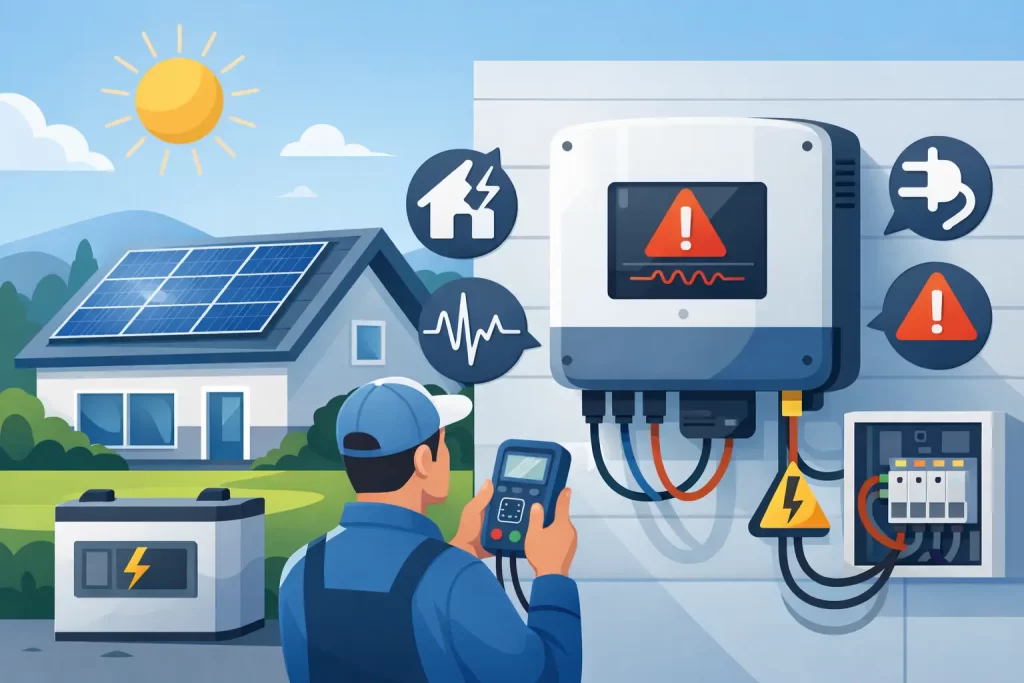
A solar inverter that has stopped generating is not always a failed inverter. A proper faulty inverter diagnosis separates a genuine equipment failure from common issues such as high grid voltage, damaged cabling, failed DC isolators, shaded panels or a system that has simply lost communication. That matters because replacing an inverter before finding the root cause can be an expensive mistake.
Your inverter is the working heart of a solar PV system. It converts the direct current produced by the panels into usable alternating current for your home and the grid. When it trips, displays a warning or produces less than expected, the loss is felt quickly in higher electricity bills and missed export income. The answer is not to reset it repeatedly and hope for the best. It is to inspect the system safely and methodically.
Signs You May Need a Faulty Inverter Diagnosis
The clearest warning is a red fault light, an error code or a screen showing no generation during daylight. Some faults are obvious, but not all. An inverter may appear normal while repeatedly disconnecting from the grid, limiting output or producing well below what the array should deliver.
A sudden drop in generation compared with the same season last year deserves attention, particularly if nearby properties are generating normally. Monitoring apps can also reveal repeated gaps in production, unusually low output from one string, or a system that goes offline at similar times each day.
Heat, unusual fan noise, a burning smell, water marks around the inverter or signs of corrosion are more urgent. Do not remove covers or attempt internal repairs. Inverters contain dangerous DC and AC voltages, and solar panels can continue to generate whenever there is daylight. If there is overheating, damage or an electrical smell, leave the system alone and arrange a professional inspection promptly.
What Causes Inverter Faults?
An inverter can fail through age and component wear, particularly where it has spent years in a hot loft, unventilated cupboard or exposed external location. Capacitors, cooling fans and internal electronics do not last forever. However, age alone does not prove the inverter is at fault.
Grid voltage is a frequent cause of avoidable call-outs. When local voltage rises above permitted limits, the inverter protects itself by disconnecting. This commonly happens around midday on bright days, when many solar systems in the area are exporting power. The display may show a grid overvoltage message, and the inverter may restart once voltage falls. Replacing the inverter without testing supply voltage will not solve that problem.
Problems on the DC side can look like inverter failure too. Loose connectors, water ingress, damaged cables, failed optimisers, faulty panel junction boxes and insulation faults can all cause shutdowns or reduced yield. Bird activity beneath panels is another overlooked risk. Nesting material, chewed wiring and accumulated debris can affect cables and create fire or electrical safety concerns.
Poor previous installation work is often part of the story. Incorrectly routed cables, unsuitable isolators, inadequate weatherproofing and poorly matched equipment may work for a time before causing intermittent faults. A proper inspection should assess the installation as a complete system, not just the box on the wall.
How a Professional Inverter Diagnosis Should Work
A reliable diagnosis begins with evidence. The engineer should review the inverter display, historic monitoring data and fault logs, then compare current generation with the system size, orientation, shading and time of year. A 4 kW system will not always produce 4 kW, especially in winter or during cloud cover, but it should behave consistently with its design and local conditions.
The next stage is a visual inspection of the inverter, isolators, consumer unit connections and accessible cabling. This can reveal overheating, moisture ingress, degraded seals, UV-damaged cables or poor workmanship before testing even begins. The mounting location matters as well. An inverter packed into a hot space or covered by stored items cannot cool correctly and may derate its output to protect itself.
Electrical tests then establish whether the inverter is receiving the correct DC input from the array and whether the AC grid supply is within acceptable operating limits. Depending on the system and symptoms, this may include string voltage checks, polarity confirmation, insulation resistance testing, earth continuity testing and voltage logging. These tests must be carried out by a competent solar electrician using suitable equipment and safe isolation procedures.
If the inverter has a communications fault, the system may still be generating even though the app says it is offline. Wi-Fi changes, router replacements, signal weakness and account configuration issues are irritating but very different from a generation fault. An engineer should confirm actual output at the inverter before treating a missing app reading as failed solar production.
Why Error Codes Are Only a Starting Point
Inverter error codes are useful, but they are not a final diagnosis. A message about insulation resistance, for example, identifies a condition the inverter has detected. It does not identify whether the cause is a panel, a connector, damaged cable, water ingress or the inverter’s own sensing circuit.
Likewise, a grid fault code may point to voltage, frequency or connection problems outside the inverter. The right response is to test, record and trace the fault, not guess. A quality diagnosis explains what has been checked, what has been found and why the recommended repair is necessary.
When Repair Makes Sense and When Replacement Is Better
A failed cooling fan, worn display, communication module or external isolator may be repairable where parts are available and the inverter remains in good condition. A wiring or grid-voltage issue may need no inverter replacement at all. These are the outcomes homeowners want to establish before spending money on new equipment.
Replacement becomes more sensible when an older inverter has suffered a major internal failure, is out of warranty, has recurring faults or no longer has manufacturer support. It can also be the right time to consider a system upgrade. If you are adding battery storage, expanding the array or seeking better monitoring, an appropriate hybrid inverter may provide a better long-term route than like-for-like replacement.
There are trade-offs. A straightforward replacement can be less costly upfront, but may limit future battery options. A larger upgrade may require changes to the existing system, notification work and careful checks that the panels, cabling and grid connection are suitable. The best option depends on the system’s condition, your electricity use and whether you want to store surplus solar rather than export it.
What Homeowners Can Check Safely
You can note the inverter’s status light, screen message and time of any fault. Check whether the AC and DC isolators appear to be in their usual positions, without operating them unnecessarily. Review your monitoring app for a pattern, and take clear photographs of any error code, water damage or visible external cable damage.
Do not open inverter covers, pull apart solar connectors, access the roof or try to dry out electrical equipment. Avoid repeated resets. A reset can sometimes clear a temporary grid interruption, but frequent restarting may hide a recurring defect and does not repair damaged wiring, overheating or water ingress.
Keep the area around the inverter clear and ventilated. If panels are heavily soiled, surrounded by overhanging growth or affected by pigeons, deal with those issues professionally as part of protecting the whole installation. Cleaning alone will not fix an electrical fault, but roof contamination and nesting can contribute to reduced performance and damage over time.
Protecting the System After the Fault Is Found
Once the underlying issue is corrected, record the repair and keep copies of test results, warranty details and commissioning information. Check production periodically against the same month in previous years rather than reacting to one dull day. A sensible maintenance plan also includes looking for vegetation growth, bird activity, loose external fittings and changes to the inverter’s operating environment.
For systems with poor prior workmanship, a wider health check is often worthwhile. Safer Solar UK Ltd regularly finds that the visible fault is only one part of the problem. Correcting unsafe cable routes, degraded isolators or inadequate pigeon protection can protect both output and the roof beneath the array.
Your solar system should quietly earn its place on the roof. If it is repeatedly tripping, underperforming or displaying faults, treat that as a signal to get clear evidence from a qualified specialist – not as a reason to gamble on a replacement inverter.