
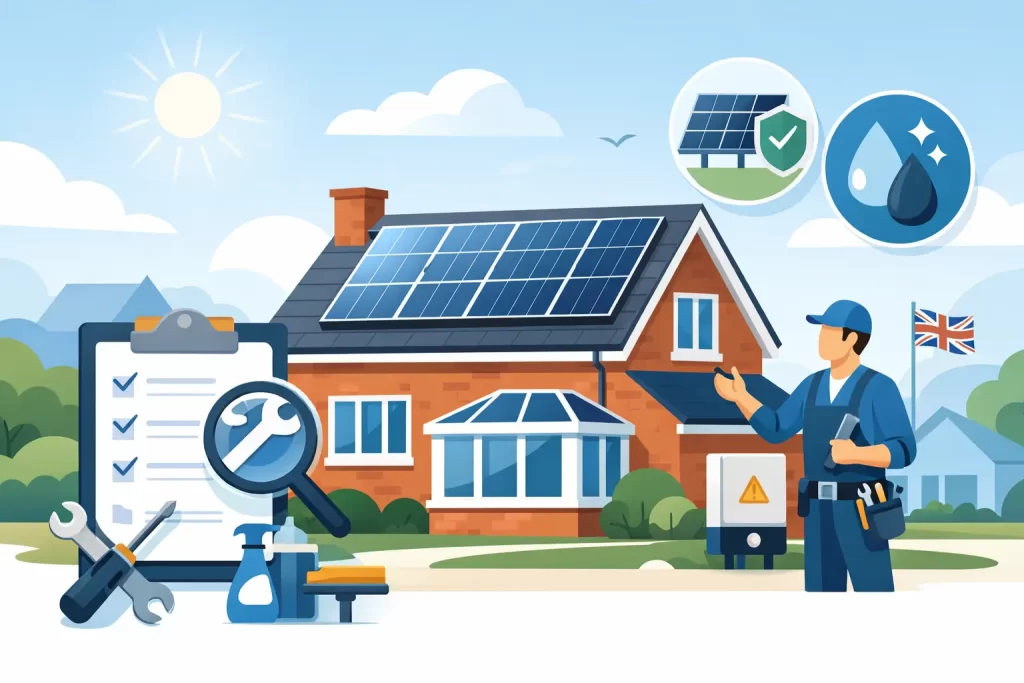
Your solar panels should not become a forgotten part of the roof. A good residential solar aftercare guide starts with one simple rule: keep an eye on performance, but do not put yourself at risk trying to fix a problem from a ladder. Solar PV is low maintenance, not no-maintenance. Dirt, bird activity, inverter faults, damaged cabling and poor previous workmanship can all reduce generation or create a safety issue.
For most homeowners, aftercare is about protecting the investment already sitting on the roof. That means knowing what normal performance looks like, acting early when something changes, and using a solar specialist rather than a general cleaner or handyman when work is needed.
What normal solar performance looks like
Generation changes throughout the year. A system that produces strongly in May and June will naturally produce far less in December, even when every component is working correctly. Cloud cover, temperature, shading and the angle of the sun all affect the figures shown on your monitoring app or inverter display.
The warning sign is not simply a lower number on a dull day. It is a sustained drop compared with similar weather and the same period in previous years, or a sudden change where output falls sharply without an obvious reason. If one string of panels has stopped contributing, the total may be noticeably lower while the system still appears to be operating.
Check your monitoring monthly and keep an occasional record of daily or monthly generation. You do not need to watch it obsessively, but a basic comparison makes it far easier to spot a fault before months of lost production pass unnoticed.
Your residential solar aftercare guide: the essential checks
A visual check from ground level every few months is usually enough for the homeowner. Look for new shadows from growing trees, obvious bird nests beneath the panels, heavy moss on the roof, staining on panel glass, loose-looking mesh, or anything that appears to have shifted after high winds.
Inside, check that the inverter is powered and displaying its normal operating status during daylight hours. A red warning light, fault code, repeated shutdown or a blank screen needs investigating. Take a photograph of any code before resetting anything. Fault information is useful to the engineer and can prevent a wasted visit.
Also look at your electricity bill and smart meter data if available. Solar generation and household consumption are different figures, so do not assume your panels have failed simply because you are importing electricity. The home may be using more power at the time than the system is producing. A battery can make this picture more complicated, particularly if its settings have changed or it is charging from the grid at unexpected times.
Do not ignore inverter warnings
The inverter is the working heart of a solar PV system. It converts the DC electricity produced by the panels into usable AC electricity for the home. Inverters do not last forever, and older units can begin to fail well before the panels themselves need replacing.
Common symptoms include intermittent production, isolation faults, earth faults, grid-related errors and a unit that is unusually noisy or hot. Some messages relate to high local grid voltage rather than a failed inverter. That still needs a proper diagnosis, because repeatedly shutting down at peak generation wastes the very electricity your system should be producing.
Do not repeatedly switch an inverter off and on in the hope that the problem disappears. If an error returns, arrange a professional inspection. The cause may be straightforward, but it may also involve cable damage, connections, isolators, the inverter itself or the electrical supply.
Keep panels clean, but avoid risky cleaning
Rain removes light surface dust, so not every system needs regular panel cleaning. However, panels affected by bird droppings, moss debris, traffic grime, salt exposure or overhanging vegetation can lose output. The problem is often localised: a stubborn patch of droppings can shade part of a panel and have a greater effect than homeowners expect.
Do not climb onto the roof with a domestic pressure washer, abrasive brush or strong chemical cleaner. Pressure can force water into areas it does not belong, damage seals, disturb fixings and create a serious fall risk. Harsh products can mark glass or frames, while untrained access can crack tiles and turn a cleaning job into a roof repair.
Professional solar panel cleaning should be carried out with suitable equipment, purified water where appropriate, and an understanding of panel frames, roof access and electrical safety. It is also an opportunity to identify cracked tiles, damaged cable clips, loose mounting components or evidence of birds getting underneath the array.
Pigeons are more than a nuisance
Pigeons nesting beneath solar panels are one of the most common aftercare problems on UK homes. The space is sheltered, warm and hard for predators to reach. Once birds establish a nesting area, the issue rarely improves on its own.
Droppings can stain panels and gutters, while nesting material may block drainage routes or create a fire concern around electrical equipment. The noise is unpleasant, and accumulated droppings carry hygiene risks. More importantly, birds can disturb cables and make future maintenance difficult.
The right answer is not a loose strip of cheap mesh pushed under the panel edge. Poorly fitted bird proofing can leave gaps, damage the panel frame, look untidy and fail in the first bad weather. Proper pigeon proofing should be securely fitted around the perimeter without drilling into panels or compromising the solar installation. Existing nests and debris should be dealt with safely before the barrier is installed.
Protect the roof as well as the panels
A solar system is attached to a roof, not floating above it. That sounds obvious, but it is often missed when work is carried out by people who understand cleaning or electrics but not both roofing and solar installation.
Pay attention to slipped tiles, cracked slates, failed flashing, staining in the loft and signs of water ingress after storms. A leak may not be caused by the solar system, but it must be assessed properly. Removing panels simply to investigate a roof issue requires careful isolation, safe handling, correct reinstatement and a final electrical check.
If you are having roof work done, tell the contractor that you have solar PV before work begins. Scaffolding, replacement tiles, chimney work and loft alterations can all affect cables, mounting hardware or access routes. The cheapest quote is not always the cheapest outcome if panels have to be removed and refitted after avoidable damage.
When an upgrade makes more sense than a repair
Aftercare is not only about maintaining what you have. A well-performing older solar array may be a good candidate for a battery, replacement inverter or carefully designed upgrade. The best option depends on your existing equipment, roof space, electricity use, export arrangement and the condition of the original installation.
Battery storage can help households use more of their own generated electricity in the evening, but it is not automatically the right choice for every home. A household that is empty through the day, has high evening demand and produces regular surplus power may see more benefit than one that already uses most of its generation as it is produced. Tariffs, battery capacity and charging controls matter just as much as the battery itself.
An inverter replacement can also provide improved monitoring and better compatibility with modern storage. Before replacing anything, have the system tested. A weak generation figure may be caused by soiling, shading, a failed optimiser, an isolation issue or a single faulty panel rather than the inverter.
Keep your paperwork and system details together
Store installation certificates, warranties, commissioning records, inverter details, monitoring logins and any maintenance reports in one place. If your system was installed under the Feed-in Tariff, retain the documents that support meter readings and registration. These records are valuable when selling the property, making a warranty claim or diagnosing a future fault.
It is also sensible to note the make and model of the inverter, battery and panels, along with the location of isolators and consumer unit labels. You do not need to work on these components yourself. The information simply helps a qualified engineer understand the system before attending.
Call a specialist when performance or safety changes
A solar inspection is worthwhile when output has dropped unexpectedly, the inverter reports faults, birds are nesting beneath panels, roof work is planned, or the installation has never been checked since it was fitted. It is particularly valuable where the original installer is no longer trading or the workmanship has always looked questionable.
Safer Solar UK approaches aftercare as solar and roofing work together, not as a quick clean or a cosmetic patch. Proper fault finding means identifying the cause, explaining the options and carrying out work that protects both the electrical system and the roof beneath it.
Your system does not need constant attention. It does need sensible oversight. A few minutes spent checking generation, a prompt response to warning signs and professional help when access or electrics are involved will do more for long-term performance than any shortcut ever will.