
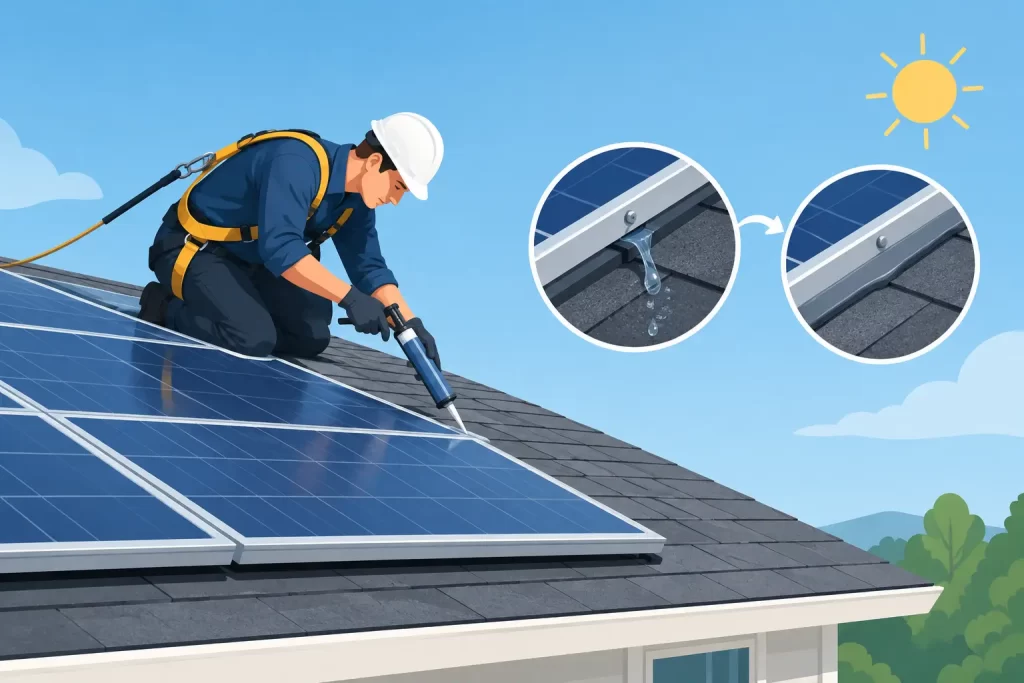
Water appearing in a loft beneath solar panels is not a job for sealant and guesswork. This solar roof leak repair example shows why the cause must be traced properly, the PV system made safe, and the roof reinstated with materials that will last as long as the repair needs to.
A homeowner noticed a brown water mark on the felt lining below the rear roof slope after several days of driving rain. Their solar array was still generating, so the first assumption was that the panels could not be involved. That assumption is common, and often wrong. A roof can leak near a solar installation without a panel itself being at fault, but the mounting system, cable route, damaged tiles and poor previous workmanship all need checking.
The Solar Roof Leak Repair Example: Finding the Real Fault
The stain was visible from inside the loft, but it was not directly below the water entry point. Rainwater can run along battens, roofing felt and timbers before it becomes visible. Treating the stain as the source of the leak would have led to the wrong repair.
A proper inspection started from the roof exterior. The array was checked for obvious issues: cracked tiles around the mounting points, lifted slates, displaced flashing, loose cables and signs that fixings had been forced through unsuitable areas of the roof. The installer also looked beneath the lower edge of the panels, where defects are frequently hidden from view.
In this case, two tiles had been cracked beside a mounting bracket. The original installer had cut the tiles poorly so they sat under pressure against the bracket. Over time, thermal movement and foot traffic during a previous panel clean had widened the cracks. Water was being driven beneath the broken tiles in strong winds, then travelling down the underlay before reaching the loft.
The roof hooks themselves had been installed into the rafters and were not the source of the leak. That distinction matters. Removing or sealing around a sound fixing would not solve the problem and could create a new one. The fault lay in the roof covering around it.
Why a Quick Sealant Fix Is Usually the Wrong Answer
A tube of roofing mastic can look like the cheapest answer when water is coming in. On a solar roof, it is usually a short-term patch that conceals the real defect. Sealant can trap moisture, fail under UV exposure, or make later access more difficult. It can also be applied over broken tiles, damaged underlay or incorrectly detailed brackets without restoring the roof’s weathering layer.
There are exceptions. A compatible sealant may form part of a carefully specified flashing or cable-entry repair. It should not be used as a substitute for replacing damaged materials or correcting poor mechanical installation.
The same applies to expanding foam, silicone around panel frames, or pushing loose tiles back into place without checking why they moved. These shortcuts may stop a drip temporarily, but they do not address wind uplift, load distribution or the condition of the roof beneath the array.
Making the Array Safe Before Roof Work Begins
Solar panels produce electricity whenever daylight reaches them. That means roof repairs near an array must be planned around electrical safety as well as roofing practice.
Before work began, the system was isolated using the correct shutdown procedure. The inverter and AC supply were dealt with appropriately, and the team treated the DC cabling with care throughout. Panels were not stood on, leaned against or used as a working platform. Their glass, frames, connectors and cables can all be damaged by careless access.
For this repair, only the affected section of the array needed to be lifted. The panels were disconnected and removed in a controlled manner, with the mounting components retained for inspection. This gave clear access to the cracked tiles and allowed the roof area beneath the panels to be checked properly rather than repaired blind.
Whether panels need removing depends on the location of the fault. A leak at an exposed cable gland or along the perimeter may be accessible without disturbing the array. A defect around a central hook, valley, flashing detail or broken tile beneath the panels often requires partial removal. The right decision is based on access and the extent of the problem, not on what is quickest on the day.
Repairing the Roof, Not Just the Symptom
With the panels safely out of the way, the damaged tiles were removed and replaced with matching, correctly sized units. The underlay was inspected for tears and water damage. Where the material had been compromised, it was repaired so the secondary weather protection was continuous.
The mounting bracket was then reassessed. It was secure, but the surrounding tiles needed to be cut and dressed correctly to allow clearance around the hook. Roof tiles should not be wedged hard against mounting hardware. They need to sit naturally, shed water correctly and avoid pressure points that can lead to cracking.
The roof was also checked for other warning signs, including fractured tile corners, slipped tiles, degraded mortar, damaged flashing and debris collecting below the array. Moss, leaves and pigeon nesting material can hold water against the roof and block drainage routes. They are not always the immediate cause of a leak, but leaving them in place can shorten the life of a repaired area.
Once the roof covering was reinstated, the mounting system was refitted, the panels were secured, and the electrical connections were checked before the system was returned to service. Generation was then monitored to confirm that the repair had not introduced an inverter fault, communication issue or string imbalance.
What This Repair Protects
The visible benefit is a dry loft. The bigger benefit is preventing a minor defect from becoming expensive structural damage. Persistent water ingress can soak insulation, stain ceilings, encourage mould and eventually affect roof timbers. If water reaches electrical equipment or cable connections, the risk becomes more serious.
A correctly completed repair also protects the solar investment. Panels that are removed and refitted badly can suffer damaged connectors, pinched cables, loose clamps or incorrect earthing arrangements. A roofer who does not understand solar hardware may repair the tiles but leave the PV system compromised. Equally, a solar-only contractor may understand the array but fail to recognise poor roof detailing.
This is why solar roof leak work should be approached as one combined job. The roof has to remain weatherproof, and the solar system has to remain mechanically secure and electrically safe. One cannot be sacrificed for the other.
Signs You Should Arrange an Inspection
Do not wait for water to drip through a bedroom ceiling. A loft check after heavy rain can identify trouble earlier, particularly where an array was fitted years ago or by a company that is no longer trading.
Arrange a specialist inspection if you see water staining near the roof slope, damp insulation, cracked tiles around the array, loose panels, exposed cables, bird debris under the panels, or a sudden drop in generation after roofing work. If your inverter is showing a fault at the same time as water ingress, switch off only in line with its instructions and seek professional advice rather than handling DC connections yourself.
It is also sensible to inspect a solar roof after storm damage, chimney work, repointing or any contractor access near the panels. Even a single misplaced foot can crack a tile that is hidden beneath the array.
Choosing the Right Repair Team
Ask who will assess both the roof and the PV system, whether the array will be isolated and tested, and what materials will be used to reinstate the roof. A clear answer is a good sign. Vague promises to “seal it up” are not.
The repair should identify the cause, not merely the place where water appeared. You should also expect careful panel handling, secure refitting, and a check that the system is operating correctly afterwards. Safer Solar UK approaches remedial work with that combined roofing and solar focus because correcting poor installation work properly is cheaper than repeatedly repairing its symptoms.
A leak beneath solar panels does not automatically mean the array must be replaced. In many cases, targeted roof repairs and correct refitting will restore protection and performance. The key is acting while the defect is still localised, before a cracked tile becomes a damp roof structure and a far larger bill.