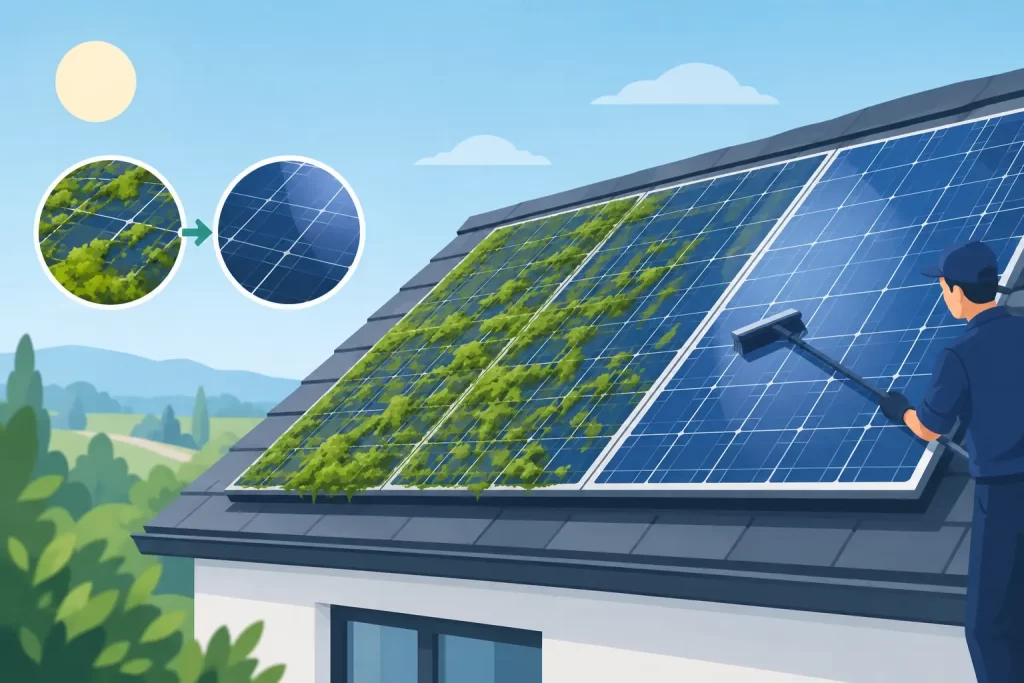
A green edge appearing beneath a panel may look like a minor roof-cleaning issue. It is not always minor. Does moss affect solar panels? Yes – particularly when it builds up around the frame, beneath the lower edge of an array, or alongside other contamination such as leaves, lichen and bird debris.
Moss rarely spreads evenly across the glass in the way people imagine. More often, it establishes itself where shade, moisture and debris collect: at panel edges, in roof valleys, around mounting rails and under panels with limited airflow. Left alone, that growth can contribute to lost generation, blocked drainage and a roof that becomes harder and less safe to maintain.
Does moss affect solar panels directly?
Moss affects solar panels most directly when it shades the active surface. Solar PV panels need unobstructed daylight. Even a relatively small shaded area can reduce the output of a panel, and on some older string systems it can influence the performance of other panels in the same string.
A thin layer of moss around the aluminium frame may have little immediate effect on generation. That is the honest answer. But moss does not usually stay as a neat, harmless border. As it retains moisture and catches wind-blown dirt, it creates a base for more debris. Leaves settle, soil forms, and the lower edge of the panel becomes a damp collection point.
The impact depends on the position of the array, roof pitch, nearby trees and how long the growth has been present. A south-facing roof with open exposure may dry quickly and show only light edge growth. A shaded roof beneath overhanging branches can develop persistent contamination much faster.
Shading is a performance issue, not just a cosmetic one
Panels work hardest when every cell receives clear, consistent light. Moss casting irregular shade across the lower cells can reduce output at the time you expect the system to be producing well. If your monitoring shows unexplained dips in generation on clear days, visible growth is worth investigating.
Do not assume moss is the only cause. A faulty optimiser, inverter issue, damaged connector or a poorly designed array can also cause underperformance. Proper diagnosis matters. Cleaning a system that has an electrical fault may make it look better while leaving the real problem untouched.
The bigger concern is often the roof beneath the panels
Moss holds water. On a tiled roof, repeated dampness can encourage further biological growth and keep the roof surface wetter for longer after rain. Around solar panels, that moisture can become trapped where access is limited and sunlight is reduced.
This does not mean moss automatically causes a roof leak. Sound tiles, correctly installed flashing and a properly fitted mounting system should manage normal weather exposure. The concern is cumulative: a roof covered in moss is harder to inspect, drainage routes can become obstructed, and small defects are easier to miss until water finds a route into the property.
Growth beneath an array also makes future maintenance more difficult. An engineer needs a stable, visible roof surface to inspect brackets, tiles, cable routes and panel condition safely. Thick moss can conceal cracked tiles or slipped components, especially where a previous installer has cut corners.
Moss, leaves and pigeons often arrive together
Moss around panels is frequently part of a wider contamination problem. Leaves and roof grit gather at the lower edge, while pigeons may use the sheltered gap beneath the array for nesting. Their nesting material adds more debris, blocks airflow and creates a damp environment where moss thrives.
Pigeon droppings are a separate issue. They can shade panels, leave stubborn residue and create an unpleasant hygiene risk around gutters and access points. Nesting birds may also damage cabling or dislodge tiles as they move beneath the system.
Where birds are present, cleaning alone is rarely a lasting answer. The area needs to be cleared safely, the roof checked for damage and the array protected with correctly fitted, durable bird-proofing. Cheap mesh fixed carelessly to panels or roof tiles can create a new problem rather than solve the existing one.
Should you remove moss yourself?
For most homeowners, no. Solar panels are electrical equipment installed at height, often on pitched roofs. The risk is not limited to falling. Incorrect cleaning can scratch glass, damage seals, disturb cables, crack tiles or force water into places it should not be.
Avoid pressure washing panels, blasting beneath them or scraping growth away with metal tools. High-pressure water can damage roof finishes and drive water under tiles. Harsh chemicals are equally poor practice: they can leave residues on the glass, affect surrounding materials and wash into gutters and gardens.
Walking on a roof without the correct training and equipment is another common mistake. A broken tile may not become obvious until the next period of heavy rain, and replacing it can require lifting panels or dismantling parts of the array. The apparent saving from a DIY clean can disappear very quickly.
What professional moss removal should involve
A proper solar cleaning and maintenance visit is not simply a quick wash. The method should suit the roof, panel condition and extent of growth. First, the array and surrounding roof should be assessed for visible faults, loose fittings, cracked tiles, nesting activity and drainage issues.
Loose moss and debris can then be removed using controlled, appropriate methods, without aggressive pressure or unsuitable chemicals. Panels should be cleaned with suitable equipment and purified water where required, leaving no detergent film that can attract more dirt. The goal is clear glass and clear drainage, not a rushed cosmetic finish.
If growth has reached beneath the panels, access may need to be managed more carefully. This is where a solar specialist with roofing knowledge matters. They can identify whether debris has affected tiles, mounting points or cabling, rather than treating the array as an obstacle to clean around.
At Safer Solar UK, this sort of work is approached as system aftercare, not generic exterior cleaning. Generation, roof condition and safe access all need attention if the job is to protect the investment properly.
When moss warrants a closer inspection
Light growth at the edge of a panel does not always require urgent work. However, it is sensible to arrange an inspection when moss is visibly spreading onto the glass, gathering beneath the array, or returning quickly after cleaning.
You should also take action if your inverter or monitoring app shows lower-than-expected output, gutters overflow near the array, tiles appear displaced, or pigeons are entering beneath the panels. These signs may be connected, and dealing with them early is normally less disruptive than waiting for an electrical fault or roof leak.
Seasonal checks are useful, particularly after autumn leaf fall and before the brighter spring months. Homeowners with trees close to the property, north-facing roof sections or shaded roofs may need more frequent attention. There is no fixed cleaning schedule that suits every system. The right interval depends on the local environment and what an inspection reveals.
Protecting solar output for the long term
The best approach is prevention rather than repeated emergency cleaning. Keep nearby branches appropriately managed, monitor generation so changes are noticed early, and do not allow gutters and roof valleys to become packed with organic debris. If birds are nesting under the array, deal with the access point as well as the mess they leave behind.
Most importantly, treat unexplained underperformance as a fault-finding question, not only a cleaning question. Moss may be part of the picture, but it may not be the whole answer. A professional inspection can distinguish surface contamination from inverter faults, damaged components, shading from vegetation or poor previous workmanship.
A clean panel is useful. A clean, secure panel on a sound roof – producing as it should – is the result worth protecting.