
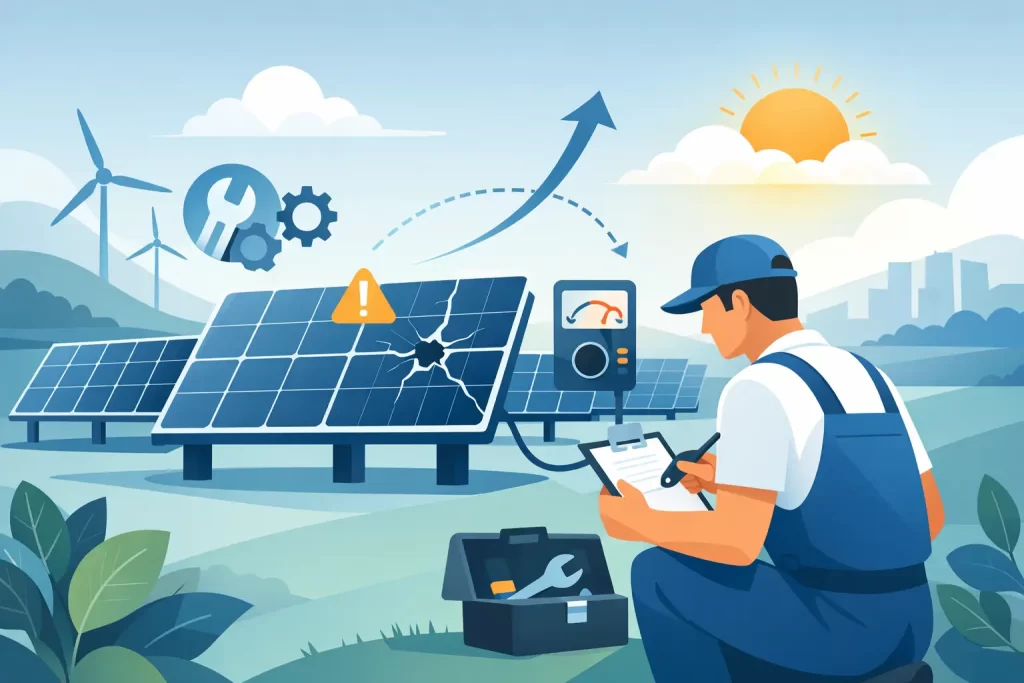
A solar system that once performed well but now produces disappointing figures is not something to ignore. The best fixes for underperforming solar begin with finding the actual cause, rather than paying for a quick clean or replacing parts on a guess. Output can fall for perfectly normal seasonal reasons, but sudden or persistent losses usually point to a problem that deserves a proper inspection.
For homeowners, the cost is not just a lower number on an app. It can mean buying more electricity from the grid, losing export income and missing the value of a battery that is no longer being charged properly. A qualified solar specialist should assess the panels, roof, inverter, cables and monitoring data together. Solar PV is an electrical system fixed to your roof, so shortcuts can create safety issues as well as poor performance.
Start by proving there is a performance problem
Before arranging work, compare generation against the same month in previous years, not against a bright day you remember from last summer. Solar output naturally drops during shorter, cloudier winter days. Temperature, roof orientation, panel angle and local weather all affect the figure.
A meaningful decline is different. If generation has fallen sharply compared with the same period last year, if one string is producing far less than another, or if the inverter is regularly reporting faults, an investigation is justified. Monitoring portals can be useful, but they do not tell the whole story. An app may show that output is low without identifying whether the cause is shade, a failed panel, poor connections, grid voltage or a dirty array.
It is also worth checking that the apparent problem is generation rather than household consumption. A new heat pump, electric vehicle, immersion heater or change in family routine can make it feel as though solar is doing less, even where generation is unchanged. Meter readings and inverter production data help separate those two issues.
Best fixes for underperforming solar systems
Deal with shading before it becomes a permanent loss
Shade is one of the most common reasons for poor output. A tree that was harmless when the system was installed can become a serious obstruction within a few years. Chimneys, dormers, neighbouring extensions and satellite dishes can also cast a moving shadow across part of an array.
Even small areas of shade can have an outsized effect, particularly on older systems where panels are arranged in a single string. The right fix depends on what is causing it. Responsible tree management may solve the issue, while a changed roof layout could require panel reconfiguration or optimisation equipment. It is not sensible to assume that adding optimisers will cure every shading problem. They can be valuable in the right design, but should follow a survey and string-level diagnosis.
Have panels cleaned properly, not aggressively
A light layer of ordinary dust is rarely a disaster in the UK. However, moss, lichen, pollen, leaf debris, traffic grime and bird mess can create stubborn soiling that blocks light and retains moisture. Panels beneath overhanging trees and arrays close to fields or busy roads often need more attention than clean, open roofs.
Professional solar panel cleaning uses suitable equipment, purified water and safe roof access. Abrasive pads, harsh chemicals and pressure washers are not a solution. They can damage the glass surface, seals, frames or roof coverings, while working at height without the right equipment puts people at real risk.
Cleaning is worthwhile when contamination is visible and verified, but it should not be sold as a cure-all. If clean panels still produce poorly, the fault may be electrical, structural or related to shading. A competent service checks for those issues rather than treating the symptom alone.
Stop pigeons nesting under the panels
Pigeons nesting beneath solar panels cause more than noise. Nesting material, feathers and droppings block drainage routes, attract insects and create an unhygienic mess around gutters and eaves. Birds can also disturb cables and leave heavy contamination on the lower edges of the array.
The durable answer is purpose-made pigeon proofing fitted around the panel perimeter. It needs to be secured correctly without drilling through panels, trapping birds or using flimsy mesh that will fail after a season or two. The array should be cleared and inspected first, with nesting material removed safely and the roof area cleaned where required.
Cheap plastic clips and poorly fitted mesh often become another problem for a specialist to correct. Proper materials and a neat installation protect the panels while preserving access for future maintenance.
Investigate inverter faults and electrical connections
The inverter is the working heart of a solar PV system. If it is displaying warning lights, error codes, repeated shutdowns or unusually low output, do not keep resetting it and hope for the best. Some faults are temporary grid events, but repeated messages can indicate a failing inverter, insulation resistance issue, DC connection fault or a problem with the supply.
A qualified engineer can test the system safely, inspect isolators and connections, review inverter logs and establish whether the fault sits on the DC or AC side. Signs such as damaged isolator boxes, cracked cable glands, water ingress or heat damage require prompt attention. These are not jobs for a general handyman.
Older inverters commonly approach the end of their useful service life before the panels do. Replacing a failed unit can restore generation and may also give homeowners clearer monitoring, better compatibility with battery storage and improved control over export. The best replacement is not always the largest or cheapest model. It must be correctly sized for the array, installed to current requirements and configured for the property’s supply.
Check for poor installation work and roof defects
Some underperforming systems were compromised from day one. Incorrect string design, undersized equipment, unsupported cables, badly positioned panels and unsuitable roof fixings can all reduce output or create future failures. Water ingress around roof penetrations is particularly serious. A solar repair should never disregard the condition of the roof beneath the panels.
This is where solar knowledge and roofing competence must work together. A proper inspection may involve lifting selected panels, checking hooks and rails, examining tiles or slates, tracing cables and assessing whether the original installation meets expected workmanship standards. The remedy could be as straightforward as securing a cable, or as involved as correcting mounting work, replacing damaged components and making the roof watertight.
Safer Solar UK approaches remedial work with that wider view: restore the system’s performance without creating a second problem in the roof, electrics or warranty position.
Rule out high grid voltage and export limitations
Not every solar fault is on the roof. Inverters are designed to disconnect or reduce output when the local grid voltage rises beyond permitted limits. This often happens around midday on sunny days, especially in areas with many PV systems. Your inverter may show messages relating to grid overvoltage, or its generation graph may repeatedly flatten or stop when the sun is strongest.
The solution starts with testing and evidence. An engineer can review inverter events and take relevant electrical measurements. Depending on the findings, the system settings, cable arrangement or distribution network may need attention. Do not alter inverter parameters yourself. Incorrect settings can be unsafe and may breach network requirements.
Export limitation can also be intentional, particularly where a system was installed with a cap on export. If household demand has changed or a battery has been added, it may be possible to review how the system is configured. Any changes should be designed around the approved connection arrangements, not guessed at from an app.
When a battery or upgrade makes sense
A battery will not fix dirty panels, shade or a failed inverter. What it can do is help you use more of the electricity a healthy array generates, rather than exporting it at a lower rate while buying power back in the evening. It is most useful where daytime production regularly exceeds household use and there is meaningful evening demand.
For an ageing system, an inverter replacement and battery upgrade can be considered together. That may reduce duplicated labour and improve control of generation, storage and export. However, the numbers depend on your generation profile, tariff, household consumption and the condition of the existing PV system. Fix the underlying performance issue first, then decide whether storage is a sensible next step.
Do not risk a DIY repair on the roof
It is reasonable to check your generation data, look for obvious new shading from ground level and photograph visible bird activity. Beyond that, leave electrical tests, roof access and panel removal to trained professionals. Solar panels can produce DC electricity whenever they are exposed to daylight, and a damaged cable or connector may not look dangerous until it overheats or fails.
If output has dropped, keep a note of when it started, any inverter messages and whether the fall is constant or only happens at certain times of day. That information gives an engineer a better starting point and helps avoid spending money on the wrong remedy.
Your solar system should be a dependable part of your home, not a source of uncertainty on the roof. A careful diagnosis and a properly delivered repair can protect the property, recover lost generation and give you confidence that every bright day is working harder for you.