A search for reset solar isolator usually starts with an unwelcome sight: your inverter has stopped generating, an alert is showing on the app, or the display has gone blank. The key point is that a solar isolator is not a reset button. It is a safety switch designed to isolate electrical supplies. Turning it off and on without understanding the fault can leave the system offline, damage equipment or expose you to dangerous DC voltage.
For a straightforward communication issue or a grid-related trip, a controlled restart may bring the inverter back online. For a burnt isolator, water ingress, repeated tripping or an inverter fault, it will not. This is where proper diagnosis matters more than repeated switching.
What a solar isolator actually does
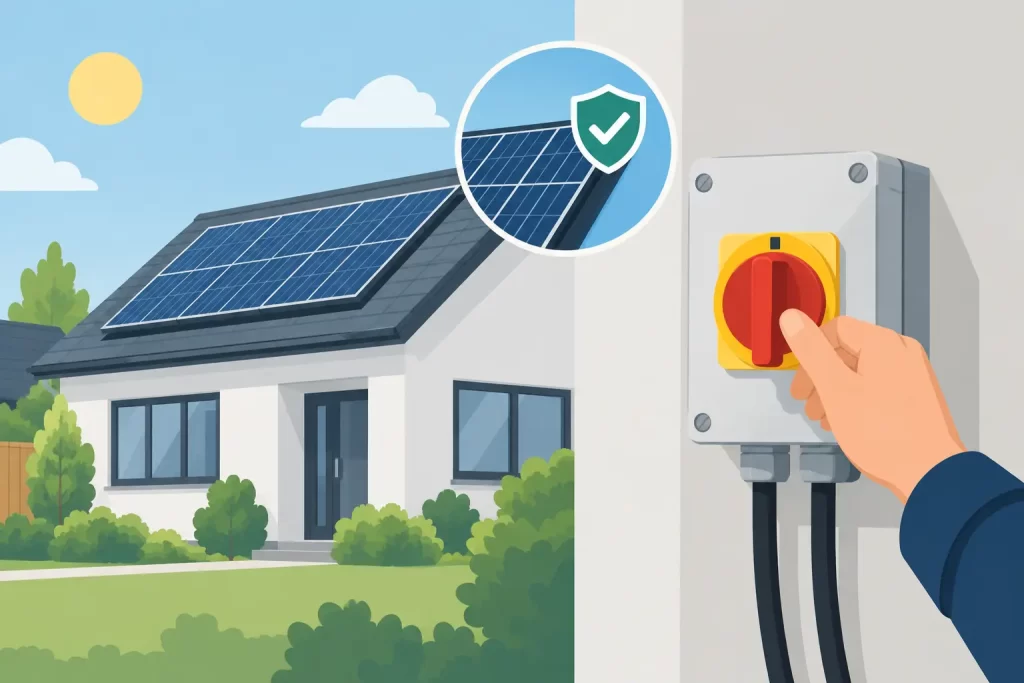
A domestic solar PV system commonly has two points of isolation. The AC isolator disconnects the inverter from your home’s mains supply. The DC isolator disconnects the solar panels from the inverter. Depending on the age and design of your system, the DC isolator may be built into the inverter, fitted beside it, or installed externally in a separate enclosure.
These switches allow an engineer to work safely on parts of the system and allow supplies to be isolated in an emergency. They do not repair faults, clear damaged wiring or make a defective inverter safe.
Solar panels produce electricity whenever daylight reaches them. Even on an overcast British day, DC cables between the panels and inverter may remain live. Unlike ordinary household electrical work, you cannot simply assume a circuit is dead because the inverter screen is off. That is why solar faults should not be treated as a handyman job.
When a reset may be appropriate
There are limited situations where a controlled inverter restart is sensible. A brief power cut, a grid voltage event, a software update or lost Wi‑Fi connection can sometimes cause an inverter to stop exporting temporarily. Many inverters reconnect automatically after the grid has stabilised, often following a mandatory waiting period.
Before touching any switches, check the obvious signs. Is the house supply working normally? Has the consumer unit tripped? Is there a message or fault code on the inverter display or monitoring app? Is the system simply waiting to reconnect after a power interruption?
If there is no smell of burning, no visible damage, no water around the equipment and no warning of an insulation or isolation fault, follow the shutdown and start-up instructions supplied by the inverter manufacturer. Those instructions vary by make and installation layout, so the label on your system and its original handbook take priority over generic advice.
A normal restart sequence is usually controlled rather than rushed. The inverter must be shut down in the correct order, left long enough for stored energy to discharge, then brought back online in the manufacturer’s specified order. Do not flick switches repeatedly. Do not force a stiff switch. And do not open inverter covers, isolator boxes or rooftop equipment to investigate further.
If the display returns but generation remains at zero in good daylight, the issue has not been solved. A reset can clear a temporary interruption, but it cannot correct a failed string, damaged connector, degraded isolator or grid-side fault.
Signs you should not reset a solar isolator
Some warning signs mean the safest action is to leave the equipment alone and arrange an inspection. A failed DC isolator can overheat internally before the problem becomes obvious, particularly on older systems or installations completed with poor-quality components.
Stop and seek professional help if you notice any of the following:
- A burning smell, buzzing, crackling or unusual heat around the inverter or isolator
- Brown marks, melted plastic, corrosion, cracking or discolouration on the switch enclosure
- Water ingress, condensation or damaged seals around outdoor electrical equipment
- A switch that will not move cleanly, will not remain in position or has visibly deteriorated
- Repeated inverter errors, trips at the consumer unit, insulation warnings or a system that repeatedly drops offline
Do not pour water over electrical equipment, attempt to dry an enclosure with a heater, or remove a cover to inspect wiring. If there is smoke, fire or an immediate danger, keep clear and contact the emergency services. If it is safe to do so, use only the system isolation points you can access without opening equipment and that are clearly identified by the installer.
Why isolator faults are more common than homeowners expect
Solar equipment lives through years of temperature changes, rain, wind and UV exposure. External DC isolators are particularly vulnerable when they were poorly selected, badly positioned or incorrectly installed. A cheap enclosure, poor cable entry, failed gland or inadequate weatherproofing can allow moisture to reach terminals. Once corrosion starts, resistance and heat can build up.
Poor previous workmanship also creates problems that a reset cannot hide. Incorrectly terminated DC cables, unsupported cabling, incompatible components and badly sealed roof penetrations may not fail on day one. They can cause intermittent faults months or years later, often when the system is working hardest in bright weather.
The inverter itself may be the issue. It could be reporting low insulation resistance, a string voltage problem, grid overvoltage or an internal hardware failure. Each fault has a different cause and a different repair path. Repeatedly cycling the isolators only masks the evidence that an engineer needs to find the real fault.
Safe checks you can make from outside the equipment
Homeowners can still provide useful information without taking risks. Record the inverter make and model, the exact fault code, the time the generation stopped and whether the problem followed a power cut, storm or electrical work at the property. Screenshots from the monitoring app are useful too.
Compare current generation with a similar sunny day, rather than expecting a fixed output figure. Output naturally changes with season, cloud cover, panel orientation and shading. However, a sudden drop to zero, a string that has disappeared from monitoring, or production that remains unusually low through clear weather deserves investigation.
Look at the equipment from a safe distance. You are checking for obvious external damage only. Do not climb onto the roof, disturb cables beneath the panels or touch cracked enclosures. Pigeon nesting, moss buildup and roof debris can affect system performance, but they may also conceal damaged wiring or create access hazards. Proper solar maintenance protects both the roof and the electrical system.
What a professional solar fault inspection should involve
A competent solar engineer does more than turn the system off and on. They should assess the fault history, inspect the inverter and accessible isolation points, check cable condition and test the electrical side of the installation using the correct equipment. Where needed, this may include string voltage testing, insulation resistance checks, polarity verification and investigation of grid voltage behaviour.
The engineer should also consider the wider installation. Is the inverter correctly ventilated? Has water entered through a cable route? Are panels affected by nesting birds, loose fixings or roof defects? Is the original system still suitable for a battery upgrade or replacement inverter? The answer depends on the age, condition and design of the installation.
At Safer Solar UK, this practical approach is central to fault finding. A system that has been poorly installed or neglected needs the underlying issue corrected properly, not a temporary switch-off that fails again next week.
Protecting your system after the fault is fixed
Once a fault has been resolved, keep the inverter area clear, dry and accessible. Check monitoring regularly enough to spot meaningful changes, especially after storms, power cuts or building work. If your system has external isolation equipment, ask the engineer whether its condition and location remain suitable for long-term weather exposure.
Keep your commissioning paperwork, inverter manual and any shutdown labels somewhere easy to find. Clear labelling is not paperwork for paperwork’s sake. In an emergency or during maintenance, it helps the right person isolate the right supply without guesswork.
A solar PV system should work quietly in the background. If it needs frequent resets, that is not normal behaviour to accept. Treat the warning as useful evidence, get the cause checked properly, and protect the generation your roof was installed to deliver.