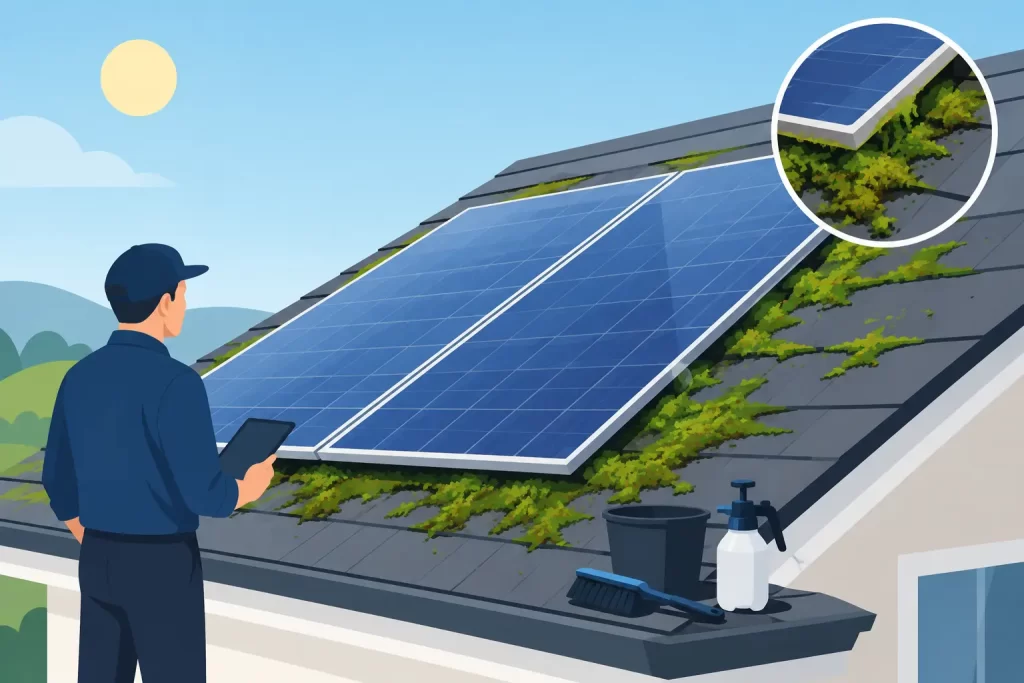
A green roof may look like a cosmetic issue from the driveway, but roof moss around solar can become a maintenance problem long before it looks severe. Moss retains water, sheds debris into gutters and can make access around your solar array slippery and unsafe. If growth is reaching the panel edges, building up beneath the array or coinciding with reduced generation, it needs a proper inspection rather than a quick clean.
Solar panels are designed to withstand the British weather. They are not designed for someone to walk across a wet, moss-covered roof with a pressure washer in hand. The right solution protects both the roof covering and the solar system, without creating cracked tiles, damaged cables, water ingress or invalidated workmanship warranties.
Why roof moss around solar panels needs attention
Moss thrives where roofs stay damp, shaded or slow to dry. North-facing slopes, overhanging trees and older roof coverings are common contributors. A solar array can also change how part of a roof dries after rainfall. It does not cause moss by itself, but the area around and underneath the panels may receive less sun and airflow than open sections of roof.
The most immediate concern is usually not the moss touching a panel frame. It is the wider build-up. Loose moss, leaf matter and grit can collect against the lower edge of panels, around mounting rails and in gutters. During heavy rain, that debris can restrict drainage and keep roof details wet for longer than they should be.
Moss also makes routine solar maintenance harder. A technician needs safe footing and clear access to inspect panel clamps, cabling, roof hooks and flashing. A roof that has become slick with moss raises the risk of a fall and makes it much easier to dislodge a tile while working.
Where trees are close by, moss often arrives with leaves, twigs and bird activity. That combination can affect panel cleanliness, block gutters and create an ideal nesting area beneath the array. The visible moss may only be one part of the problem.
Does moss reduce solar panel output?
Moss on the roof does not automatically mean poor solar generation. If it is well away from the panels and is not causing debris, shading or drainage issues, output may be unaffected. This is why homeowners should be wary of anyone claiming that every patch of roof moss demands urgent panel cleaning.
However, moss can contribute to reduced performance indirectly. Fragments can wash or blow onto the glass, especially after dry spells and high winds. Build-up at the bottom edge of a panel can hold dirt in place. Nearby branches that create the damp conditions moss prefers may also cast intermittent shade – and even partial shade can have a noticeable effect on a solar array.
A falling generation figure is not always a cleaning issue either. Inverter faults, failed optimisers, damaged connectors, bird contamination and electrical issues can all produce similar symptoms. Before paying for cleaning, establish whether the system is genuinely dirty or whether it needs diagnostic work.
A sensible assessment compares current generation with expected seasonal performance, checks the inverter for fault messages and inspects the array safely from ground level and at roof level where appropriate. This avoids treating a technical fault as a housekeeping job.
The risks of a cheap moss removal job
Roof cleaning is often sold as a straightforward exterior cleaning service. Around a solar PV installation, it is specialist work. The person carrying it out needs to understand roof coverings, safe access and the electrical components fixed above them.
High-pressure washing is a particular concern. It can strip surface material from tiles, force water into weak points and blast moss into gutters, beneath panels or across the panel glass. It may also disturb cable clips, lift poorly fitted flashings and expose faults that have been waiting to happen. These risks are higher on ageing roofs and on systems installed with poor attention to cable management.
Harsh chemicals are not a shortcut either. Run-off must be managed carefully, particularly where it can reach gutters, gardens or watercourses. Products that are unsuitable for roofs or photovoltaic equipment can leave residues and create unnecessary risk to surrounding materials.
The worst approach is climbing onto the roof without the correct safety measures, then working around live solar equipment as if it were ordinary roof furniture. Panels and rails must not be used as handholds or walkways. A panel can be damaged without showing an obvious crack, and damaged electrical components can create faults that are expensive to trace later.
A safer way to deal with moss near a solar array
The correct method depends on the roof condition, the extent of the moss and how close it is to the solar system. A specialist starts by assessing the roof, the panels and the drainage route together. There is little value in cleaning the visible roof surface if blocked gutters, lifting tiles or debris beneath the array are left behind.
For light, localised growth, careful manual removal from accessible areas may be enough. This should be carried out using suitable roof-access equipment and techniques that do not scrape, crack or loosen the roof covering. The aim is to remove the bulk of the growth without driving water or debris under the panels.
For heavier growth, a controlled treatment may be considered once loose moss has been dealt with. The roof type matters. Concrete tiles, clay tiles, slate and modern roof systems all respond differently, and an unsuitable treatment can do more harm than the moss. The work should also account for rainwater goods, landscaping and any nearby surface water drainage.
If moss and debris have accumulated under the array, the decision becomes more technical. In some cases, a careful clean around the panel perimeter is sufficient. In others, particularly where there are roof defects, broken tiles, nesting materials or substantial contamination beneath the panels, temporary removal and reinstatement of the array may be the proper answer. It costs more than a surface clean, but it gives access to inspect the roof and mounting system rather than hiding a problem underneath it.
Check the roof and solar system as one job
A good inspection should look beyond green growth. Roof moss is often a useful warning sign that maintenance has been deferred. Check for overflowing gutters, slipped or cracked tiles, deteriorating mortar, damaged soffits and branches overhanging the roof. Each can worsen damp conditions and make future moss growth more likely.
The solar array should be checked for loose panel clamps, exposed or unsupported cables, damaged bird-proofing and signs of nesting. Bird mesh is only effective when fitted securely around the full perimeter without trapping cables or leaving gaps that pigeons can exploit. If contamination is present beneath the panels, cleaning the glass alone will not resolve the underlying hygiene and access issue.
It is also worth checking that drainage pathways remain clear. Moss washed into a gutter can form a dense, wet blockage with leaves and silt. Overflowing water may stain brickwork, saturate fascias and eventually affect the roof edge. This is a roof maintenance issue first, but it can quickly make solar access more complicated.
When should you call a specialist?
Call for professional help if moss is touching or collecting beneath the panels, gutters are overflowing, tiles appear damaged, birds are nesting under the array, or generation has dropped without a clear explanation. The same applies if the roof is steep, high, fragile or difficult to reach safely. These are not conditions for improvised ladder work.
A specialist solar and roofing inspection is particularly valuable when a previous installer is no longer trading or when the original work looks suspect. Poor cable routing, inadequate bird-proofing and unsupported components are often only discovered when cleaning or moss removal exposes them. Correcting them early is cheaper than waiting for water damage, an electrical fault or a failed roof tile to force the issue.
Safer Solar UK approaches this type of work with the full system in mind: roof condition, panel performance, safe access, contamination and long-term protection. That matters because a clean-looking array is not much use if the roof below it has been damaged in the process.
Moss will return if the conditions that support it remain, especially on shaded roofs near trees. The practical goal is not to chase a permanently spotless roof. It is to keep drainage clear, prevent debris reaching the array, maintain safe access and deal with faults before they affect the roof or the electricity your system should be producing.