
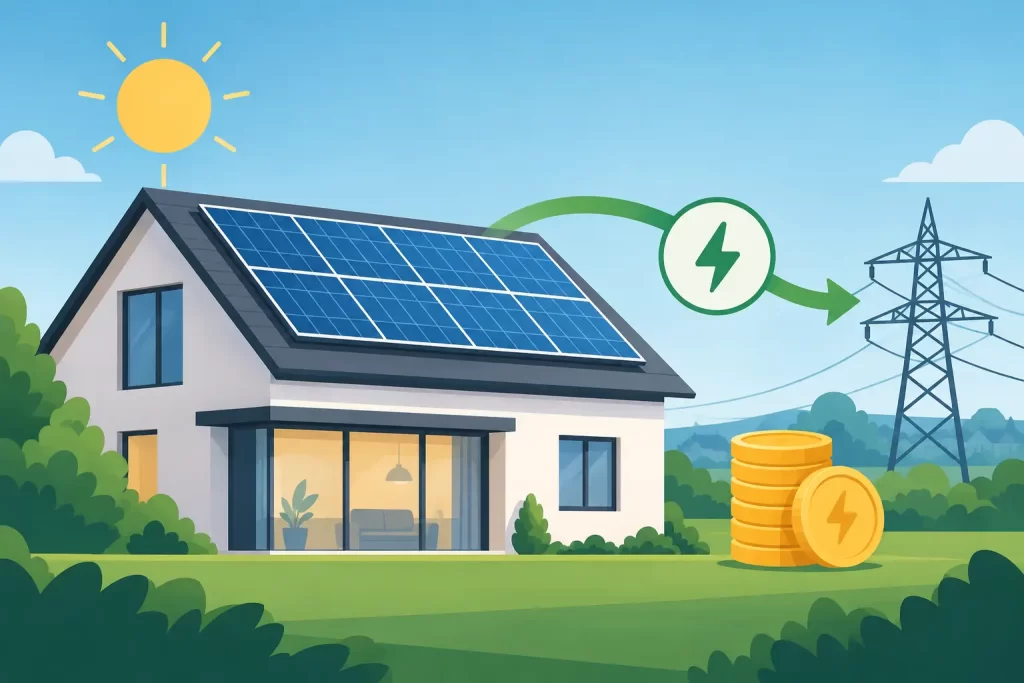
A solar export tariff guide should start with one hard fact: generating electricity is not the same as being paid properly for it. Plenty of homes have capable solar PV systems but export on a poor rate, have a meter that is not recording correctly, or use battery settings that send valuable power to the grid at the wrong time. The panels may be working, but the household is not getting the full financial benefit.
For most newer UK systems, the route to payment is the Smart Export Guarantee, usually called SEG. It pays you for surplus electricity exported from your property to the grid. The rate, contract terms and meter requirements vary by supplier, so it pays to look beyond the headline figure before signing up.
What is a solar export tariff?
A solar export tariff is the amount an electricity supplier pays for each kilowatt-hour (kWh) of solar electricity your property exports. Under SEG, larger electricity suppliers are required to offer at least one export tariff, although they set their own prices and terms.
This is different from the old Feed-in Tariff scheme. Older installations may receive Feed-in Tariff generation payments and deemed export payments under their original agreement. In many cases, changing export arrangements can affect what you receive, so do not switch anything until you understand the terms of your existing contract.
SEG payments are normally based on actual export readings. That means your system needs an appropriate meter that can record electricity leaving the property, and the supplier needs a way to receive those readings. A compatible smart meter is often the practical answer, but eligibility and metering rules are set by the supplier you choose.
The value of exported solar is usually lower than the price you pay to buy electricity from the grid. That is why using your solar power in the home remains the first priority. Export payments matter, particularly in summer or with a larger array, but self-consumption normally delivers the bigger saving per unit.
Solar export tariff guide: check the foundations first
Before comparing tariffs, confirm that the installation itself is in order. A supplier cannot pay accurately if export data is missing, and no tariff can compensate for an inverter that is regularly tripping, panels shaded by heavy contamination, or a system held back by a fault.
Start with your generation figures. Compare recent output against the same period last year, allowing for weather differences. A sudden, unexplained drop may point to a failed optimiser, inverter warning, isolation issue, damaged cable or string fault. Moss growth, bird nesting and pigeon fouling can also restrict airflow and reduce generation, while creating a far more serious hygiene and fire-risk concern around cabling.
Then check the meter and monitoring app. Your inverter app shows generation, not necessarily export. A home may generate 20 kWh in a day, use 12 kWh directly, store 5 kWh in a battery and export only 3 kWh. The figure that matters to an export supplier is the electricity actually exported.
If readings look wrong, do not assume it is a supplier issue. Incorrect CT clamp positioning, poor commissioning, meter configuration errors and unsuitable battery settings are common causes of confusing figures. These faults need diagnosing properly. Guesswork around live electrical equipment is not a safe or sensible way to chase a few extra pence per kWh.
Choosing between fixed and flexible export rates
Export tariffs generally fall into two camps. A fixed rate pays the same amount for every exported unit. It is straightforward and predictable. A flexible or time-of-use rate changes throughout the day, sometimes half-hourly, reflecting demand on the grid.
A high fixed rate can suit households that want certainty and export most of their surplus during daylight hours. It is easy to understand and does not require daily attention. The trade-off is that it may not reward you for shifting exports to higher-value periods.
Flexible export can be worthwhile for homes with battery storage, smart controls and an appetite for monitoring performance. If a battery can discharge when export prices are favourable, returns can improve. But the tariff is not free money. Rates can fall sharply, and some suppliers place rules around battery charging, grid import and exported electricity. Read the terms carefully, especially where a battery could export energy imported cheaply from the grid.
Do not choose on the top advertised rate alone. Check whether the tariff requires a smart meter with half-hourly readings, whether there is a fixed contract period, how often payments are made, and whether taking the export tariff forces you onto an expensive import tariff. The best export rate can be quickly cancelled out by a poor price for the electricity you still need to buy on dark winter evenings.
Battery settings can make or waste money
A battery changes the conversation because it gives you a choice: use solar later, export it now, or in some cases charge from cheaper off-peak grid electricity. There is no universal best setting. It depends on your electricity usage, import price, export price, battery size and how much solar your roof produces across the year.
For a household paying far more for imported electricity than it receives for export, charging the battery from daytime solar is usually sensible. The stored power can cover evening demand, reducing expensive grid imports. If export rates rise well above import rates at certain times, a different strategy may work better, but only if your equipment, supplier terms and battery warranty allow it.
Avoid setting a battery to chase tariff movements without understanding its limits. Every charge and discharge cycle contributes to wear. Repeatedly cycling a battery for a small margin may not justify the loss of stored capacity over time. Reserve settings also matter. Keeping too much capacity permanently unused reduces the benefit of the battery; keeping none in reserve may leave you importing at the wrong time.
A properly configured system should reflect how the home actually operates, not what looked attractive on a tariff comparison table one afternoon.
Documents and checks suppliers may ask for
Eligibility requirements differ, but suppliers commonly ask for details that prove the system is safe, registered and capable of measuring export. Keep your paperwork together from the start. For older systems, this can be particularly valuable if the original installer has disappeared or left incomplete records.
You may need the MCS certificate or other evidence of installation eligibility, a DNO notification or approval reference, your MPAN, meter details, bank information and recent meter readings. The exact evidence depends on the supplier and the age of the installation.
If you cannot find the documents, do not invent information or submit paperwork you are unsure about. A specialist inspection can establish what equipment is fitted, identify safety issues and help clarify what remedial work may be required. This is especially important where previous work looks untidy, roof penetrations have not been properly finished, or cabling has been exposed to birds, weather or UV damage.
Protect the generation behind the payment
An export tariff is only worthwhile while the solar system is generating safely and consistently. Cleaning should never mean walking on panels, blasting them with aggressive equipment or disturbing roof tiles. Likewise, cheap pigeon proofing fixed with unsuitable clips or mesh can damage panel frames, trap debris and create another maintenance problem.
At Safer Solar UK, the practical focus is on the full system: generation, electrical safety, roof condition, contamination, bird activity and the settings that determine where your power goes. A clean-looking array is not automatically a healthy one, and a healthy inverter display does not prove that export is being recorded or paid at the right rate.
Review your tariff when your circumstances change. Adding a battery, electric vehicle charger, heat pump or extra panels can completely alter the balance between using, storing and exporting electricity. The right arrangement is the one that protects the system, matches the household’s real usage and pays fairly for the surplus your roof produces.