
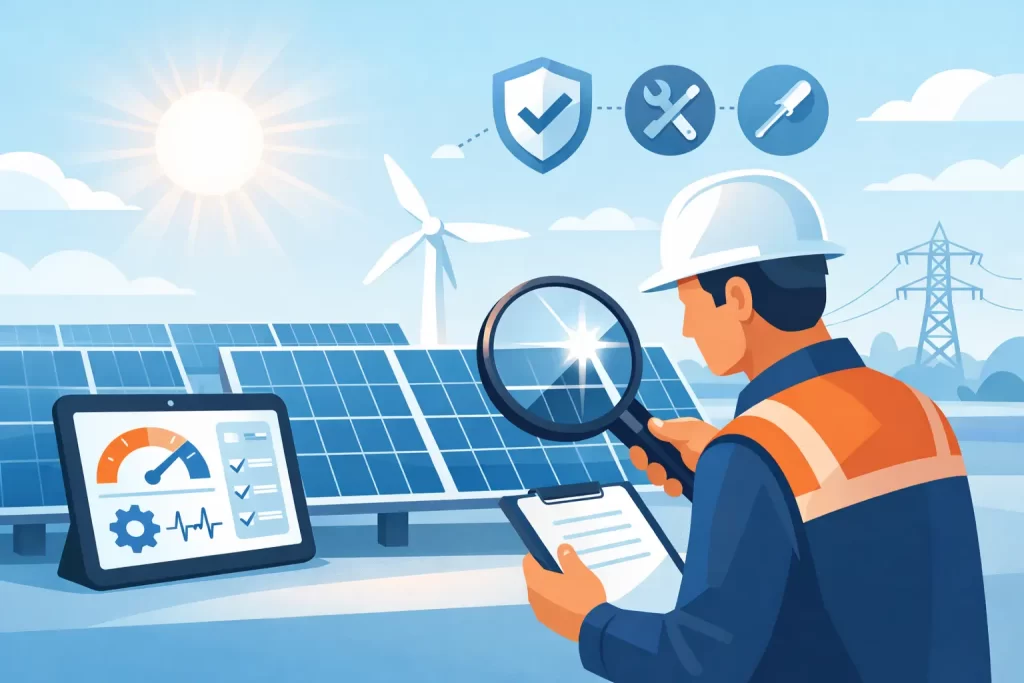
A solar PV system can look perfectly tidy from the garden while losing generation, developing a wiring fault or allowing pigeons to damage the roof beneath it. That is why solar health checks matter. They are not a sales exercise or a quick glance at the panels. Done properly, they are a practical inspection of the parts that affect safety, output and the life of your investment.
For many homeowners, the first warning sign is a disappointing electricity bill. Others notice an inverter warning, a sharp fall in app readings, staining around the array or birds constantly gathering beneath the panels. By that point, the issue may have been building for months. A professional check gives you a clear picture of what is working, what is deteriorating and what needs attention before a small repair becomes a costly one.
What a proper solar health check should cover
A worthwhile inspection looks beyond whether the inverter has a green light. Solar generation varies with season, weather, shading and household use, so a single day’s reading rarely tells the whole story. The system should be assessed against its design, age, historic performance and the condition of the roof installation.
The physical inspection starts with the panels, mounting system and roof-facing details. Cracked glass, damaged frames, loose clamps, failed seals and poor cable routing all need identifying. Panels are designed to withstand British weather, but they are not immune to storm damage, roof movement or careless work carried out after installation.
The electrical side needs equal attention. A specialist should inspect accessible DC and AC cabling, isolators, connections, earthing arrangements and the inverter for signs of heat damage, water ingress, deterioration or incorrect installation. Solar PV contains high-voltage DC electricity. It is not safe for a homeowner, general cleaner or roofer without solar experience to pull covers off equipment or start testing cables.
Generation data also matters. Comparing current output with expected seasonal performance can expose a weak string, inverter issue, persistent shading or a panel fault that is not obvious from ground level. If monitoring has stopped reporting, that should be addressed too. A system you cannot monitor is harder to protect.
A full health check may also assess battery storage where fitted. Battery status, error history, ventilation, connections and operating settings can all influence whether stored energy is actually being used as intended. The right advice depends on the equipment, tariff and household pattern. A battery cannot compensate for an array that is underperforming or unsafe.
Solar health checks catch problems before output drops further
Not every fault shuts a system down. That is precisely why maintenance is often delayed. An inverter may continue running while one section of the array produces less than it should, or while panels are gradually shaded by debris and nesting material. The homeowner still sees some generation, but not the generation they paid for.
Pigeons are a common example. Once birds gain access beneath panels, they can nest, foul the roof and block guttering. Droppings, feathers and nesting debris can build up around the array, while repeated activity can disturb cables or damage vulnerable roof areas. There is also a hygiene issue. Leaving it untreated is not a harmless nuisance.
Moss, algae and general grime need a sensible assessment rather than an automatic cleaning recommendation. Light, evenly spread dirt may have little measurable effect, particularly after rainfall. Thick deposits, bird fouling or contamination concentrated along the lower edge of panels are different. They can create shading, hold moisture and reduce useful daylight reaching the cells.
The wrong cleaning method can do more harm than good. Abrasive pads, harsh chemicals, high-pressure washing and untrained access can scratch glass, damage seals, disturb roof tiles or invalidate manufacturer requirements. Cleaning should only be recommended where the condition justifies it, using suitable equipment and safe access methods.
Signs your solar PV system needs attention
You do not need to wait for an annual reminder to arrange an inspection. Act promptly if your inverter reports a fault, repeatedly disconnects or shows no generation during suitable daylight. A sudden and sustained fall in output compared with similar periods in previous years also needs investigating, especially where there has been no new shading from trees or neighbouring work.
Visible signs deserve the same response. These include cracked panels, loose-looking brackets, exposed or sagging cables, water marks near the inverter, corrosion around equipment, persistent staining below the array and birds entering beneath the panels. If your roof has been repaired, extended, cleaned or affected by severe weather since the solar installation, it is sensible to have the system checked afterwards.
Older installations can benefit particularly from a review. Standards, monitoring options and battery technology have moved on, while some early systems were installed with poor cable management, unsuitable roof details or little thought for long-term maintenance. A check can reveal whether an inverter replacement, monitoring upgrade, pigeon proofing or battery addition is worthwhile. It may also confirm that your system is sound, which is useful reassurance rather than money wasted.
How often should a system be checked?
There is no one timetable that suits every roof. A newer, well-installed array with reliable monitoring and no nearby trees may need less intervention than a system surrounded by mature vegetation or affected by regular bird activity. However, an annual visual and performance review is a sensible baseline for many households, with a more detailed inspection when output changes, faults appear or roof work has taken place.
Do not rely on the inverter alone. It can tell you when it has stopped producing, but it cannot always explain why output is lower than expected or whether pigeons are causing damage behind the panels. Equally, do not assume low winter figures mean a fault. Shorter days, low sun angles and heavy cloud reduce generation naturally. A specialist should separate normal seasonal variation from a genuine performance issue.
A health check is not the same as a cheap clean
Some companies sell solar cleaning as if every panel needs frequent washing. Others offer a low-cost inspection but do not have the competence to test electrical components, assess roof fixings or identify poor solar workmanship. Neither approach gives homeowners the full picture.
A proper service should be evidence-led. If panels need cleaning, the reason should be clear. If bird proofing is recommended, it should be fitted with durable, panel-safe materials that do not compromise ventilation or damage the array. If a fault is found, you should understand the likely cause, the urgency and the repair options before work begins.
This matters especially where another installer has cut corners. Poorly supported cable, incorrect isolators, badly positioned inverter equipment and unsuitable roof penetrations can create safety risks as well as lost output. The cheapest fix is not always the safest fix. Correcting defective work properly may cost more upfront, but it protects the system, the roof and the value of the property.
What to do before booking an inspection
Keep a note of your recent generation figures, inverter messages and any changes you have noticed. Photographs from ground level can help show staining, nesting activity or obvious panel damage, but do not climb onto the roof or attempt to reach under the array yourself. If there is visible cable damage, a burning smell, water entering electrical equipment or repeated inverter tripping, switch off only if you can do so safely using the normal controls and arrange urgent professional advice.
It is also useful to gather any installation paperwork, inverter details and previous service records. These help a specialist understand the original design and identify whether equipment remains within its warranty period. If documents are missing, that should not stop you arranging a check. Many older systems have incomplete records, particularly where the original installer has ceased trading.
Safer Solar UK approaches maintenance with the same standard expected of an installation: assess the system properly, protect the roof and electrical equipment, then recommend only the work that will improve safety or performance. That is the difference between maintaining an asset and merely giving it a cosmetic once-over.
Your panels should not become an out-of-sight problem sitting above the gutter line. A timely inspection gives you the information to deal with faults, contamination and bird damage while they are still manageable – and to keep your solar investment producing with confidence.