Pigeons do not need much of a gap to turn the space beneath a solar array into a nesting site. Once they are established, the problem rarely stays neat or quiet. Droppings spread across panels and roof tiles, nesting material blocks drainage routes, and repeated bird activity can leave a home with reduced generation, unpleasant smells and a mess that is unsafe to clean without the right equipment. This solar panel bird proofing review looks at what genuinely protects a domestic system – and what often fails after the installer has left.
Why bird proofing is more than a cosmetic fix
Solar panels are mounted above the roof to allow ventilation and drainage. Unfortunately, that gap also creates a sheltered, raised area that pigeons favour. They can nest beneath panels, breed repeatedly and return to the same roof year after year.
The visible droppings are only part of the issue. Soiling on the glass can reduce the light reaching the cells, particularly where droppings dry hard and build up at the lower edges of panels. Nesting debris can collect around mounting rails, cables and gutters. On roofs with existing moss or damaged tiles, bird activity can make a maintenance problem worse very quickly.
There is also a safety point that cheap bird proofing firms regularly overlook. Solar arrays contain electrical equipment and should not be treated like a standard roof pest-control job. Anyone working around panels needs to understand how they are mounted, where cables run and how to avoid putting pressure on the glass, frames or roof covering. A broken tile, disturbed cable or bent panel frame can cost far more than doing the work properly in the first place.
Solar panel bird proofing review: the mesh system test
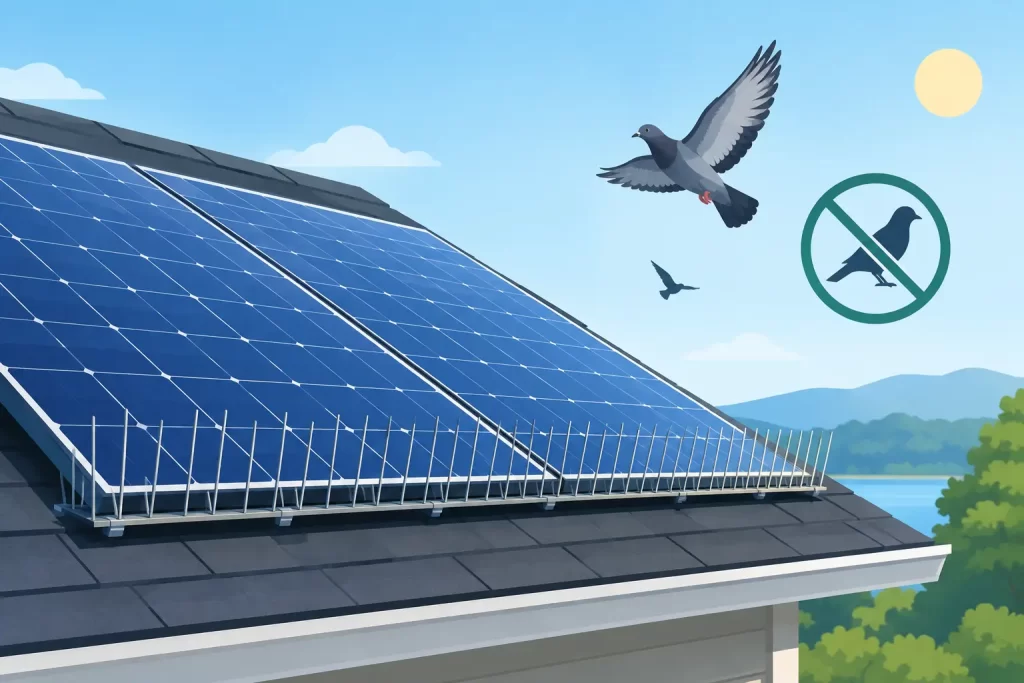
For most homes, a properly fitted solar panel mesh system is the most effective long-term answer. It closes the perimeter gap between the panels and roof without drilling into the panel frames or compromising the array. The mesh is secured with purpose-made clips, then shaped carefully around the panel layout so birds cannot enter beneath it.
The best installations are not simply a roll of wire pushed around the edge. Material quality, mesh size, fixing method and preparation all matter.
PVC-coated galvanised mesh
PVC-coated galvanised steel mesh is the standard worth looking for. The galvanised core gives it strength, while the coating helps resist weathering and corrosion. It should be rigid enough to hold its shape in wind, but workable enough for a specialist to produce a close, tidy fit around awkward edges.
The mesh openings must be small enough to prevent pigeons entering, without creating an unsightly barrier around the system. Correctly installed, it remains discreet from ground level on most properties. It also allows airflow beneath the panels, which is essential for normal operation.
Very thin, uncoated mesh is a false economy. It can rust, deform or pull away from the roofline, giving birds an opening to exploit. Once that happens, the original contamination and nesting problem returns.
Non-penetrating panel clips
Clips are just as important as mesh. A reputable installer uses clips designed to attach securely to the panel frame without drilling holes or using screws through the aluminium. Drilling a frame may affect manufacturer warranties and creates an unnecessary risk on an expensive generating asset.
Plastic cable ties, silicone blobs and improvised fixings do not make a professional bird-proofing installation. Cable ties become brittle in sunlight and can loosen. Adhesives may fail in changing temperatures, leave residue on panels and make later maintenance difficult. If a quote relies on these shortcuts, ask why a proper clipped system is not being used.
A full perimeter seal
Bird proofing only works when it is continuous. Gaps at corners, around split arrays, beside roof obstructions or beneath a flashing detail are not minor omissions. Pigeons are persistent and will use the smallest accessible route.
A good survey identifies every entry point before fitting begins. This is particularly important on older installations, arrays with uneven roof tiles, and systems installed close to chimneys, dormers or valleys. The work may take longer on a complicated roof, but forcing a one-price, one-size approach is how poor workmanship starts.
Cleaning first is usually the right order
Fitting mesh around an active nest site without addressing the contamination underneath simply seals the problem in. Before bird proofing, the area beneath and around the panels should be assessed for nest material, feathers, droppings and blocked guttering.
Cleaning must be handled carefully. Bird droppings can carry harmful bacteria and dried debris becomes airborne when disturbed. Panels should not be scraped with abrasive tools, blasted at close range or walked on. The roof itself also needs protecting, especially where tiles are brittle, moss-covered or already damaged.
In many cases, professional cleaning and bird proofing should be completed as one planned job. The system is cleaned, the nesting material is removed where lawful and appropriate, gutters are checked, and the mesh is fitted once the perimeter is clear. This produces a cleaner finish and prevents birds returning while the work is being completed.
There is an important exception: active nests and protected species require care. Wild birds, nests and eggs are covered by legal protections, and work must not trap birds beneath the panels or unlawfully disturb an active nest. A responsible contractor will assess the situation and plan the timing correctly rather than fitting mesh regardless.
What a proper inspection should cover
A bird-proofing quote should be based on more than the number of panels. The layout, roof pitch, access requirements, roof condition and extent of contamination affect both the work needed and the safe method of carrying it out.
A thorough inspection should consider the condition of panel frames and mounting hardware, visible cabling, broken or slipped tiles, the state of gutters, access equipment and whether there are signs of water ingress. It should also check whether dirt on the panels is isolated bird contamination or part of a wider issue involving moss, shading or a system that is already underperforming.
This is where a solar specialist offers a real advantage over a general pest-control or exterior cleaning company. Bird proofing should protect the array, not create a new fault. If panels are heavily soiled, cables appear vulnerable, or an inverter is showing poor performance, those concerns should be raised before the job is closed off with mesh.
The common shortcuts to avoid
The cheapest quote is often based on speed, limited access or poor-quality materials. That may look attractive when pigeons are making a mess, but failed mesh usually means paying twice – first for the inadequate installation and again for removal, cleaning and replacement.
Be cautious if a contractor proposes to drill into panel frames, use adhesive as the primary fixing, fit mesh without cleaning the nesting area, or quote from photographs without asking about roof access and array layout. Equally, be wary of anyone promising to remove birds immediately without discussing active nests or the legal position.
Another poor approach is fitting oversized mesh that sags against tiles or leaves visible gaps. Aside from looking untidy, loose edges can rattle in the wind and become a route for birds to get back underneath. The finish should follow the panel perimeter closely, with secure edges and properly shaped corners.
Is bird proofing worth the cost?
If pigeons have already started nesting, bird proofing is normally cheaper than repeated cleaning, gutter clearance and repairs caused by ongoing contamination. It protects the roof area that is hardest to reach, keeps nesting material away from cables and mounting equipment, and helps panels stay cleaner between maintenance visits.
The value depends on the property. A high roof, a large array or heavy existing contamination may require more access equipment and preparation. Conversely, an array with no evidence of bird activity may only need monitoring. Preventative installation can still make sense in areas with persistent pigeon pressure, but it should be a considered decision rather than an automatic add-on.
For homeowners already seeing droppings below the array, hearing movement under panels or finding blocked gutters, waiting usually makes the job dirtier and more expensive. Safer Solar UK approaches bird proofing as solar maintenance, not a quick pest-control patch. The aim is to protect generation, roof condition and the investment sitting above your home.
A well-fitted mesh system should become almost invisible in daily life. That is the right outcome: no birds beneath the panels, no growing contamination problem, and no need to worry that the solution has damaged the solar system it was meant to protect.