
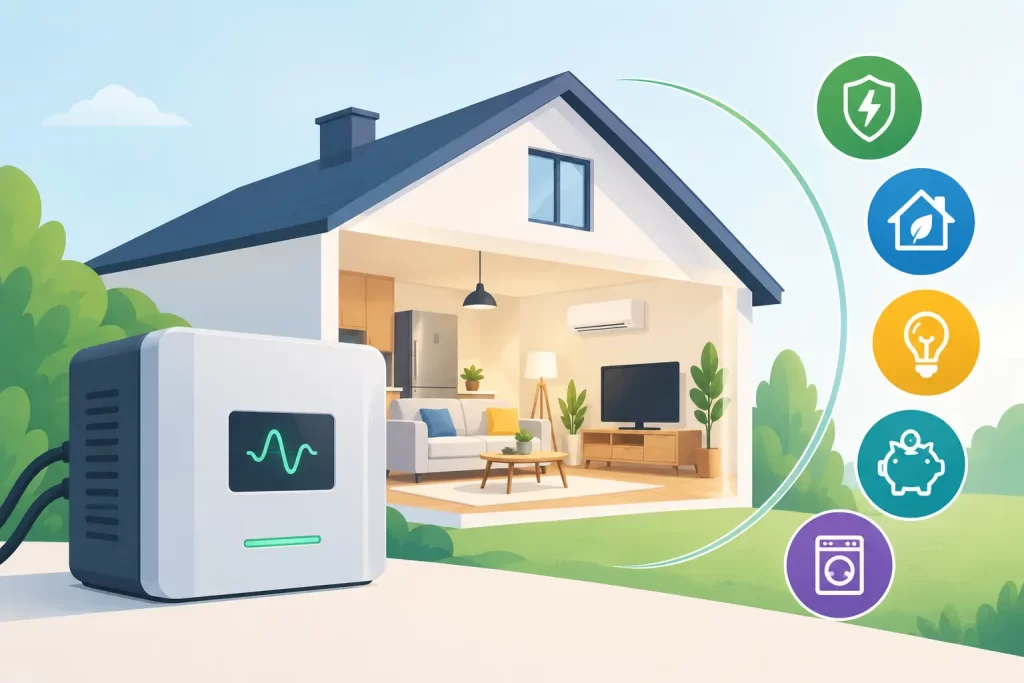
A home supplied at the higher end of the UK voltage range may be using more electricity than its equipment actually needs. That is where the benefits of voltage optimisation can become practical rather than theoretical: reduced avoidable consumption, less strain on certain appliances and better control over a property’s electrical performance.
For homeowners already investing in solar PV, batteries and other energy-saving measures, it can be a sensible part of a wider plan. It is not a magic box that cuts every bill by the same percentage, and anyone promising that should be treated with caution. The result depends on your incoming supply voltage, the loads in your home and how your solar and battery system has been designed.
What voltage optimisation does
The UK nominal mains voltage is 230V, but the permitted supply range is broader – generally from 216.2V to 253V. In many areas, particularly those close to a local transformer, households can regularly receive voltage well above 230V.
Voltage optimisation equipment regulates that incoming supply to a more appropriate level before it reaches the consumer unit and household circuits. Where a property consistently receives excess voltage, this can reduce wasted energy in voltage-dependent equipment while maintaining a stable, usable supply.
This is not the same as simply fitting a device and hoping for the best. A proper assessment considers the voltage arriving at the property over time, the condition and layout of the electrical installation, peak demand and any existing renewable technology. Equipment that is poorly specified or carelessly installed can create more problems than it solves.
The main benefits of voltage optimisation
Lower consumption from voltage-dependent loads
Some electrical loads consume more power as voltage rises. Traditional lighting, older motors, pumps, fans, immersion heaters and certain heating controls are examples where excess voltage can mean excess consumption.
The exact saving varies. A home packed with modern, electronically controlled appliances may see a different result from a property with older equipment, ventilation fans, pumps or substantial lighting loads. That is why an honest installer discusses likely savings based on the building, rather than quoting a headline figure without testing anything.
Voltage optimisation does not reduce the energy used by every device in equal measure. Modern switched-mode power supplies – common in televisions, laptops, phone chargers and many appliances – often regulate their own input. However, cutting waste from the loads that are voltage sensitive can still make a meaningful difference over years of use.
Better conditions for appliances and electrical equipment
Running electrical equipment at unnecessarily high voltage can increase heat, stress and wear in certain components. Lamps may run hotter, motors can work less efficiently and older equipment may have a shorter service life.
Optimising a consistently high supply helps create steadier operating conditions. It will not repair an ageing appliance or compensate for faulty wiring, but it can remove one avoidable source of strain. For homeowners who want to protect their investment in heating controls, pumps, lighting and home energy equipment, that is a worthwhile consideration.
A more controlled electrical installation
One of the less advertised benefits is control. Many households know their electricity bill is high but have no clear picture of what is happening at their incoming supply. Monitoring voltage is part of understanding the wider installation.
A specialist assessment can highlight whether high voltage is actually present, whether there are supply variations worth investigating and whether other faults need attention first. This matters in homes that have been altered over time, fitted with solar by different contractors or affected by previous poor-quality electrical work.
Voltage optimisation is not a substitute for a safe consumer unit, correct earthing, sound cable connections or compliant electrical testing. It should sit on top of those basics, never be used to disguise their absence.
Supporting a broader energy-saving strategy
Solar panels generate electricity; batteries store electricity; voltage optimisation can reduce avoidable demand. Used together, these measures can make a property more efficient, but each needs to be correctly specified.
For example, lowering waste in daytime loads may help a household make better use of its solar generation. If less electricity is being needlessly consumed by voltage-sensitive equipment, there may be more solar power available for useful loads, battery charging or export. The financial outcome will depend on your tariff, export arrangement, battery settings and when your household uses power.
It is also worth remembering that a system producing less imported electricity is not automatically producing more solar energy. Panels still need to be clean, unshaded and functioning correctly. A voltage optimiser cannot fix a failing inverter, damaged roof cabling, bird contamination or poor panel performance. Those faults require direct investigation and repair.
Is voltage optimisation suitable for a solar home?
It can be, but solar PV makes the assessment more important. Grid-connected inverters are designed to operate within defined voltage limits and actively monitor the electricity supply. High local grid voltage can contribute to inverter protection events in some circumstances, particularly where there is significant local solar generation.
A voltage optimiser must therefore be compatible with the PV installation and installed with a clear understanding of how the inverter, battery system and supply interact. The goal is not to interfere with inverter safety settings or mask a network issue. Where an inverter is repeatedly shutting down on high-voltage protection, the right answer may involve recorded diagnostics, checks to the AC installation and, where necessary, action by the network operator.
Homeowners should be wary of anyone treating solar as an afterthought. A device that appears suitable for a standard property may need a different approach where there is a solar inverter, battery, EV charger, heat pump or immersion-diverter control in place.
When it may not deliver the result you expect
Voltage optimisation is most effective where the incoming voltage is consistently above what the property needs and the home has enough voltage-dependent demand. If supply voltage is already close to nominal, the available reduction may be limited.
Likewise, a household with very low daytime use, highly efficient modern appliances and little voltage-sensitive equipment may have a longer payback period than a larger home with pumps, fans, lighting and older electrical loads. Usage patterns matter as much as the equipment itself.
It is also not a cure for a bill driven mainly by electric heating, an inefficient hot-water cylinder, a poorly configured battery or an EV charged at expensive tariff times. In those cases, the biggest savings may lie elsewhere. Good advice identifies the problem before recommending the product.
What a proper installation should include
Voltage optimisation equipment works at the heart of a property’s electrical system. This is not handyman work and it is not an area for shortcuts. The unit needs to be correctly sized for the property’s maximum demand, installed safely and coordinated with existing protective devices.
Before installation, the incoming supply should be assessed rather than assumed. The installer should understand the property’s energy use and identify major loads, then review the solar PV, battery storage, EV charging and heating equipment already connected. After installation, the work should be properly tested and the homeowner should know what has changed, what has not, and what performance to expect.
At Safer Solar UK, the same principle applies to voltage optimisation as it does to solar upgrades and fault finding: protect the homeowner’s system first, then improve it properly. A lower upfront price is poor value if it introduces compatibility issues, leaves unsafe workmanship behind or fails to address the real reason energy costs are high.
Before committing, start with evidence. Measure the supply, examine the loads and look at the whole energy system rather than one product in isolation. The right solution should reduce waste without compromising the equipment your home depends on.