
A solar PV system can look perfectly healthy from the ground while quietly producing far less electricity than it should. A dirty panel surface, a nesting pigeon, inverter warnings or a failed string can all reduce output without an obvious visible sign. The best ways to monitor generation combine daily visibility with a sensible understanding of what normal production looks like for your home.
The aim is not to stare at an app all day. It is to spot a meaningful drop early, before lost generation turns into months of higher electricity bills or an avoidable repair. For homeowners with export payments or older feed-in tariff arrangements, it also helps protect income that can be easily lost when a fault is ignored.
Start with your inverter monitoring app
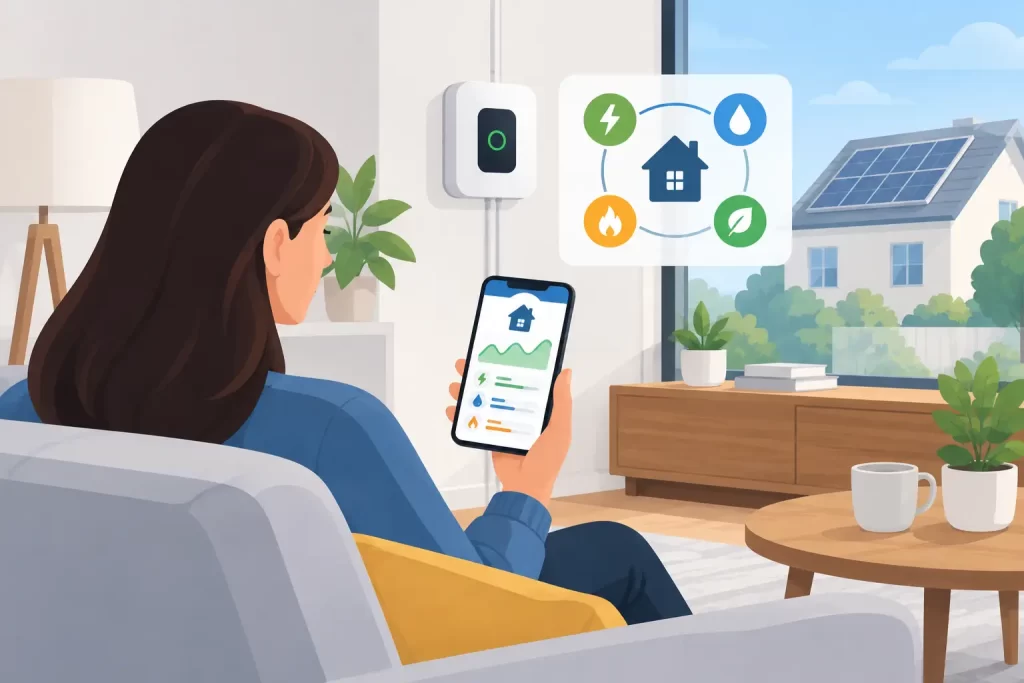
Most modern inverters offer a manufacturer app or online portal. It is the simplest place to see daily, monthly and annual generation, and it should be checked regularly rather than only when an electricity bill arrives.
Focus on the daily graph, not just the headline total. On a clear day, generation should rise through the morning, peak around the middle of the day and fall again towards evening. A flat line, a sudden midday drop or no production at all during daylight hours needs investigating.
Apps are useful, but they are not infallible. Some lose their Wi-Fi connection and stop reporting despite the system still generating. Others display delayed data. If the figures look wrong, check the inverter itself for warning lights, fault codes or a message on the screen before assuming the panels have failed.
Keep the app login details somewhere safe. When a property changes hands, monitoring access is often lost because the original installer retained control of the account or the system was never properly handed over. That is a frustrating but fixable issue, and one worth resolving before a fault occurs.
Compare generation with like-for-like days
Solar output naturally changes with the weather and seasons. A low December total is not evidence of a fault, just as a strong June day does not mean every panel is operating perfectly. The useful comparison is between similar days and similar periods.
Look at this week against the same week last year, or compare a clear day with another clear day around the same time of year. A gradual year-on-year reduction can point to panel soiling, shading from tree growth, bird activity or degradation. A sudden fall is more likely to indicate an inverter issue, damaged cabling, an isolator problem or a fault affecting one part of the array.
Do not judge performance purely by a neighbour’s system either. Panel orientation, roof pitch, system size, shading and battery use all change the result. Two systems on the same street may have very different production profiles for entirely legitimate reasons.
Know your expected baseline
Your original quotation, MCS paperwork or handover documents may include an estimated annual output. Treat that figure as a guide, not a guaranteed monthly target. Weather varies, but a large and persistent gap deserves professional attention.
It is also worth noting major changes around your home. A new extension, loft conversion, chimney work or taller nearby trees can introduce shading that was not present when the system was installed. Even partial shade can have a disproportionate effect on older arrays or systems without optimisers.
Use your smart meter to check what you are buying
Generation is only half the picture. Your smart meter and energy supplier app show the electricity you are still importing from the grid. When the sun is bright and your PV system appears to be producing well, grid import should usually reduce unless high-demand appliances are running.
This comparison can reveal a practical problem: a system may be generating, but the household may not be using that power when it is available. Timers for washing machines, dishwashers, immersion heaters or electric vehicle charging can improve self-consumption where suitable. If you have a battery, its charge and discharge pattern should also make sense alongside your solar generation.
Be careful not to confuse import data with generation data. A smart meter does not normally tell you whether every panel is performing correctly. It tells you what is coming from, or going to, the grid. For diagnosis, it needs to be read alongside inverter information.
Watch for warning signs, not just low numbers
Some faults are obvious once you know where to look. Inverter fault notifications, repeated shutdowns and error messages should never be ignored simply because the system starts again later. Intermittent faults can become permanent faults, particularly where connections, isolators or voltage issues are involved.
Common warning signs include:
- generation stopping during daylight hours
- an inverter display showing a fault, alarm or grid message
- output that is consistently lower than comparable periods
- unusually frequent inverter restarts
- visible bird nesting, moss build-up or staining beneath panels
- a sudden change after roof work, storms or electrical work
Pigeons are not a cosmetic nuisance. Nesting beneath panels can restrict airflow, leave corrosive droppings, damage cabling and create a persistent hygiene problem. Moss, leaf debris and heavy grime can also affect production, particularly on low-pitch roofs where water does not clear contamination as effectively. Never climb onto a roof or pressure-wash panels to investigate. Both can cause serious damage and create an obvious safety risk.
Check the physical condition from ground level
A regular visual check from a safe position is worthwhile. Look for panels that appear heavily soiled, obvious debris around the array, loose-looking components, damaged bird mesh or signs that pigeons are going underneath the panels. After high winds, storms or building work, this check becomes more important.
You should also look at the inverter area. It should be dry, accessible and free from stored items that restrict ventilation. Excess heat can shorten inverter life, so a cupboard packed with coats, boxes or drying laundry is not an ideal location. Do not remove covers or interfere with DC cabling and isolators. Solar PV equipment can remain live in daylight even when parts of the system appear switched off.
Arrange a professional performance check when patterns change
Monitoring tells you when something is wrong. It does not always tell you why. A proper diagnostic visit can check inverter operation, DC and AC connections, string performance, voltage behaviour, system settings and visible roof-level issues. This is particularly valuable for older systems, installations with no monitoring history, or arrays completed by firms that are no longer trading.
A competent solar specialist should not jump straight to selling replacement panels or a new inverter. The right answer depends on the fault. A Wi-Fi issue needs a different fix from a failed inverter, shaded string, damaged cable or contaminated panel array. Equally, panel cleaning is not a cure for an electrical fault, and a cheap handyman repair is not a sensible response to a roof-mounted electrical system.
For systems that underperform repeatedly, a wider review may be worthwhile. Battery storage, optimisers, inverter replacement or a carefully planned upgrade can improve how much of your solar power you use. But upgrades should follow evidence, not sales pressure.
Set a monitoring routine you will actually keep
For most households, a quick weekly app check and a more detailed monthly comparison are enough. Record any fault messages, unusual production drops and relevant events such as storms, roof work or increased bird activity. A simple note on your phone is often all that is needed.
Once a year, review total generation against previous years and arrange maintenance if the pattern suggests a problem. Safer Solar UK approaches this work as a performance and safety issue, not just a cleaning job: poor access, damaged bird proofing and unresolved electrical faults can all cost far more when left to develop.
Your solar system should be quietly reducing what you buy from the grid. If the numbers stop making sense, do not wait for the next annual bill to find out why. A timely, qualified inspection can protect the output you paid for and the roof it sits on.