
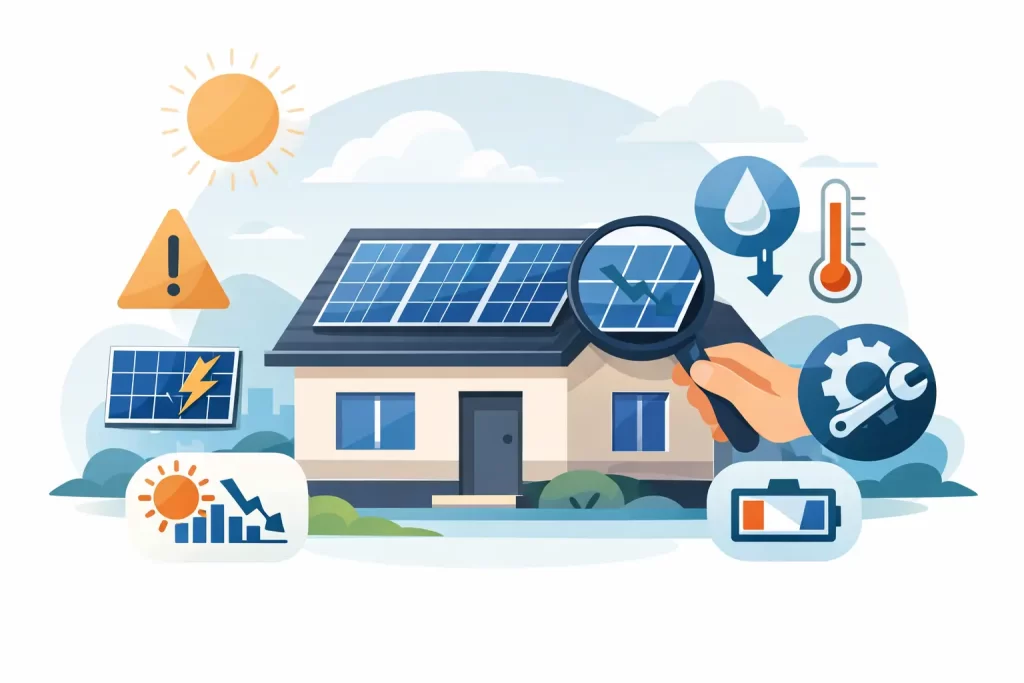
A solar PV system should quietly earn its keep. When generation drops, alerts start appearing or pigeons move in beneath the panels, ignoring the problem can turn a manageable service visit into a costly repair. Knowing the signs solar needs servicing helps you protect output, roof integrity and the equipment that makes your savings possible.
Not every change in production means there is a fault. Shorter winter days, heavy cloud and seasonal shading all affect generation. The concern is a persistent change that does not match the weather, or visible evidence that panels, cables or roof fixings are no longer in good condition.
10 signs solar needs servicing
1. Generation has fallen without a clear weather reason
Your monitoring app or inverter display is often the first place a problem shows itself. Compare current output with the same period last year, allowing for major changes such as new shade from a neighbour’s extension or mature trees. A gradual decline may point to soiling, moss, bird mess or ageing equipment. A sudden drop can indicate an inverter issue, a failed panel, damaged wiring or a string fault.
Do not judge performance by one sunny afternoon. Look at daily and monthly generation over several weeks. If the figures are consistently below what your system has historically produced in similar conditions, it is time for professional diagnostics.
2. The inverter shows a warning light or error message
The inverter is the working heart of most domestic solar systems. A red light, fault code, repeated restart cycle or blank display should not be treated as a minor annoyance. Some warnings relate to temporary grid conditions, but recurring errors can involve insulation resistance, DC faults, overheating, internal component failure or voltage problems.
Take a photograph of the message and note the time it appeared. Then arrange for a qualified solar specialist to investigate. Never remove inverter covers or interfere with DC isolators yourself. Solar panels can continue generating electricity in daylight, even when the inverter is switched off.
3. Your system repeatedly switches off at midday
A system that starts normally in the morning but trips or stops exporting around the middle of a bright day may be responding to high local grid voltage. This is particularly common in areas with substantial solar uptake, where voltage rises as many properties export electricity at once.
It can also be linked to poor connections, incorrect settings or an inverter nearing the end of its working life. The answer is not to keep resetting it and hope for the best. Proper testing should establish whether the issue lies with the inverter, the installation, the supply voltage or a combination of factors. In some homes, voltage optimisation or an upgrade plan may form part of the solution, but it depends on the test results.
4. Panels look dirty, streaked or covered in bird mess
Rain does not reliably clean solar panels. It may wash away loose dust, but baked-on bird droppings, traffic film, pollen, lichen and moss need more attention. Heavy contamination can block daylight from reaching cells and create uneven output across the array.
The risk is not limited to lost generation. Moss and debris can hold moisture around panel edges and roof areas, while incorrect cleaning methods can scratch glass, damage seals or put unnecessary weight on the panels. Household pressure washers, harsh chemicals and a quick climb up a ladder are not sensible shortcuts. Panels should be cleaned with appropriate equipment and with full regard for roof safety, cabling and mounting hardware.
5. Pigeons are nesting under the panels
Constant cooing, feathers gathering near gutters, droppings on patios or a visible nest at the array edge are clear warning signs. The space beneath a solar array is dry, sheltered and warm, which makes it attractive to pigeons. Once established, nesting material and droppings can build up quickly.
This is more than a nuisance. Birds can dislodge cables, block gutters, contaminate roof areas and create hygiene concerns around the property. Nesting debris can also restrict airflow beneath panels, which is unwelcome in warmer weather when equipment needs to shed heat. Professional pigeon proofing should be fitted without drilling through panels or using flimsy mesh that fails after a season. The existing contamination should also be removed safely rather than sealed in beneath the array.
6. You can see loose cables, damaged mesh or shifting panels
From ground level, inspect the visible edges of your system occasionally. Look for dangling cables, clips that have come free, lifting mesh, obvious gaps around bird protection, or panels that appear uneven. You may also notice cracked roof tiles beneath the array, damaged flashing or staining that was not there before.
Do not go onto the roof to inspect more closely. A safe solar inspection considers both the electrical installation and the roof structure. This matters especially where the original work was completed by a general contractor rather than a specialist who understands mounting systems, cable management and weatherproofing together.
7. The inverter is unusually noisy, hot or old
A low operational hum can be normal, depending on the inverter model. Loud buzzing, clicking, fan noise that persists in mild weather, a burning smell or excessive heat are not. Keep the area around the inverter clear and ventilated, but do not block vents or try to dismantle the unit.
Inverters do not last forever. Many domestic units have a shorter service life than the panels themselves, and an older inverter may be less efficient or no longer supported by its manufacturer. Replacement is not always the first answer, but if a repair is uneconomical, an appropriately specified new inverter can restore reliability and create options for battery storage or improved monitoring.
8. Your electricity bill has risen despite similar habits
A higher bill can have several causes: tariff changes, more time at home, an electric vehicle, a hot tub or simply a colder season. But where household use is broadly unchanged and solar output has slipped, the two may be connected.
Check whether your system is generating less, exporting less, or both. If you have a battery, review whether it is charging and discharging at the expected times. A battery configuration issue, failed generation or incorrect monitoring data can leave you importing more expensive grid electricity than necessary. A full system check should look beyond the panels alone.
9. Monitoring data is missing or does not make sense
An app that has stopped updating may be a Wi-Fi issue, but it can also hide a genuine generation problem. Equally, monitoring that reports a suspiciously high or low figure should be treated with caution until it is verified against the inverter and meter readings.
Reliable monitoring is useful because it gives a technician evidence to work with. If your system has had no meaningful data for months, restoring that visibility is worthwhile. You cannot protect performance if you have no practical way to see it.
10. The system has not been inspected since installation
Solar PV is low maintenance, not no-maintenance. Years of wind, rain, temperature changes, nesting birds and roof movement can affect components that appeared sound on installation day. This is particularly relevant if you inherited the system with the property, have incomplete paperwork, or suspect that previous workmanship was poor.
A professional service can assess generation, inverter condition, isolators, cable routing, roof fixings, panel condition and signs of water ingress or contamination. The exact scope should reflect the system’s age, visible condition and any faults reported. A clean, fault-free system may need only periodic inspection; a neglected or poorly installed one may need remedial work before cleaning or upgrades make sense.
Why quick fixes can make solar faults worse
Solar equipment sits at the meeting point of electrical work, roof work and weatherproofing. That is why a handyman repair, cheap panel clean or improvised bird mesh can create a bigger problem than it solves. Cable damage may not be obvious from the ground. A broken tile can become a leak months later. Mesh fixed incorrectly can trap birds or work loose in high winds.
The right approach is diagnosis before repair. A competent specialist should identify the cause of underperformance, explain the options plainly and carry out work with suitable materials, safe access and proper regard for your roof. Safer Solar UK Ltd takes this aftercare approach because protecting a solar investment means correcting faults properly, not disguising them for a few weeks.
If your system is producing less than it should, making an unfamiliar noise or attracting birds, act while the evidence is still clear and the repair is likely to be straightforward. A well-maintained solar system should give you confidence every time the sun comes out.