
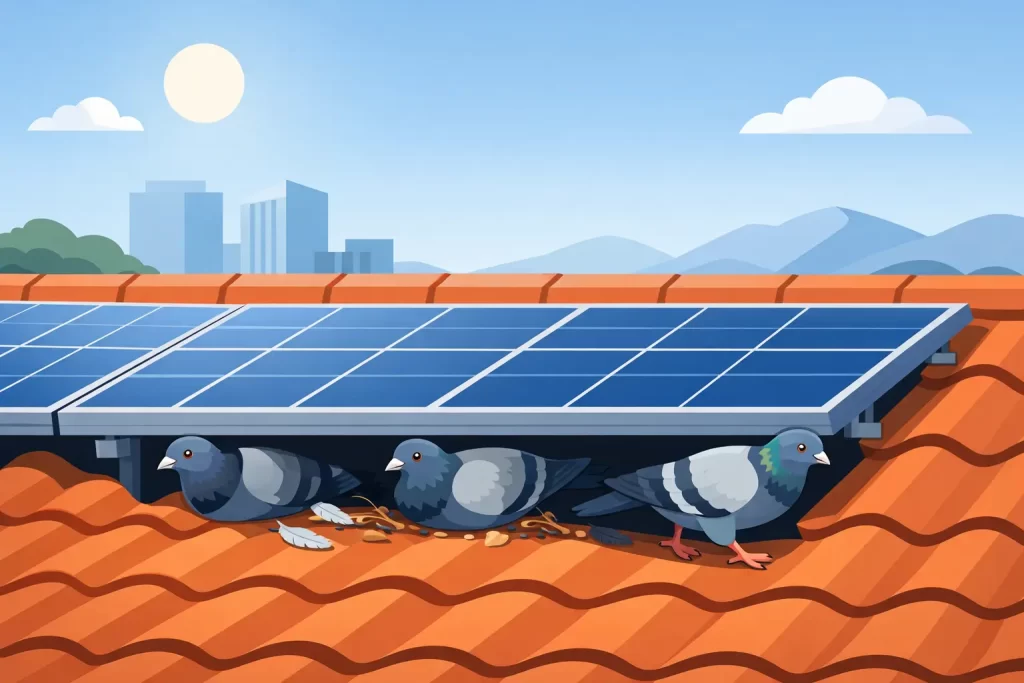
A quiet scratching sound above the bedroom, feathers collecting in the gutter, or dirty streaks appearing beneath the array are usually the first clues. Homeowners often ask, why are pigeons under panels when there is plenty of roof space elsewhere? The answer is simple: a solar array creates one of the most attractive nesting spaces a pigeon can find, particularly on a sheltered UK roof.
The gap between the panels and the tiles is warm, dry, elevated and difficult for predators to reach. Once a pair has settled there, it is not a problem that normally disappears on its own. Nesting materials build up, droppings spread across the roof and panels, and the system can become harder and more expensive to maintain safely.
Why are pigeons under panels rather than on the roof?
Solar panels sit on mounting rails, usually leaving a gap of several inches between the panel frame and the roof covering. That space gives pigeons shelter from rain, wind and harsh sun without exposing them to the open roof. The panels also retain a little warmth, especially after a sunny day, making the void more appealing during colder months.
A roof-mounted array offers height and a clear view of the surrounding area. Pigeons can watch for threats, fly in and out easily, and return to the same location repeatedly. If nearby properties already have bird activity, the chances of a new flock investigating an unprotected array increase.
The problem is often worse where panel edges are close to a chimney, dormer, gutter line or neighbouring roof. These features can act as convenient landing points. It is not a reflection on the quality of the solar installation itself – even a well-installed system can be vulnerable if the perimeter beneath the panels is left open.
The damage pigeons can cause beneath solar panels
Pigeons do more than make a mess. Their droppings are acidic and can contaminate roof surfaces, gutters and the lower edges of the panels. If droppings, dust and feathers reach the glass, they can block daylight and reduce generation. A light layer may have limited effect, but repeated fouling in the same areas can become a genuine performance issue.
The larger concern is what cannot be seen easily from ground level. Pigeons carry twigs, leaves, feathers and other nesting material beneath the array. This debris can hold moisture against roof tiles, obstruct drainage routes and create a sheltered environment for insects and parasites. It may also make future inspection, cleaning or electrical fault finding more difficult.
There is a safety element too. Solar cabling should be securely clipped and protected from sharp edges and movement. Persistent bird activity around cables, connectors and roof penetrations is not something to ignore. Pigeons are not usually known for chewing cables in the way rodents are, but nests can conceal damage, retain moisture and prevent a clear assessment of the installation.
On some properties, the weight and volume of debris can become substantial. Gutters below the array may block with feathers and nesting material, causing water to overflow down brickwork or onto fascias. That turns a bird-control issue into a roof and property-maintenance issue.
Noise, hygiene and repeat nesting
The cooing can be surprisingly intrusive, particularly where panels sit above a loft conversion, bedroom or home office. More concerning is the hygiene risk. Droppings can attract flies, harbour bacteria and create unpleasant odours when damp nesting material starts to break down.
Pigeons are highly habitual. If they have successfully nested under an array once, they will attempt to return, and younger birds may treat the same roof as an established colony site. Removing a visible nest without closing access points rarely solves the underlying problem.
When pigeon activity affects solar performance
Not every pigeon under a panel will cause an immediate fall in output. Solar generation naturally changes with season, weather, shading and system condition. However, bird fouling can contribute to lower performance when it builds up on active sections of a panel or creates localised shading.
Modern panels are designed with bypass diodes to limit the effect of partial shading, but that does not make dirt and droppings harmless. Shading one section can reduce the output of more cells than homeowners expect. If the system is already affected by tree shade, ageing equipment, string issues or an inverter fault, pigeon contamination adds another avoidable source of lost generation.
A proper inspection matters before blaming birds for every production issue. A competent solar specialist can assess panel condition, visible cabling, roof access, inverter data and the extent of contamination. This avoids paying for superficial cleaning when the real issue is an electrical fault, damaged component or poor previous workmanship.
Why DIY pigeon proofing can create bigger problems
It is understandable to look at the panel edge and think a roll of mesh from a DIY shop will do the job. Unfortunately, badly fitted mesh is a common sight on roofs. It can rattle in the wind, leave gaps large enough for birds to enter, scratch panel frames, trap birds, or detach and block a gutter.
Solar panels must never be drilled into or permanently altered to fit bird mesh. Drilling can compromise the panel frame, affect warranties and introduce unnecessary risk. Adhesives and cable ties used without care can also fail in ultraviolet light and changing weather, leaving loose material on the roof.
Working around a solar array has its own hazards. Panels and their cables can generate electricity whenever daylight reaches them, and roof work brings obvious fall risks. There is also a legal and welfare consideration: active nests, eggs and young birds must be dealt with appropriately. Timing and method matter.
Cheap proofing can look acceptable from the pavement while doing very little at roof level. The job should protect the array without restricting ventilation, damaging tiles, interfering with drainage or creating a new maintenance problem.
The right way to stop pigeons nesting under panels
Effective pigeon proofing starts with assessing the entire array, not simply covering the most obvious gap. The perimeter needs to be closed using purpose-made, durable mesh fixed securely to the panel frame with appropriate clips. This prevents access beneath the panels while allowing the system to ventilate as intended.
Before mesh is fitted, existing nesting material and contamination should be removed safely. This is the stage that is often skipped by general cleaning firms. Covering an active nest or sealing debris under the panels can leave odours, parasites and damp material in place. The roof, gutters and accessible panel surfaces should be checked and cleaned where required.
A professional installation also considers the details: panel corners, changes in roof level, gaps around cable routes, the condition of mounting hardware, loose tiles and gutter flow. A one-size-fits-all mesh installation is rarely the best answer, because every roof layout has different access points.
At Safer Solar UK, pigeon proofing is treated as solar aftercare, not as a quick pest-control add-on. The aim is to protect the panels, roof and long-term output with materials and fixing methods suited to a working solar PV system.
What to expect after proofing
Once access is properly blocked, pigeons may continue to land on the roof or panel tops for a short period. That is normal. They are returning to a familiar nesting place and testing whether they can get back in. Without entry beneath the array, they usually move elsewhere.
Proofing will not remove old staining from panel glass or repair roof damage that has already occurred. If the array is heavily soiled, panel cleaning may be sensible once the source of contamination has been dealt with. If generation remains low, it is worth arranging diagnostics rather than assuming cleaning alone will restore output.
Signs that it is time to arrange an inspection
You do not need to wait until a nest is visible. Repeated pigeon traffic around the panel edges, feathers emerging from beneath the array, blocked gutters, droppings on the driveway or a persistent scratching sound are enough to investigate.
Be particularly cautious if you notice loose mesh from an earlier installation, cracked tiles near the array, exposed-looking cables, water overflowing from gutters, or a sudden unexplained drop in generation. These are situations where a solar and roofing-aware inspection is safer than sending a general handyman onto the roof.
A protected array is easier to keep clean, easier to inspect and far less likely to become a hidden source of roof contamination. Deal with pigeons while the problem is confined to a few visits and a small amount of nesting material, rather than after months of debris, blocked gutters and lost solar performance.