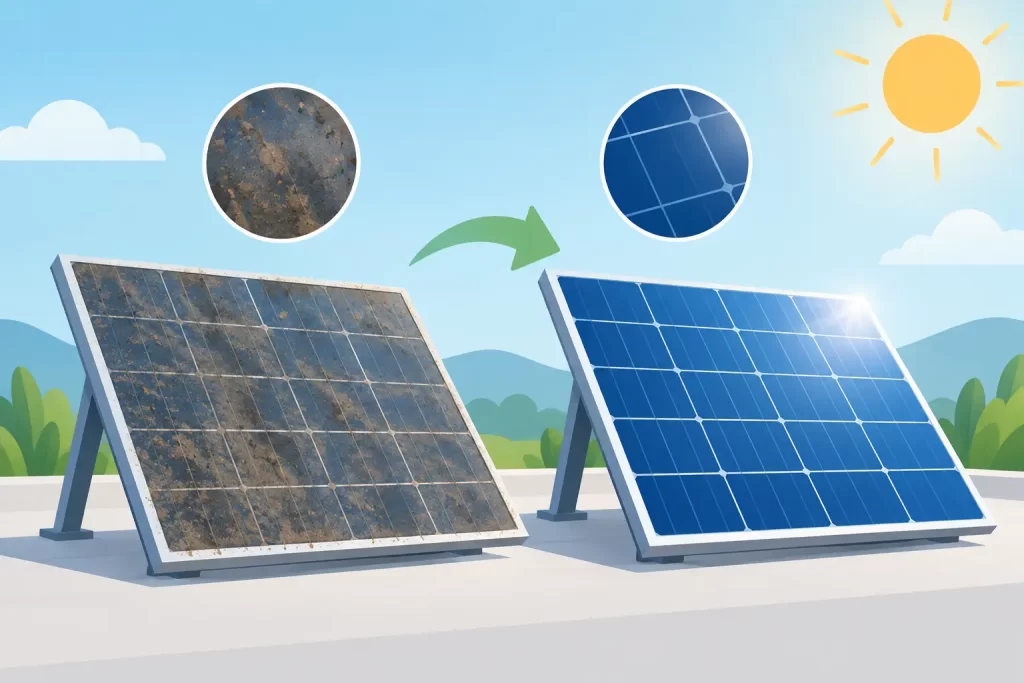
A solar PV system can look perfectly serviceable from ground level while its generation quietly slips. The question is simple: can dirty panels reduce output? Yes. Any material that blocks sunlight from reaching the cells can reduce production, and the problem becomes more serious when contamination is thick, uneven or left in place for months.
For many UK homeowners, ordinary rain will rinse away light dust and pollen. That does not mean every system is self-cleaning. Bird droppings, moss debris, lichen, traffic film, salt deposits and grime from nearby trees can stick to glass, collect around frames and create persistent shaded patches. If your monitoring shows a noticeable change in performance, cleaning may be part of the answer – but it should never replace a proper diagnosis.
Can Dirty Panels Reduce Output in Real Terms?
Solar panels work by converting available daylight into electricity. When dirt sits across the surface, less light reaches the solar cells beneath it. A light, even layer of dust may have a modest effect. Heavy staining or isolated deposits can have a far greater impact because solar modules are made up of interconnected cells.
A thick bird dropping is not just dirt. It is an opaque patch that can shade individual cells repeatedly, particularly when it dries hard in warm weather. Leaves and moss can also hold moisture against the panel edge or frame, allowing further debris to build up. On low-pitched roofs, panels beneath overhanging trees or properties with regular pigeon activity, contamination is rarely spread evenly. That uneven shading is where output losses can become more noticeable.
The exact reduction depends on the panel angle, weather, location, system design and the type of soiling. It would be wrong to promise that every clean will restore a fixed percentage of generation. A system that is already losing power because of an inverter fault, failed optimiser, damaged cable or grid-voltage issue will not be fixed by washing the glass. That is why performance should be checked before assuming dirt is the only cause.
The Dirt That Causes the Biggest Problems
In Britain, the worst contamination is usually not a thin layer of everyday dust. It is the material that adheres to the surface and keeps returning.
Bird mess is a common culprit. Pigeons nesting beneath panels create a constant supply of droppings, feathers and nesting material. Aside from reducing light levels, this can block drainage routes, attract insects and create an unhygienic problem around the roofline. The noise is often only the first warning sign.
Moss and organic debris are another concern, especially on shaded roofs or homes close to mature trees. Moss may not grow across the glass in the same way it grows on tiles, but fragments can wash down, lodge at panel edges and trap further dirt. Lichen, airborne pollution and residue from agricultural areas can also form a stubborn film that rain alone will not remove.
Coastal homes face a different issue: salt residue. It can settle on panel surfaces and, combined with windblown dirt, leave a film that needs careful removal. Hard water used in an unsuitable cleaning method can make matters worse by leaving mineral deposits behind.
Why a Quick DIY Clean Can Cost More Than It Saves
It is tempting to treat solar panel cleaning as a simple roof-cleaning job. It is not. Panels are electrical equipment installed at height, often beside fragile roof coverings, live cabling and fittings that must remain weather-tight.
Using a pressure washer is a poor idea. High pressure can damage seals, force water where it does not belong, disturb mounting components and affect the panel surface. Abrasive pads, household glass cleaners and harsh chemicals can scratch coatings or leave residues that attract more dirt. Walking directly on panels risks microcracks and can invalidate manufacturer warranties.
There is also the obvious risk of working at height. A wet roof, ladder placed incorrectly or an attempt to reach over a panel can turn a maintenance job into a serious accident. Homeowners should not have to choose between protecting solar yield and protecting themselves.
Professional cleaning should use suitable access equipment, purified water where appropriate, soft non-abrasive tools and a method that respects both the panels and the roof. Crucially, the person doing the work should understand how solar arrays are fitted. A cleaner who does not recognise loose fixings, damaged cabling, broken tiles or poor previous workmanship may leave the actual cause of the problem untouched.
Cleaning Is Also an Opportunity to Inspect the System
The best maintenance visits do more than make panels look better. They provide an opportunity to inspect the array for signs that affect safety, generation and the condition of the roof.
A competent inspection can identify visible cable damage, cracked panels, debris beneath the array, compromised bird-proofing, loose components and water pathways around the installation. It can also reveal whether nesting birds are causing repeat contamination. Cleaning panels without dealing with the pigeons underneath is a short-term fix. The mess will return, often along with damaged insulation, blocked gutters and a growing hygiene issue.
Monitoring data matters as well. Compare current output with the same season in previous years, allowing for weather differences. If one string or one part of the roof is producing less than expected, the issue may be localised shading, a panel fault or an electrical problem rather than general dirt. If the inverter displays warnings or regularly trips, do not assume a clean will cure it. A qualified solar specialist should investigate the system properly.
When Should Solar Panels Be Cleaned?
There is no responsible one-size-fits-all schedule. A clear, unobstructed system on an exposed roof may need very little intervention. A system beneath trees, close to a busy road, near farmland or affected by pigeons may need more regular attention.
Rather than booking a clean purely because a calendar says so, look for practical signs. These include hardened droppings visible from the ground, moss debris collecting around the array, reduced generation against comparable periods, water staining, nesting activity, or leaves repeatedly gathering beneath panels. A professional assessment is particularly worthwhile after storms, roofing work or a period of known underperformance.
Spring can be a sensible time to inspect and clean because the higher-generation months are approaching. However, panels should be serviced when they need it, not when a generic sales pitch tells you they do. The right interval is based on your roof, local conditions and the condition of the array.
Protect Output by Solving the Cause, Not Just the Surface Dirt
If bird activity is the main problem, cleaning alone will not protect long-term generation. Proper pigeon proofing can prevent birds accessing the void beneath the panels without drilling into frames or using makeshift materials that rust, detach or damage the installation. It should be fitted securely, with durable mesh and fixings suited to solar arrays and roof conditions.
If the issue is overhanging branches, a discussion with a qualified tree professional may be needed. If pollution film or moss debris is recurring, planned maintenance may be the sensible route. And if cleaning reveals cracked glass, damaged roof tiles or signs of an electrical fault, the priority must shift from appearance to repair and safety.
At Safer Solar UK, this is why solar cleaning is treated as specialist maintenance rather than a quick wash-and-go service. The aim is to restore clear access to sunlight while checking that the system, roof and protective measures are still doing the job they were installed to do.
A clean panel surface can help a healthy solar PV system perform as intended. But the most valuable outcome is knowing whether dirt was the problem – or whether your roof is giving you an early warning that needs a proper fix.