A solar PV system can look perfectly fine from the ground while quietly losing output, suffering from a failing inverter, or becoming a nesting site for pigeons. So, do solar panels need servicing? Yes – although not in the same way as a boiler. Panels have no moving parts, but the system around them still needs professional attention to keep it safe, productive and protected.
The sensible approach is condition-led maintenance backed by regular checks. Homeowners should not be paying for unnecessary annual work, but neither should they assume that a solar array will look after itself for 25 years. Monitoring data, visual warning signs and the age of the equipment all help determine what servicing is needed and when.
Do solar panels need servicing every year?
Not every system needs a full annual service. If your generation is consistent, the panels are clear, there are no inverter warnings and there is no sign of bird activity or roof contamination, an annual inspection may be more precautionary than urgent.
That said, a professional check every one to two years is a sensible benchmark for many homes, particularly where the system is older, difficult to inspect, surrounded by trees, or exposed to heavy bird activity. A system that was poorly installed, has suffered storm damage, or is generating less than expected should be assessed sooner.
Servicing is not just about the glass on the front of the panels. It can involve checking panel fixings, roof penetration points, cabling, isolators, inverter performance and generation records. These are the parts that can turn a small, correctable issue into lost income, reduced savings or an avoidable safety concern.
What a proper solar PV service should look for
A worthwhile service starts with performance, not a quick wipe of the panels. The engineer should compare current output with what the system would reasonably be expected to generate for the time of year, weather conditions and system size. A sudden or gradual drop can point to shading, soiling, a faulty string, inverter problems or damaged components.
The inverter deserves close attention. It is the working heart of a solar PV system and commonly has a shorter service life than the panels themselves. Error codes, intermittent shutdowns, unusual noises, loss of display information and unexplained production gaps all need investigating. A system can still appear to be working while one section is underperforming.
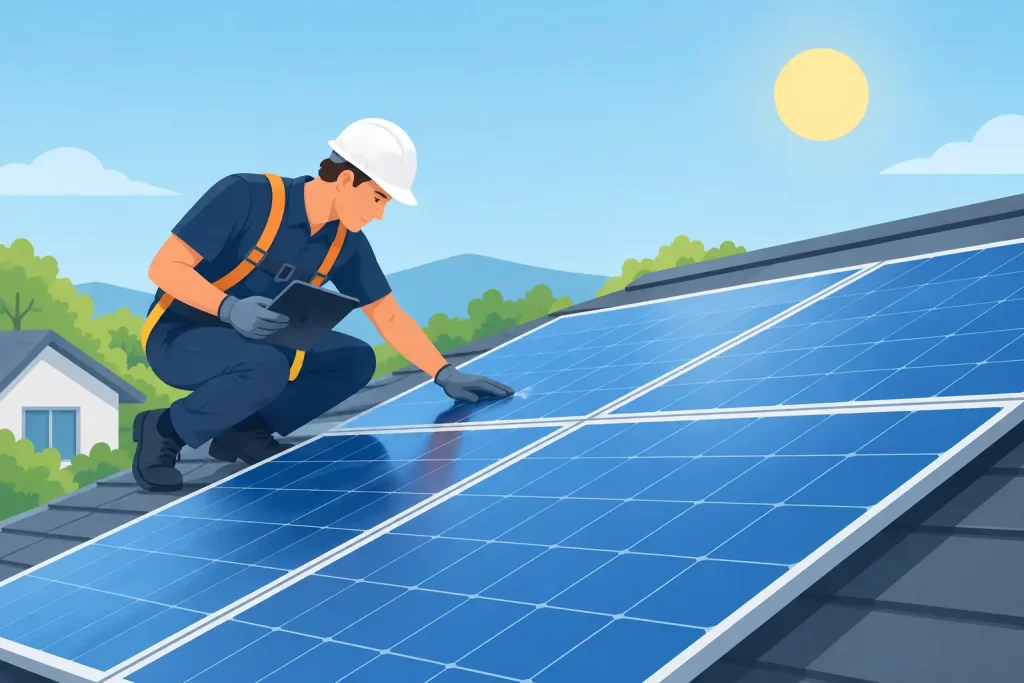
At roof level, a competent specialist will assess visible mounting hardware, cable routes and any signs of water ingress or disturbed tiles. Solar work affects both electrical safety and the roof covering. That is why a general cleaner or handyman is not the right person to diagnose a solar fault or alter panel fixings.
A thorough visit may also identify loose or degraded cabling, damaged conduit, ageing DC isolators, corrosion, cracked panels or signs of heat damage. These are not jobs to postpone because the system is still producing some electricity. Electrical defects and water entry rarely improve with time.
Cleaning is sometimes needed, but it is not the whole service
Rain will remove a light layer of ordinary dust from panels on a clear, pitched roof. In many parts of the UK, that means routine cleaning is not required every year. Claims that every solar array needs frequent cleaning to work properly are usually more sales-led than evidence-led.
However, some panels genuinely need cleaning. Moss, algae, pollen, soot, traffic film, salt residue and stubborn bird mess can all reduce the light reaching the cells. The effect is often patchy, which matters because shaded cells can restrict the output of a larger section of the array. On low-pitch roofs, beneath trees or near busy roads, build-up can be far more persistent.
Bird mess is especially problematic. It is not simply untidy: it can be acidic, harbour bacteria and attract further nesting. Pigeons nesting beneath panels bring droppings, feathers, mites and debris onto the roof. They may also obstruct drainage paths and create ongoing noise problems directly above bedrooms.
Cleaning should be carried out with the correct access equipment and methods. Abrasive pads, harsh chemicals, pressure washers and walking directly on panels can damage surfaces, seals, frames or roof tiles. A professional solar clean is about restoring access to light without creating a more expensive repair.
Pigeon proofing protects more than your panels
If pigeons have started nesting under an array, cleaning alone is not a lasting answer. Once food debris, nesting material and sheltered space are available, the birds tend to return. The right solution is to remove the contamination safely, inspect the system for damage, clean the panels where necessary and fit durable, purpose-made mesh to prevent re-entry.
Poor-quality mesh installations cause their own problems. Lightweight materials, incorrect clips or badly finished edges can loosen in high winds, mark the panels or leave gaps large enough for birds to get back underneath. The work must allow ventilation around the panels while securing the perimeter without drilling into frames or compromising the roof.
This is one area where cheap fixes regularly become repeat jobs. Proper pigeon proofing should be fitted to the array, not improvised with household mesh and hope.
Signs your solar system needs attention now
Your monitoring app is often the first warning. Check it periodically rather than waiting for an annual statement or an unexpectedly high electricity bill. A clear fall in generation against comparable periods, especially when there has been no new shading, deserves investigation.
Other warning signs include an inverter fault light or error message, repeated trips, a system that appears offline, visible dirt or bird droppings, broken tiles around the array, loose-looking components, water marks in the loft, and scratching or cooing from beneath the panels. Do not climb onto the roof to inspect these yourself. Photograph what you can safely see from ground level and arrange a qualified assessment.
It is also worth acting after severe weather. High winds can affect edge components and roof tiles, while hail, falling branches and storm debris can damage panel glass or cabling. Even if there is no obvious breakage, checking performance over the following days can reveal a problem.
Servicing older systems and poor installations
Older solar systems often need more than a simple inspection. Inverters may be approaching replacement, original monitoring may no longer work, and older electrical components may not meet the standard expected of a modern remedial installation. This does not mean the entire array must be replaced. In many cases, targeted fault finding, inverter replacement or an upgrade can restore reliable performance.
Poor workmanship needs particular care. Incorrect cable routes, poorly supported wiring, insecure mounting, unsuitable roof detailing and badly installed bird mesh should not be covered up with a quick repair. The cause needs identifying before remedial work begins. A repair that ignores the underlying installation fault can leave the homeowner paying twice.
For households considering a battery, servicing is also a useful opportunity to check whether the existing solar array, inverter and consumer unit are suitable for an upgrade. The best answer depends on your generation profile, electricity use, export arrangements and the condition of the current equipment. Adding a battery to a system with unresolved faults is rarely money well spent.
What homeowners can do between professional visits
You do not need to touch the roof to look after your system. Check the monitoring platform every month or so, particularly through spring and summer when generation should be strongest. Keep a note of fault messages, sudden changes in output and any periods when the inverter is offline.
From the ground, look for heavy soiling, new tree shading, accumulated leaves and evidence of pigeons. Inside, make sure the inverter area remains accessible, dry and well ventilated. Do not cover it with stored belongings or attempt to open electrical enclosures yourself.
A solar system is designed to be low-maintenance, not no-maintenance. Treat a drop in performance, a roof-level problem or bird activity early, and you stand a far better chance of protecting the generation you paid for over the long term.