
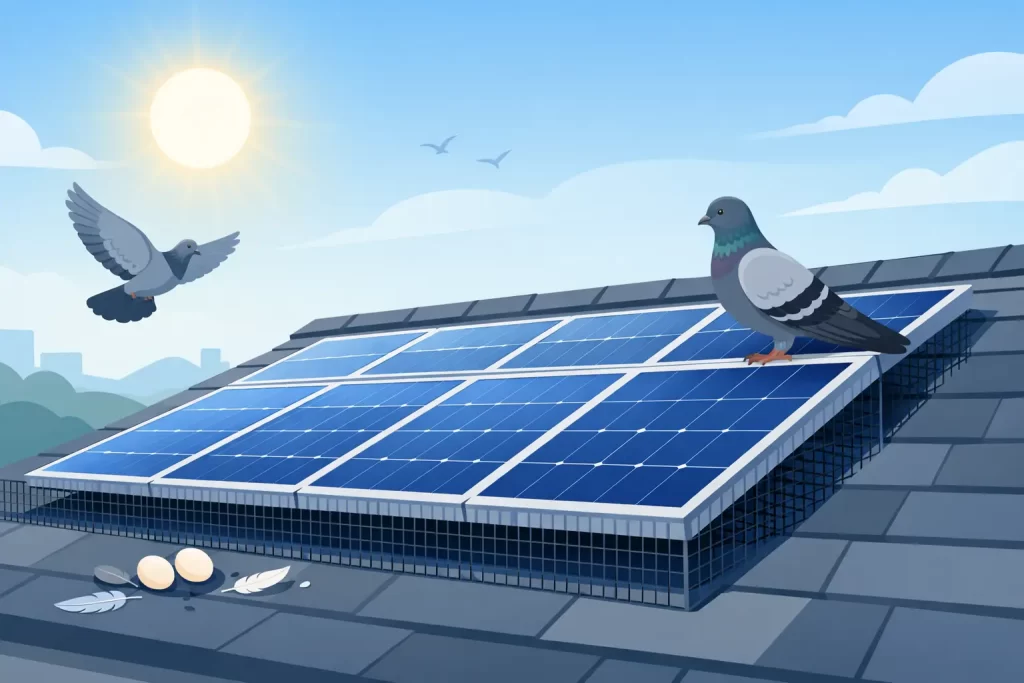
Pigeons do not simply sit on a solar array. Once they find the sheltered gap beneath the panels, they can turn it into a nesting site, leaving droppings, feathers, nesting material and parasites across the roof. Proper pigeon proofing closes off that access without compromising the panels, roof covering or ventilation they need to perform safely.
For a homeowner, the first warning is often noise: scratching, cooing or fluttering overhead, particularly early in the morning. Others notice a dirty patch at the panel edges, blocked gutters, unpleasant smells around an upstairs window or a sudden build-up of debris beneath the array. Leaving it alone is rarely the cheaper option. The longer birds are established, the more cleaning, repairs and roof access the job is likely to require.
Why pigeons under solar panels are a serious problem
Solar panels create a dry, raised and relatively warm space that protects birds from wind and rain. It is an attractive location for nesting, but it was never designed to hold organic debris or support repeated bird activity.
Droppings can spread over the panel surface and reduce the light reaching the cells. A small amount of dirt may have limited effect, but concentrated contamination at the lower edges or on one section of an array can contribute to uneven generation. It can also leave stubborn residue that should be removed using methods suitable for solar glass and frames, not aggressive roof-cleaning chemicals.
The bigger concern is underneath. Nesting material can collect around cables, panel connections and mounting rails. Birds may peck at exposed cable coverings or dislodge components over time. Debris holds moisture against areas that should remain clear, while droppings create a hygiene issue for anyone clearing gutters, cleaning windows or carrying out roof maintenance.
There is also the roof itself to consider. Pigeons can block gutters and downpipes with nesting material, creating overflowing water during heavy rain. On older roofs, persistent contamination around tiles, flashing and valleys makes inspection harder and can conceal problems that need attention. A solar system should protect your household energy costs, not create an avoidable maintenance burden overhead.
What effective pigeon proofing looks like
The most reliable solution is a purpose-made mesh barrier fitted around the perimeter of the solar array. It prevents birds entering the void beneath the panels while leaving the installation intact. The mesh is secured with dedicated clips designed for the panel frame, rather than being screwed through panels, drilled into roof tiles or improvised with materials that will fail in the weather.
A good installation starts with the condition beneath the panels, not just the visible edge. Existing nests, feathers and droppings must be assessed and removed carefully where lawful and safe to do so. If there are active nests, work may need to be delayed or planned around the relevant wildlife protections. A reputable specialist will not simply rip out an occupied nest to finish a job quickly.
Once the area is clear, durable mesh is cut and shaped to follow the array neatly. The lower edge, corners, changes in roof level and gaps around cable routes all need attention. Pigeons are persistent, and one poorly protected corner can make an otherwise tidy installation ineffective.
The finished guard should be secure but discreet from ground level. Crucially, it should not press against the glass, trap water, restrict normal drainage or block the ventilation gap beneath the modules. Panels need airflow to manage operating temperature. Pigeon proofing is about excluding birds, not wrapping the array in a sealed enclosure.
Why plastic mesh and makeshift fixes often fail
Cheap plastic netting, chicken wire and cable ties are common shortcuts. They may look acceptable on the day they are fitted, but UV exposure, wind movement and repeated bird pressure can make them brittle, loose or unsightly. Loose material can rub against panel frames, catch debris and create a further maintenance issue.
Spikes are also not a complete answer for solar arrays. They may discourage birds from landing on a ledge, but they do not reliably stop access beneath panels. Foam fillers are another poor substitute: they can degrade, hold moisture and give birds material to pull apart.
Effective pigeon proofing uses corrosion-resistant, purpose-suited mesh and proper fixing clips. Material quality matters because this is a roof-level installation expected to withstand years of British weather. Saving a small amount on unsuitable mesh only makes sense until it has to be removed and replaced.
Pigeon proofing should include cleaning and inspection
Fitting a barrier over an existing problem without clearing it first can trap contamination beneath the array. That is why the work should be treated as a remedial solar maintenance job, not a simple pest-control visit.
A proper inspection considers the visible condition of the panels, fixings, cabling and roof perimeter. It identifies whether the birds have affected gutters or whether debris has gathered in locations that need separate attention. The installer should also look for signs that the array itself was poorly fitted, such as insecure cabling, damaged panel edges or access gaps created by untidy workmanship.
Panel cleaning, where required, should be carried out with the right equipment and approach. Abrasive pads, harsh chemicals and high-pressure washing are not sensible methods for solar panels. The aim is to remove contamination without scratching glass, disturbing seals or forcing water into areas where it does not belong.
There is a practical trade-off here. A light surface clean may be enough where birds have only recently started visiting. A long-established nest site may need more extensive clearance, gutter work and a closer electrical check. The correct scope depends on what is actually found on the roof, not on a one-price promise made without inspection.
When should you arrange pigeon proofing?
The best time is before pigeons become established. If you have just had solar panels installed and neighbouring roofs already have bird activity, installing a guard early can avoid contamination and nesting altogether. It is usually more straightforward to protect a clean array than to restore one that has hosted birds for several seasons.
Do not wait for a complete drop in generation before acting. Solar generation naturally changes with the season, weather, shading and household monitoring settings, so bird activity is not always obvious from an app alone. Physical signs are often more useful: repeated pigeon traffic, debris falling from the array, droppings on the patio beneath, noise under the panels or blocked gutters.
Spring and early summer can be particularly busy periods because nesting activity increases. That does not mean protection cannot be installed at other times of year, but it does mean an early assessment gives more options if active nests are present.
Why solar knowledge matters on this type of roof work
A standard roofer may understand tiles and gutters. A general pest-control firm may understand bird behaviour. Pigeon proofing around solar panels needs both disciplines, plus an understanding of panel frames, cable routes, mounting systems and safe access.
The wrong person can damage a panel frame, crack a tile while gaining access, interfere with wiring or leave a barrier that looks neat but fails at the first vulnerable gap. They may also overlook issues caused by the original installation. This is particularly relevant where panels were fitted by a company focused on completing a new install quickly, with little interest in the aftercare that follows.
Choose a provider that can explain the materials being used, how the mesh will be secured, what cleaning is included and how active nesting will be handled. Insured workmanship and a clear warranty are meaningful here. Roof-level work is not the place for an untrained handyman, especially when your solar system and electrical cabling are part of the job.
Safer Solar UK approaches this work as solar protection, combining practical roof knowledge with the care required around a PV installation. The aim is not to sell a quick visual fix. It is to leave the array clean, protected and able to keep generating without becoming a home for pigeons.
A few birds on the roof do not automatically mean there is damage, but regular activity beneath the panels deserves attention. Deal with the access point early, use materials made for the job and make sure the person working on the array understands what sits underneath it. That is how pigeon proofing remains a lasting safeguard rather than another repair waiting to happen.