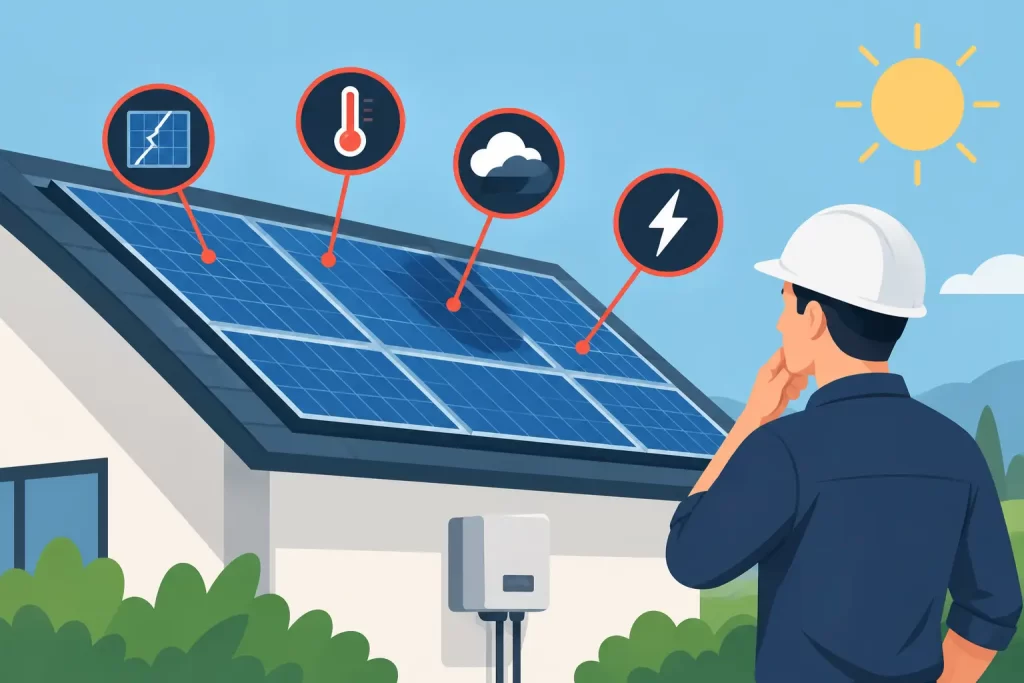
A solar PV system can look perfectly normal from ground level while silently losing a meaningful amount of generation. Solar faults are not always dramatic. A warning light on the inverter is obvious, but a single underperforming panel, a loose connection or repeated grid shutdown can reduce returns for months before a homeowner notices.
That matters whether you are trying to lower electricity bills, protect feed-in tariff income or make the most of a battery. Solar is not fit-and-forget equipment. It is an electrical system installed on a roof, exposed to weather, heat, birds and poor workmanship. When something changes, the right diagnosis protects both performance and safety.
Common solar faults and what they mean
The inverter is the part homeowners notice most often because it displays messages, warning lights and generation figures. It converts the direct current produced by panels into usable alternating current for the home and grid. If it fails completely, generation stops. However, an inverter message does not automatically mean the inverter itself is defective.
Grid voltage issues are a common example. If local voltage rises beyond the inverter’s permitted limit, the inverter disconnects to protect the network. It may reconnect later, creating a pattern of lost generation during bright periods. Replacing the inverter without investigating voltage readings, cable sizing and the installation design can waste money and leave the real fault resolved.
Other common solar faults include damaged or degraded DC cabling, poor MC4 connector terminations, water ingress in rooftop connections, failed isolators and blown protection equipment. These are not cosmetic issues. DC electricity can arc and generate intense heat if connections are loose, damaged or poorly installed. Any signs of scorching, cracking, discolouration or a burning smell need urgent professional attention.
Panels can also develop faults. A cracked module, hot spot, failed bypass diode or water ingress may affect one panel or a section of the array rather than the whole system. Because panels are connected in strings, the effect can be greater than homeowners expect. Proper testing identifies whether the issue sits with an individual module, a string, the inverter or the cabling between them.
When low generation is not an electrical fault
Not every disappointing yield is a technical failure. Generation naturally falls in winter, on heavily overcast days and when the sun is low. New shading can also make a substantial difference. A tree that has grown since installation, a neighbour’s extension or a new chimney obstruction can alter performance at key times of day.
Dirt, moss, lichen and bird mess are another frequent cause of lost output. A light layer of ordinary dust is rarely a reason to climb onto a roof. Thick grime, moss growth, repeated bird fouling and nests beneath the panels are different matters. They can block light, hold moisture against components and encourage cable damage.
Pigeons are particularly troublesome. Nesting under an array creates mess, noise and hygiene concerns, while nesting materials can obstruct drainage and attract parasites. Birds may also interfere with cabling. The answer is not a cheap mesh fixed carelessly to the panel frame. Pigeon proofing must be fitted without drilling into panels, restricting ventilation or creating a route for water to sit against the roof.
Panel cleaning should also be approached with caution. Harsh chemicals, abrasive tools and high-pressure washing can damage panels, seals and roof finishes. A specialist will assess the contamination, roof access and panel condition before deciding whether cleaning is worthwhile and how it should be carried out.
Warning signs you should not ignore
A sudden drop in daily or monthly generation is worth investigating, particularly if weather conditions are similar to previous years. Check the monitoring app first, but treat it as a clue rather than a diagnosis. Monitoring can lose its internet connection while the PV system continues to operate, and a displayed reading may not reveal an intermittent electrical fault.
Repeated inverter error codes, regular shutdowns, an inverter that is unusually noisy, or a battery that no longer charges from solar all warrant attention. So do tripped breakers, water marks around electrical equipment, damaged conduit, chewed cables or a system that has been switched off following roof work.
If there is visible damage, overheating, a burning smell or evidence of water entering electrical equipment, do not remove covers or attempt repairs. Keep clear of the affected equipment and arrange a qualified solar electrician to assess it. Switching off a solar system is not as simple as turning off one supply: panels continue to generate DC power whenever they receive light.
Why correct diagnosis matters
Fault finding should begin with the system’s history. A good engineer will ask when performance changed, whether roof works or electrical changes have taken place, which error messages appear and whether the system has a battery, optimiser or monitoring platform. Installation paperwork, commissioning details and previous generation data can all speed up the process.
The inspection then needs to cover both the roof and the electrical system. That may include a visual survey of panels and mounting equipment, checks of isolators and protection devices, cable inspection, inverter diagnostics, string voltage and current testing, and examination of the AC supply. Where appropriate, thermal imaging and insulation testing can help locate a developing issue that is not visible to the eye.
This is where experience makes a difference. A fault that appears to be an inverter failure might be caused by a poorly terminated connector on the roof. A battery complaint might be a configuration issue, a CT clamp installed incorrectly or an export limitation setting. A system producing less than expected may have been designed badly from day one, with unsuitable panel layout, undersized equipment or shading that was never properly assessed.
The cheapest quote is rarely good value when the diagnosis is wrong. Repeated call-outs, unnecessary replacement parts and temporary fixes can cost more than a thorough inspection carried out once. For systems installed by firms that are no longer trading, clear fault reports are especially useful when deciding whether repair, replacement or an upgrade is the sensible route.
Solar faults after roof work or an upgrade
Roofing work and solar PV need to be planned together. Panels may need careful removal and reinstatement before repairs to tiles, felt, battens or flashings can be completed. Working around an array without suitable solar knowledge risks cracked panels, disturbed roof hooks, damaged cabling and water ingress.
The same principle applies when adding a battery, replacing an inverter or expanding an existing system. New equipment must be compatible with the current array, supply arrangement and export permissions. Older systems can have limitations, and an upgrade is not always a straightforward swap. Sometimes retaining a working inverter is sensible; in other cases, replacement creates a safer and more useful system with improved monitoring, battery capability or better control of surplus generation.
Safer Solar UK approaches fault work with the full system in mind: roof condition, array security, electrical safety and long-term output. That is vital when correcting work completed by installers who treated solar as a side job rather than a specialist service.
What homeowners can check safely
You do not need to go onto the roof or open electrical enclosures to spot useful patterns. Compare current generation with the same month in previous years, allowing for weather differences. Check whether the inverter display shows a persistent message, whether monitoring has stopped updating, and whether shading or bird activity has changed around the array.
Keep a note of dates, messages and screenshots from the app. If the system shuts down at roughly the same time on sunny days, mention that. If the issue began after a power cut, roof repair or electrical work, mention that too. These details can reduce diagnostic time and help distinguish a genuine equipment fault from a communications problem or grid-related shutdown.
Avoid resetting the inverter repeatedly in the hope that the warning disappears. A reset may temporarily clear a code but it does not repair the cause, and repeated restarts can obscure a useful fault pattern. Never climb onto the roof to inspect panels or attempt to reconnect cables yourself.
A healthy solar system should earn its place on your roof year after year. If output no longer looks right, act before a small fault becomes lost generation, roof damage or an electrical safety issue.