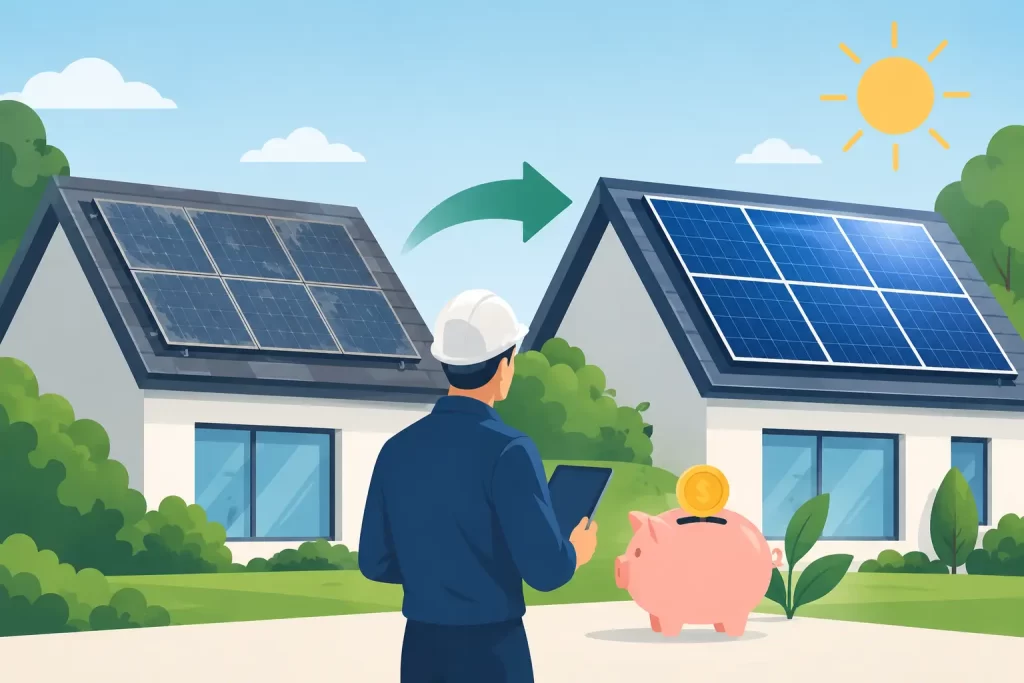
A solar PV system that looked impressive ten or fifteen years ago can quietly become the weak link in an otherwise energy-efficient home. An ageing inverter may be clipping generation, a failed panel may be dragging down a string, or pigeons and moss may be creating problems that a basic clean will not solve. Knowing how to upgrade old solar starts with finding out what is actually limiting performance – not buying the first piece of new equipment offered to you.
A proper upgrade should protect your roof, improve usable generation and leave you with a system that can be maintained safely for years. That requires more than swapping a box on the wall. It requires a specialist who understands solar electrics, roof detailing, system design and the common mistakes left behind by poor-quality installations.
Start With a Proper Solar Health Check
Do not judge an old system by whether the inverter screen is lit. Many underperforming systems still appear to be working. The useful question is whether they are generating what they reasonably should for the roof orientation, panel age, season and local shading.
A competent assessment looks at historic generation data where available, then checks the panels, mounting system, cables, isolators, inverter, consumer unit connection and roof penetrations. It should also identify external causes of poor output, such as new tree growth, chimney shadows, bird nesting or heavy soiling.
This is where cheap, one-size-fits-all advice often causes expense. Replacing every panel is rarely the first answer. A system may instead need an inverter replacement, one or two faulty panels addressed, improved monitoring or remedial electrical work. Equally, fitting a battery to a system with an existing fault only stores less value from a problem that has not been fixed.
Check the paperwork before changing the system
Find the original installation paperwork, commissioning information, warranties and any feed-in tariff records. If your system receives Feed-in Tariff payments, make sure any upgrade is planned with the tariff rules in mind. Replacing components does not automatically mean losing payments, but capacity changes and metering arrangements need to be handled correctly.
Your installer should also establish whether the proposed work needs notification to the Distribution Network Operator. This is particularly relevant when adding battery storage, increasing inverter capacity or changing the way the system connects to the grid. It is administrative work, but it matters. A good upgrade is electrically compliant on the day it is fitted and properly documented afterwards.
How to Upgrade Old Solar: Choose the Right Improvement
The best route depends on the age and condition of your equipment, how you use electricity and whether the roof itself is ready for more work. These are the upgrades that most often make a practical difference.
Replace a tired or failed inverter
Inverters commonly have a shorter working life than solar panels. If yours is showing faults, repeatedly shutting down, losing generation on sunny days or no longer communicating with its monitoring portal, it may be time to investigate replacement.
A modern inverter can improve monitoring and may work with a future battery system, but bigger is not automatically better. The correct size depends on the array, its orientation and the electrical design. Oversizing or undersizing without calculation can reduce the benefit you were hoping for. The new inverter must also be installed with suitable protection, correctly rated cabling and safe isolation equipment.
Add battery storage where it suits your household
Battery storage can make a real difference if your panels generate during the day while the household uses most electricity in the morning and evening. Instead of exporting all surplus generation for a modest payment, you can store some of it for later use.
It is not a magic saving for every home. A small household that is out all day, has low electricity use and produces limited solar surplus may see a longer payback period than a family with higher evening demand. The best battery size is based on actual import and export patterns, not a sales target. It should also be selected around safe siting, ventilation requirements, usable capacity, warranty terms and whether backup power is genuinely required.
For some older systems, an AC-coupled battery is the sensible choice because it can work alongside the existing solar inverter. In other cases, replacing the inverter with a hybrid model creates a cleaner long-term arrangement. The right answer depends on the condition of what you already have.
Add panels only after checking roof space and system design
Adding panels can be worthwhile, especially where electricity demand has increased due to an electric vehicle, heat pump or a growing household. However, an extension needs to work electrically as well as physically. Mixing panel types, orientations and ages on the same string can create mismatch losses unless the design accounts for it.
The roof also needs careful inspection. Loose tiles, degraded flashing, ageing felt, poor cable routes and weak fixings should be dealt with before additional panels go on. Solar panels should not be used to hide roof defects. Removing them later to repair a preventable issue is disruptive and costly.
Upgrade monitoring and get control of your generation
Older systems often provide little more than a lifetime generation figure on a small display. Modern monitoring can show live production, household consumption, grid imports, exports and battery activity. It helps you see faults early and adjust routines, such as running appliances when solar output is strongest.
Monitoring is valuable only if the readings are accurate and the system has been installed correctly. A professional should explain what the figures mean, rather than leaving you with an app full of graphs and no clear picture of whether the system is doing its job.
Do Not Ignore the Physical Condition of the Array
Panels work outdoors for decades, so their condition matters as much as the electronics behind them. Moss, algae, lichen and accumulated dirt can affect output, but aggressive cleaning can be worse than leaving the panels alone. Abrasive tools, harsh chemicals and pressure washers can damage panel surfaces, seals and roof tiles.
Pigeons are an even more serious issue. Nesting beneath panels can block gutters, create unpleasant contamination and damage cabling. The weight of nesting material and persistent moisture can also create problems around the roofline. Proper pigeon proofing uses durable mesh and secure fittings designed around the solar array. It should not involve drilling through panel frames, trapping birds or using flimsy material that will fail after one winter.
If panels need cleaning, it should be carried out with suitable methods, safe roof access and a clear understanding of the array beneath. A contractor who treats panels like conservatory glass may not recognise damaged connectors, loose mounting components or unsafe cabling while they are on the roof.
Watch for Signs That an Upgrade Has Become Urgent
Some issues should not wait for the next convenient season. Repeated inverter errors, burning smells, water ingress around cable entries, cracked isolator housings, tripping circuits or visible animal damage need prompt specialist attention. Do not repeatedly reset a faulting inverter and assume the problem has gone away.
Likewise, if generation has fallen sharply without an obvious seasonal reason, arrange diagnostics. A failed string, insulation fault, degraded connection or inverter issue can leave a system producing far less than expected for months before the homeowner notices. Lost generation adds up, particularly when electricity prices are high.
Be cautious of anyone who offers a quick fix without testing. Solar faults can sit on the DC side of the system, where voltages remain present whenever daylight reaches the panels. This is not handyman work, and it is not a job for unqualified roof cleaners.
Plan the Upgrade Around Your Next Ten Years
The strongest solar upgrades are planned as a sequence rather than a collection of impulse purchases. If the inverter is nearing the end of its life but the panels are sound, choose a replacement that keeps sensible battery options open. If the roof will need work soon, resolve that first. If pigeons are nesting beneath the array, protect and clean the system before contamination and cable damage become more expensive.
Safer Solar UK approaches older systems with this practical mindset: diagnose the cause, correct unsafe or poor-quality work, and fit durable solutions that make sense for the property. The aim is not to sell the largest upgrade. It is to make sure the system on your roof earns its place there.
Your old solar system may have plenty of useful life left. With an honest inspection and the right improvements in the right order, it can become a more reliable part of how your home uses energy – rather than an ageing installation you hope is still working.