
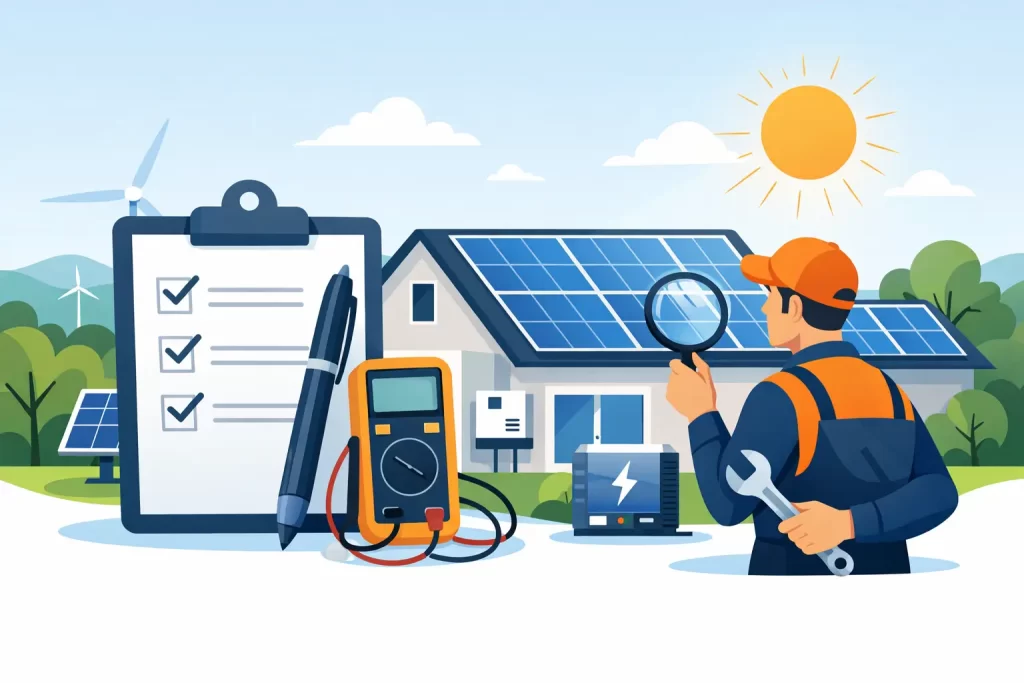
A solar system can look perfectly normal from the ground while quietly producing less electricity than it should. A dirty panel surface, a failing inverter, loose cabling or pigeons nesting beneath the array can all reduce performance over time. This solar maintenance checklist homeowners can follow helps you spot warning signs early, protect your investment and avoid the costly mistakes that come from leaving faults too long.
Solar PV is not maintenance-free. It is low-maintenance when it has been installed correctly and checked by people who understand both the electrical system and the roof it sits on. The aim is not to climb onto the roof with a brush or start opening electrical equipment. It is to monitor what you can safely see, act quickly when generation changes and bring in a qualified specialist for work that carries a safety or warranty risk.
Your solar maintenance checklist for homeowners
Check generation figures every month
Your inverter app, generation meter or monitoring portal is often the first place a problem shows up. Check the output at least monthly and compare it with the same period last year, allowing for differences in weather. A bright June should not suddenly generate far less than the previous June without a reason.
Do not judge the system solely by one cloudy day. Look for a consistent drop, missing generation data, repeated alerts or an inverter that stops producing at certain times. If you have added a battery, also check whether it is charging and discharging in line with the settings you expect. Poor battery settings can leave valuable solar generation unused, while a fault may prevent the battery from charging at all.
A gradual fall in output can indicate dirt, moss contamination, shading from new tree growth or panel deterioration. A sudden fall is more likely to point to an inverter, isolator, cable, connection or monitoring issue. Both need investigation, but they are not the same job.
Look at the inverter safely from ground level
The inverter is the working heart of most domestic solar PV systems. Once a month, check that it is powered, its display or status light appears normal and it is not showing a fault code. Many inverters make a gentle operational sound during daylight hours, but loud buzzing, clicking, burning smells or excessive heat are not normal.
Keep the area around the inverter dry, clear and ventilated. Do not store boxes, coats or household items against it. Heat is the enemy of electrical equipment, and restricted airflow can shorten an inverter’s service life.
If the display is blank during daylight, the app has stopped reporting or a warning light remains on, record the fault message and arrange a professional diagnostic visit. Do not repeatedly switch isolators on and off in an attempt to reset the system. That can mask an intermittent fault and, in the worst cases, place unnecessary strain on equipment.
Inspect panels, roof edges and gutters from the ground
A visual inspection after winter, strong winds and periods of heavy rain is sensible. From a safe position on the ground, look for obvious debris, thick bird mess, moss, damaged panel glass, slipped tiles, loose-looking brackets or anything caught around the array. Binoculars can help, but never climb onto a roof or lean ladders against panels.
Pay close attention to the lower edge of the panels and the gutter line. Moss, leaves and nesting material can block gutters, hold moisture against the roof and create a mess that spreads beneath the system. Water should drain cleanly away from the roof. Overflowing gutters beneath solar panels are not merely a housekeeping issue – they can become a roof maintenance problem.
Small amounts of dust and rain spotting rarely justify a rushed clean. In the UK, rainfall naturally removes much loose surface dirt. Thick grime, bird droppings, pollen buildup, moss debris and industrial fallout are different. These can block light and create uneven shading across cells, reducing output more than homeowners expect.
Treat pigeon activity as a maintenance issue, not a nuisance
Pigeons under solar panels are one of the most common causes of avoidable solar damage. The warm, sheltered gap beneath an array is an ideal nesting space. Once birds gain access, nesting material, feathers and droppings accumulate quickly.
This creates more than an unpleasant noise problem. Droppings can contaminate panels and gutters, block drainage, attract insects and create hygiene concerns. Nesting material can interfere with cabling or ventilation beneath the array. In severe cases, repeated movement and debris can contribute to damaged components and a much larger clean-up bill.
Look for birds repeatedly flying behind panels, persistent cooing from the roof, feathers around the property, debris in gutters or staining below the array. Early professional pigeon proofing is usually far simpler than clearing an established nest. The work needs to be fitted securely without drilling into panels, compromising the roof or using flimsy mesh that deforms after a season.
Keep shading under control
Solar panels need direct light. A branch that was harmless when the system was installed can become a serious shading issue a few years later. Check for growing trees, climbing plants, new extensions, satellite dishes or neighbouring structures that cast shade during the middle of the day.
Shade does not always affect every panel equally. Depending on how the system is designed, one shaded area can reduce the output of a wider section of the array. This is why a specialist should assess the cause before recommending changes. Tree work may help, but the answer could also involve system optimisation, panel-level equipment or a review of how strings are performing.
Check warning labels, consumer unit and visible cables
Your solar installation should have clear warning labels at isolators, the consumer unit and relevant supply points. During a visual check, look for faded or missing labels, cracked isolator covers, water ingress around equipment or visible cable damage. Keep children and pets away from all solar electrical components.
Do not remove covers or test live equipment yourself. Solar PV systems can remain live whenever panels are exposed to daylight, even if other parts of the installation are switched off. A homeowner’s role is to identify concerns, not to carry out electrical diagnosis.
If you notice scorch marks, melted plastic, a burning smell, water entering electrical equipment or repeatedly tripping circuits, treat it as urgent. Switch off only if you can do so safely using the documented emergency procedure supplied with the system, then contact a qualified solar professional or electrician without delay.
When solar panel cleaning is worth doing
Panel cleaning should be based on condition and performance, not a blanket promise that every system needs regular washing. A clean array can help restore generation where panels are heavily soiled, but aggressive cleaning can cause damage that costs far more than any recovered output.
Avoid pressure washers, abrasive pads, strong detergents and tap water that leaves heavy mineral deposits. Never walk on panels. Micro-cracks, damaged seals and scratched glass may not be obvious immediately, yet they can affect long-term performance and warranties.
A professional clean is most worthwhile where you can see persistent bird mess, dense organic debris, pollution residue or a measurable performance drop that cannot be explained by weather or shading. The right contractor will assess the condition first, use suitable equipment and inspect for related problems such as pigeons, blocked gutters or loose components.
Arrange a professional health check annually
A yearly solar health check is sensible for most households, particularly where the installation is older, output has fallen, the original installer is no longer trading or there has been previous roof work. It is also wise after storm damage or before committing to a battery upgrade.
A proper inspection goes beyond looking at the panels. It should consider generation data, inverter operation, cable condition, isolators, mounting hardware, roof penetrations, signs of water ingress, visible panel defects and the overall condition of the array. Where faults are suspected, testing and diagnostics should identify the cause rather than replacing parts by guesswork.
This matters because poor original workmanship is common. Loose cable management, unsuitable roof fixings, poorly fitted bird mesh and badly planned electrical work can all become expensive if ignored. Safer Solar UK approaches maintenance as a system check, not a quick visual tidy-up, because the roof, panels, electrics and performance figures are all connected.
Keep records that protect your system
Keep installation certificates, commissioning documents, warranties, inverter manuals, photographs and service records together. Add notes of faults, error codes, cleaning dates and annual generation totals. These records are useful when diagnosing problems, making warranty claims, selling the property or planning upgrades such as battery storage.
If your system has a feed-in tariff or export arrangement, accurate records also help you keep an eye on income and identify prolonged underperformance before it becomes a bigger loss.
The best maintenance habit is simple: watch the numbers, inspect safely from the ground and act before a small change becomes a failed inverter, contaminated roof space or damaged installation. Solar should keep earning its place on your roof, not become a problem you only notice when the bills rise.