
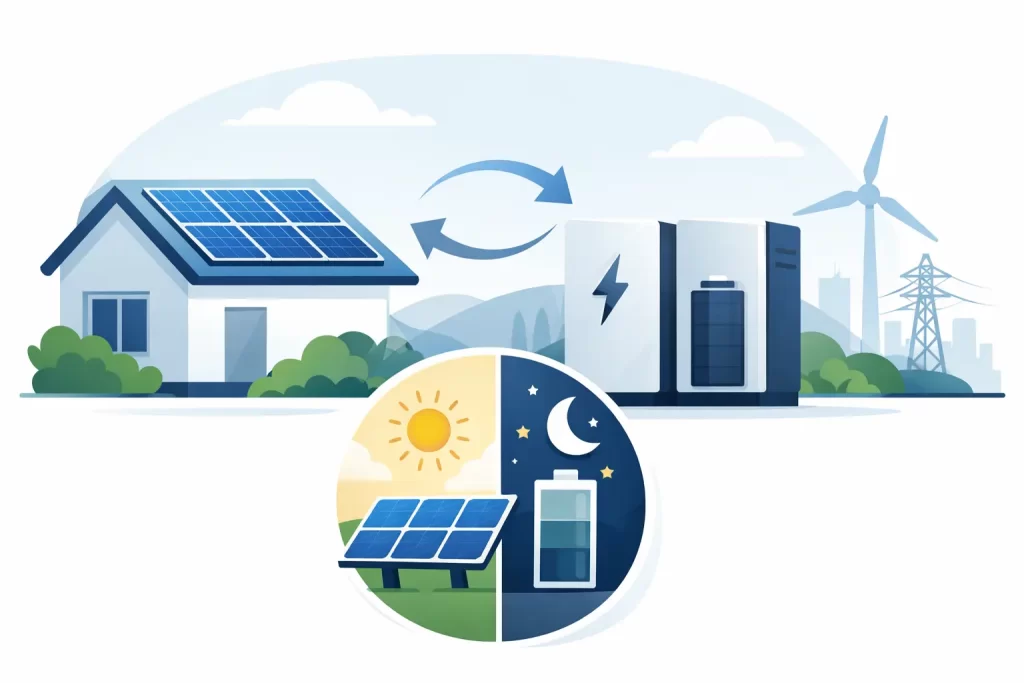
A solar PV system can generate plenty of power at midday while the house is empty, then leave you buying electricity when the kettle, oven and television go on in the evening. That is why many homeowners ask about an upgrade solar for battery storage. Done properly, a battery can make more of your own generation available when you need it. Done badly, it can expose existing faults, create compatibility problems and leave you with an expensive system that does not perform as expected.
Battery storage is not a bolt-on purchase to make in isolation. Your panels, inverter, consumer unit, generation history and household electricity use all matter. A proper survey should establish what your system can safely do before anyone recommends a battery size or starts talking about savings.
Should You Upgrade Solar for Battery Storage?
For many established PV owners, adding a battery is a sensible next step. It is particularly useful where a household exports a significant amount of solar electricity during the day but uses most of its power in the late afternoon and evening. Rather than sending every spare unit to the grid, the battery stores a portion for later use.
The value depends on your pattern of use, not simply the size of the roof array. A household that is regularly at home in daylight and already runs appliances from solar may have less surplus to store. A family with an empty house from nine until five may benefit more, especially if electricity demand rises after work.
There are other reasons to consider storage. A battery can support planned use of cheaper off-peak electricity tariffs, subject to the chosen system and tariff terms. It can also help smooth household reliance on imported electricity. However, it will not create extra solar generation, and it cannot make up for shaded, dirty or faulty panels.
A battery is also not automatically a backup power system. Keeping selected circuits running during a power cut requires the right backup equipment, safe changeover arrangements and careful design. Never assume that a standard battery installation will power the whole property when the grid fails.
Check the Existing Solar System First
An older solar installation may have years of reliable service left. Equally, it may have hidden problems that a battery will not solve. Before upgrading solar for battery storage, the existing PV system needs a thorough technical check.
Start with generation. Compare current output with historic readings, taking account of weather and seasonal variation. If generation has fallen noticeably, investigate why. Common causes include inverter faults, panel shading, damaged cables, poor connections, roof contamination and bird activity beneath the panels. Pigeons can foul panels, block drainage routes and damage cabling or components over time. Moss, lichen and heavy grime can also affect performance and make safe inspection more difficult.
The inverter deserves particular attention. Its age, condition and specification influence the best battery route. An inverter near the end of its working life may make a replacement with a compatible hybrid unit more sensible than fitting separate equipment around an ageing system. On the other hand, a healthy existing inverter may suit an AC-coupled battery, allowing the solar inverter and battery system to operate separately.
The electrical installation must be inspected too. That includes isolators, protective devices, earthing arrangements, cabling and the consumer unit. Poor previous workmanship is not rare, particularly on older systems installed by companies that have since disappeared. A specialist should identify remedial work before adding further equipment. Storage systems involve high currents and substantial stored energy. This is not work for a general handyman or an installer guessing their way around an unfamiliar solar system.
AC-Coupled or Hybrid Battery: Which Route Fits?
There are two common approaches to retrofitting a battery. Neither is universally better.
An AC-coupled battery is often well suited to an existing, working solar PV system. It has its own battery inverter and monitors the property’s import, export and solar activity. This can avoid replacing a solar inverter that still has useful life left. It can be a practical route where the original PV system is sound but does not support direct battery connection.
A hybrid inverter combines solar and battery management in one unit. This route may be appropriate if the existing inverter has failed, is outdated or is due for replacement. It can provide a tidier long-term arrangement, but it may involve more alteration to the PV system and additional labour. The right choice depends on the equipment already installed, available space, wiring routes, future expansion plans and the condition of the system.
Be wary of one-size-fits-all packages. A battery that looks cheap on paper can become costly if it needs major electrical alterations, remedial PV work or a rushed inverter change. The specification should clearly state what is being retained, what is being replaced and how the system will operate once commissioned.
Size the Battery Around Real Use
The largest battery is not always the best investment. If a household only has a modest amount of solar surplus on a typical day, a very large battery may spend much of the year partly empty. If it is too small, it may fill before midday and export the remainder of your generation.
A sensible recommendation uses actual electricity data where possible. Smart meter half-hourly readings, electricity bills and inverter monitoring can reveal when you import power, when you export it and how much energy is realistically available for storage. It should also consider seasonal reality. Summer production is generous, but winter solar output can be limited just when household demand is highest.
Future changes matter as well. An electric vehicle, heat pump, electric shower or growing family can alter consumption substantially. In some homes, it makes sense to choose a system with a realistic expansion path rather than oversizing from day one. Battery capacity, usable capacity, warranty throughput and expected operating strategy should all be explained in plain terms.
Safety, Location and Compliance Are Part of the Job
Battery storage must be installed in a suitable location, with manufacturer clearances, safe cable routes and appropriate protection. A garage, utility area or external location may be suitable depending on the equipment and property. The decision should not be based solely on whichever wall is easiest to reach.
The installer should also address network requirements and any necessary notifications or applications with the local distribution network operator. Export limits can affect the system design, particularly where an existing solar array is already exporting close to its agreed capacity. If you receive payments linked to an older generation scheme, metering arrangements and system changes should be considered carefully before work begins.
Good commissioning matters just as much as installation. You should be shown how the battery operates, what the monitoring data means and how to recognise a fault. Keep the handover documents, warranties, electrical certificates and updated system information safely stored. If the original installation paperwork is missing, that should be raised early rather than ignored.
When a Battery Is Not the First Fix
If your PV system is underperforming, deal with that first. Cleaning panels where contamination is affecting output, resolving pigeon problems, replacing a failing inverter or correcting unsafe cabling can restore lost generation. There is little point storing solar electricity that your system is failing to produce.
The same applies to severe shading. A battery can shift the timing of available energy, but it cannot cure a chimney, tree line or neighbouring building blocking sunlight. A professional assessment should be honest about these limits, even if the answer is that remedial work is needed before storage will pay its way.
A battery upgrade should leave your home with a safer, better understood energy system, not another black box attached to an existing problem. Safer Solar UK Ltd approaches retrofits by checking the whole PV system first, then specifying storage that suits the property, the equipment and the way the household actually uses electricity.