
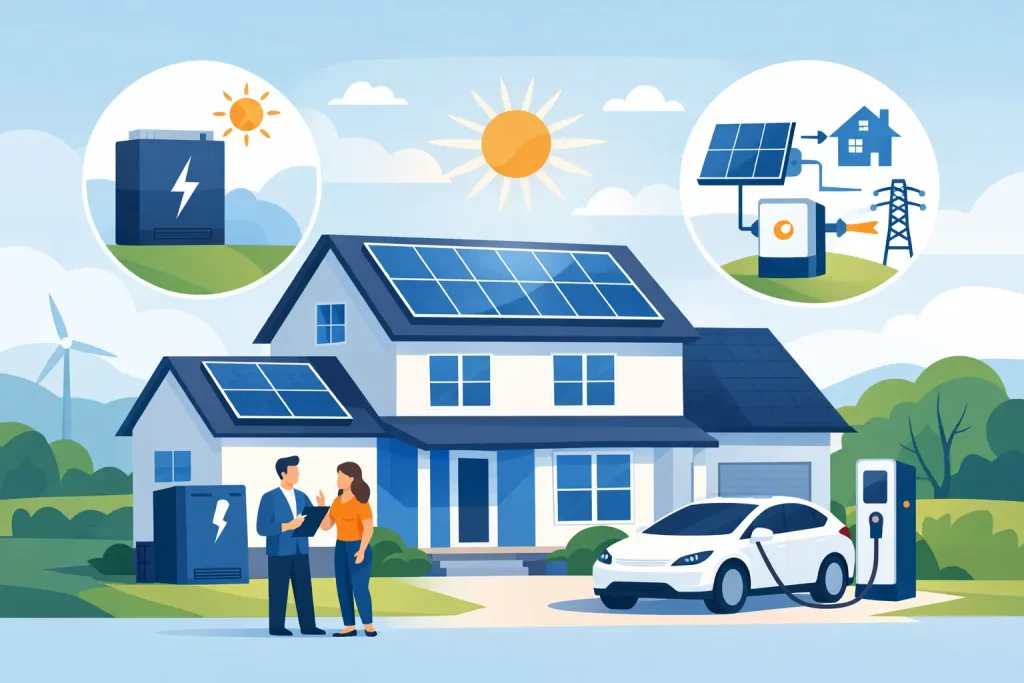
A solar PV system should not be treated as a fit-and-forget purchase. If your generation has fallen, your daytime export is high, or the original installation is showing its age, there are solar upgrade options homeowners can use to improve performance without replacing a working system unnecessarily. The right answer depends on what is actually limiting your system: poor panel condition, an ageing inverter, unsuitable export settings, roof access issues, or simply no way to store surplus electricity.
The first rule is straightforward: diagnose before you buy. A battery will not cure a fault, and extra panels will not solve a roofline blocked by nesting pigeons. A proper inspection should look at generation history, inverter alerts, cabling, mounting hardware, panel condition, roof penetrations and any evidence of water ingress or contamination. This is where specialist solar and roofing knowledge matters. Cheap work that ignores the roof, electrical safety or manufacturer requirements can turn an upgrade into an expensive repair.
Start by finding out why performance has changed
Many homeowners only notice a problem after a disappointing electricity bill. Yet a gradual drop in output can be caused by several separate issues. Dirt, moss, bird droppings and leaf debris can reduce light reaching the panels. Pigeons nesting beneath an array can damage cables, block drainage routes and create an unhygienic build-up on the roof. A failing inverter may work intermittently or derate output without the fault being obvious from indoors.
Compare current production with the same months in previous years, allowing for weather differences. Check the monitoring portal for warning codes, missing days of data or unusually low midday output. Do not climb onto the roof or attempt to lift panels yourself. Panels, fixings and DC cabling all need careful handling, while a roof that looks accessible from the ground can be unsafe underfoot.
A professional assessment may reveal that a targeted repair, clean or protective measure offers a better return than a major electrical upgrade. It also establishes whether the system is safe and suitable for further investment.
Add battery storage when export is the real problem
Battery storage is one of the most popular solar upgrade options for homeowners because it changes when you use your solar electricity. Instead of sending a large share of daytime generation to the grid, a battery can retain some of that energy for evening cooking, lighting and appliance use.
It is not automatically the right choice for every property. Homes occupied during the day may already use much of their generation directly. A household with a modest array, low consumption and a good export tariff may find the financial case less compelling than a family that is out all day and buys electricity during higher-priced evening periods.
AC-coupled and DC-coupled batteries
An AC-coupled battery is often suitable for an existing solar system because it can be installed alongside the current inverter. This can make it a practical retrofit route where the solar inverter is still healthy. A DC-coupled arrangement can be efficient where a new solar and battery system are being designed together, but it may involve replacing more equipment.
Battery capacity should match real household patterns, not sales language. An oversized battery that rarely fills is capital tied up in unused capacity. One that is too small may be full before the best part of a sunny afternoon, leaving further generation to export. Usage data, seasonal production and planned changes such as an electric vehicle or heat pump should all be considered before specifying a size.
Ask clear questions about warranty terms, usable capacity, expected degradation, emergency power capability and whether backup operation includes essential circuits only. A battery does not necessarily keep the whole house running during a power cut. That depends on the equipment design and how the property is wired.
Replace an ageing or unsuitable inverter
The inverter is the working heart of a solar PV system. It converts the panels’ DC electricity into usable AC electricity for the home. Inverters do not last forever, and older units can become unreliable, noisier, inefficient or difficult to monitor as parts and software support become limited.
An inverter replacement can be a sensible upgrade when a unit is repeatedly faulting, outside warranty, or no longer suitable for a planned battery installation. It can also improve monitoring, giving homeowners clearer visibility of live generation, household use, export and battery status.
However, an inverter must be specified for the actual array. String configuration, panel ratings, shading, roof orientation and network requirements all matter. Simply fitting the biggest available inverter is not good practice. The installer should check the existing design, protective devices and certification before recommending a replacement.
If your system receives Feed-in Tariff payments, take particular care. Alterations can affect metering arrangements or the evidence needed to protect payments. Keep documents for the original system and seek advice before changing its generating capacity or configuration.
Increase solar capacity only after checking the roof and connection
Adding panels can make excellent sense where a household’s electricity demand has risen. An electric vehicle, home office, electric cooking or planned heat pump can change the value of generating more power. A new extension, garage or outbuilding roof may also offer a useful additional mounting area.
But more panels are not always a straightforward bolt-on job. The existing roof structure and covering need to be in sound condition. A tired roof may be better repaired before new mounting rails are installed, rather than disturbed twice. New panels may not match the electrical characteristics of an older string, and mismatched equipment can limit output.
The local electricity network operator may also need to be notified or approve a larger system, depending on the change being made. This is not paperwork to skip. Network connection rules exist to protect the property, the installation and the wider supply.
Where shading affects part of an array, optimisers or microinverters may be worth assessing. They can help in some layouts, particularly where chimneys, dormers or nearby trees cast uneven shade. They are not a magic cure for a heavily shaded roof, and additional electronics bring extra cost and complexity. Sometimes selective tree management, where appropriate, or realistic expectations about production are the better answer.
Protect the panels you already own
Not every upgrade involves adding electrical equipment. Restoring access to sunlight and preventing physical damage can be one of the most valuable ways to protect output over the long term.
Professional solar panel cleaning is useful where panels are affected by bird droppings, traffic film, pollen, moss debris or roof contamination. The method matters. Abrasive products, harsh chemicals and untrained pressure washing can damage surfaces, seals or roof tiles. Cleaning should be carried out safely with equipment and techniques suitable for solar arrays.
Pigeon proofing is equally important where birds have moved under the panels. Once nesting starts, the problem rarely resolves on its own. Nesting materials can accumulate around cables and beneath the array, while droppings reduce panel performance and create a mess across gutters, patios and vehicles below. Properly fitted mesh protection should secure the perimeter without drilling into panel frames or compromising the roof.
This is one area where poor workmanship is common. Loose mesh, unsuitable clips and rushed fitting can look acceptable from the ground but fail after wind, weather and repeated bird pressure. Durable materials and correct installation are worth paying for because removal and rework often cost more than doing it properly first time.
Do not overlook voltage and electrical quality
Some homes experience high local voltage, which can cause an inverter to reduce generation or disconnect to protect the grid. If monitoring shows regular grid-related shutdowns, the cause should be investigated rather than assumed to be a panel fault. In some circumstances, voltage optimisation or network-related checks may be relevant, but they must be based on measured site conditions.
A qualified contractor should also inspect isolators, consumer unit connections, earthing, cable routes and signs of heat damage or poor previous alterations. Solar upgrades involve both DC and AC electrical work. A neat-looking installation is not necessarily a safe one.
Choosing between solar upgrade options for homeowners
The best upgrade is the one that addresses a proven weakness in your system. If panels are heavily soiled or birds are nesting beneath them, restore and protect the array first. If the inverter is unreliable, replacement may be the priority. If the system produces well but exports too much electricity, battery storage may offer the most practical improvement. If demand has grown and the roof is suitable, extra generation can be considered alongside the required electrical and network checks.
Safer Solar UK approaches upgrades as a performance and safety decision, not a catalogue exercise. A clear survey, honest explanation of trade-offs and workmanship that respects both the roof and the electrical system will protect your investment far better than a quick-fix quote.
Before spending on any upgrade, make sure you can see the condition of the system you already own. The most valuable next step is often not the biggest addition, but the one that stops wasted generation, prevents avoidable damage and gives you confidence that your solar is working as it should.