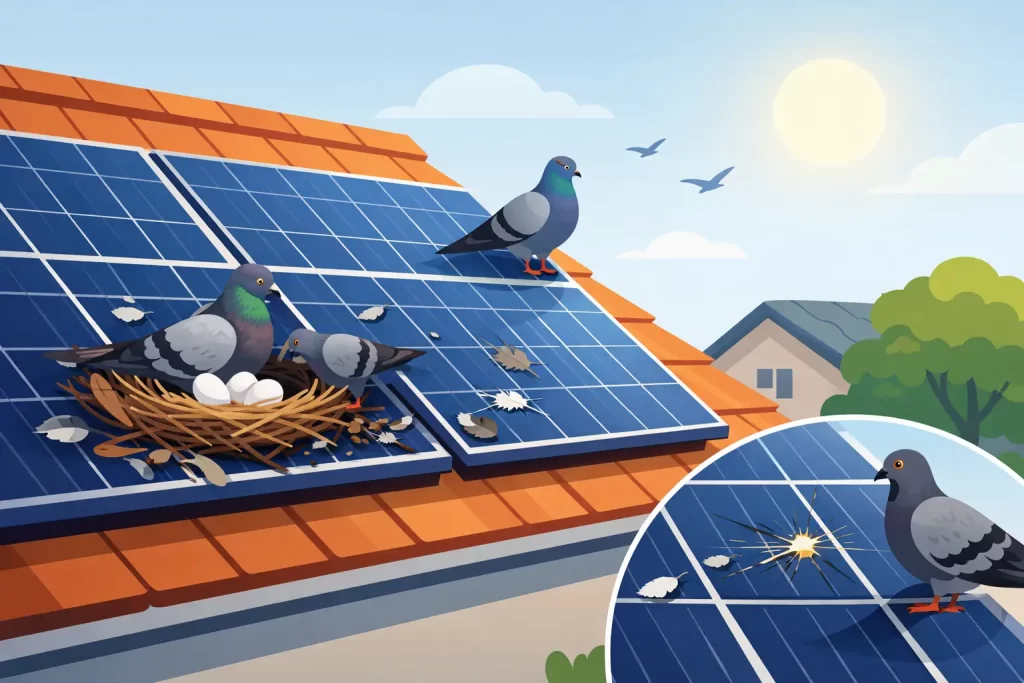
A few pigeons sitting beneath your panels may look harmless from ground level. What you cannot see is the nest material, droppings and trapped debris building up in the narrow gap between the array and your roof. So, can pigeon nests damage solar panels? Yes – although the damage is often gradual rather than dramatic. Left alone, a nesting problem can reduce generation, create hygiene issues, affect cabling and turn a straightforward maintenance job into a costly repair.
For homeowners relying on solar to reduce electricity bills or protect feed-in tariff income, this is not just a cosmetic issue. A poorly maintained array can produce less power precisely when you expect it to be working hardest.
Can pigeon nests damage solar panels and the roof?
Pigeons do not normally damage the glass surface of a panel simply by nesting beneath it. Solar glass is designed to withstand weather exposure. The risk comes from everything that gathers around the panels: twigs, feathers, moss, leaves, nesting material and corrosive droppings.
That material can block drainage routes and retain moisture against roof coverings. On tiled roofs, persistent bird activity may dislodge or crack already vulnerable tiles, particularly around edges where pigeons land repeatedly. It can also fill gutters and valleys with debris, causing water to back up where it should be flowing freely away.
The panels themselves need ventilation underneath. When nests and debris restrict that airflow, panel temperatures can rise. Solar modules naturally lose efficiency as they get hotter, so reduced ventilation can add to the performance loss caused by dirt and shading. It may not create an immediate fault, but it is an avoidable drag on output over the warmer months.
There is also the mounting system to consider. A proper solar installation leaves appropriate clearances and uses secure fixings, but accumulated debris makes inspections harder. It can hide damaged roof tiles, loose cable clips or signs of water ingress until the issue is more advanced.
Droppings cause more than a dirty appearance
Pigeon droppings are not the same as a light coating of dust. They can form thick, stubborn deposits on the lower edges of panels, particularly where birds perch above the array. These deposits block sunlight from reaching the cells beneath them.
Even partial shading matters. Solar panels contain groups of cells wired together, so a small heavily soiled area can affect the output of more than the visibly dirty section. Modern panels and bypass diodes help limit losses, but they do not make repeated shading harmless. Where contamination is severe and persistent, localised heating can become a concern and long-term performance may suffer.
Droppings also create a practical maintenance problem. They bake on in dry weather, then absorb moisture when it rains. Abrasive scrubbing, domestic pressure washers or harsh chemicals can scratch surfaces, damage seals or force water into places it should not go. The answer is not to attack the panels with whatever is in the shed. They need an appropriate cleaning method, carried out safely from the roof.
Nesting beneath panels can affect cables and electrical safety
The cabling beneath a solar array is protected, but it is not meant to sit buried under years of nesting material and contamination. Debris can pull on cables, obstruct access to connectors and conceal damage from weather, movement or previous poor workmanship.
Pigeons are not usually the main cable-chewing culprit. However, a sheltered nest can attract other pests, and any damaged cable insulation, loose connector or compromised clip deserves prompt attention. DC solar wiring remains live whenever the panels are exposed to daylight. This is not a suitable area for a general roofer or a homeowner to investigate by pulling materials away by hand.
A competent inspection should assess the visible condition of the modules, mounting rails, roof area, cable routing and inverter performance. If generation has dropped, the cause could be bird contamination, but it could also be a failing optimiser, inverter fault, string issue or a system that was poorly installed from the outset. Proper fault finding prevents an assumption from becoming an expensive wrong fix.
The less obvious cost: lower generation
The first sign of a pigeon problem is often a mess on the driveway or patio. The more important sign is a change in generation that does not match the season or weather.
Check your monitoring app, where available, against previous comparable periods. A gradual fall in output, unexplained dips on clear days or one string performing worse than another can justify a professional inspection. Do not expect every reduction to be caused by pigeons. Winter daylight, tree growth, dirt, equipment age and grid-related inverter behaviour all affect production. But visible nesting and droppings underneath the array give you a strong reason to investigate.
For older systems, this is a sensible time to assess the wider setup. An underperforming inverter, outdated monitoring or lack of battery storage may be limiting the value you get from your solar system. Cleaning and pigeon proofing protect the existing asset; diagnostics establish whether the system is converting available sunlight properly.
Why DIY pigeon proofing often creates another problem
Cheap mesh, loose clips and improvised barriers are common on roofs where someone has tried to solve the problem quickly. Unfortunately, poorly fitted mesh can rub against panels, come loose in high winds, trap birds or leave gaps large enough for pigeons to return. It may look acceptable from the ground while failing completely at the corners and around roof obstructions.
Drilling through panel frames or using unsuitable fixings is equally risky. Solar panels, roofs and mounting systems are engineered components. Altering them without understanding the system can affect warranties, create water-ingress points or damage equipment that was otherwise sound.
Effective pigeon proofing uses durable, purpose-made materials fitted around the perimeter of the array. It should exclude birds without obstructing drainage or ventilation, and it must be secured without compromising the panels or their frames. The work starts with removing nesting material and contamination, then inspecting the roof and solar components before fitting the protection.
If birds are actively nesting, the work also needs to be handled responsibly. The aim is to prevent repeat access, not to trap animals under the array or create an avoidable welfare issue.
What professional remediation should include
A proper job is more than attaching mesh. The condition of the system should be assessed before it is covered up. This is particularly important where the array has been installed by a non-specialist, or where the homeowner has noticed reduced output, roof leaks or inverter alerts.
A specialist visit will usually involve safe access planning, removal of debris, a check of accessible cabling and mounting components, appropriate panel cleaning where required, and secure perimeter proofing. Any damaged tiles, loose fixings, failed cable clips or electrical concerns should be identified clearly rather than hidden behind new mesh.
At Safer Solar UK Ltd, pigeon proofing is treated as solar maintenance, not as a generic pest-control add-on. The roof, panels and electrical system all need protecting together. That approach matters because a neat-looking barrier is of little value if the source of poor generation or roof contamination has been ignored.
When to arrange an inspection
Do not wait until a nest is visible above the panel line. Book an inspection if you can hear persistent cooing beneath the array, see nesting material falling onto the ground, notice repeated droppings on the panels or find debris collecting in gutters. A sudden warning from the inverter, a drop in generation or evidence of roof dampness should move the job higher up the list.
Early action is usually simpler. Once birds have established a regular nesting site, the contamination builds quickly and each breeding cycle adds more material beneath the panels. Removing it safely and closing off access protects both the solar investment and the roof below it.
Your panels should be generating clean electricity, not providing sheltered accommodation for pigeons. Deal with the first signs properly, and you are far more likely to keep the system safe, accessible and productive for the years it was designed to serve.